
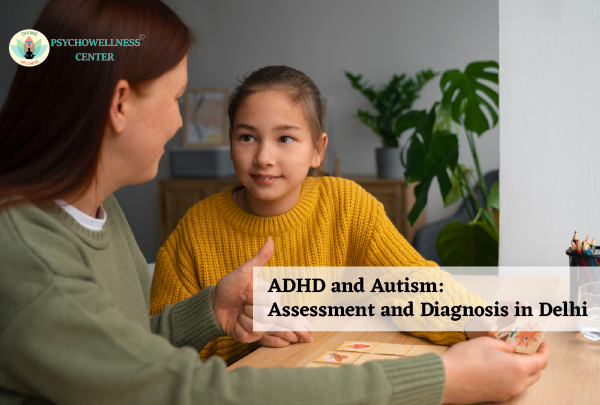
Attention-Deficit/Hyperactivity Disorder (ADHD) and Autism Spectrum Disorder (ASD) are neurodevelopmental conditions that affect attention, behavior, communication, and social interaction. Although they are distinct diagnoses, they can share overlapping features, which sometimes makes accurate identification challenging. Early and comprehensive assessment is essential to ensure appropriate support, intervention planning, and long-term developmental outcomes.
In a large and diverse city like Delhi, awareness about neurodevelopmental conditions is increasing. However, confusion about symptoms, stigma, and delayed referrals often prevent timely diagnosis. A structured, evidence-based assessment process helps families and adults gain clarity and move forward with informed decisions.
Learning about ADHD
Persistent patterns of impulsivity, hyperactivity, and inattention that impair functioning or development are the hallmarks of ADHD. Children with ADHD may struggle to sustain attention, follow instructions, organise tasks, or remain seated for extended periods. Adults may experience difficulties with time management, concentration, emotional regulation, or impulsive decision-making.
It is important to note that occasional distractibility or restlessness does not automatically indicate ADHD. Diagnosis requires symptoms to be persistent, developmentally inappropriate, and present across multiple settings, such as home, school, or work.
Comprehending Autism Spectrum Disorder
Autism Spectrum Disorder affects social communication, behavioral flexibility, and sensory processing. Individuals with autism may have difficulty interpreting social cues, maintaining reciprocal conversations, or adapting to changes in routine. Some may display repetitive behaviors or highly focused interests.
Autism exists on a spectrum, meaning support needs vary widely. Some individuals require substantial assistance in daily functioning, while others may function independently but experience subtle social or sensory challenges. In some cases, individuals may also experience co-occurring conditions such as intellectual disability, which can influence learning pace and adaptive functioning.
The co-occurrence and overlap:
ADHD and autism can co-occur, and certain symptoms may overlap, such as difficulty with attention, impulsivity, or social interaction. However, the underlying mechanisms and treatment approaches differ. A comprehensive evaluation is therefore critical to differentiate between the two conditions or identify dual diagnoses when present. Misdiagnosis or delayed identification can lead to inappropriate interventions and increased emotional stress for individuals and families.
The Value of Early Evaluation
Early assessment improves developmental outcomes significantly. When ADHD or autism is identified during childhood, targeted interventions can enhance academic performance, communication skills, emotional regulation, and social functioning.
For adolescents and adults, assessment can provide long-awaited clarity. Many individuals seek evaluation later in life after years of struggling with concentration, relationships, or workplace challenges without understanding the underlying cause. Assessment is not about labeling; it is about identifying strengths, understanding challenges, and creating practical support plans.
What a Comprehensive Assessment Involves
A thorough diagnostic process typically includes multiple components. Clinical interviews gather developmental history, behavioural patterns, and family observations. Standardised rating scales and psychological tests assess attention, executive functioning, communication skills, sensory sensitivities, and adaptive behavior.
For children, information from teachers or school reports may also be included. Observational assessments help clinicians evaluate social interaction, emotional responses, and behavioural patterns in structured settings. These evaluations may also help identify concerns such as developmental delay, which can influence learning and communication milestones. Assessment is conducted according to established diagnostic criteria and involves careful differentiation from other conditions such as anxiety, learning disorders, or mood disorders.
The Role of Multidisciplinary Evaluation
A multidisciplinary approach is frequently necessary for accurate diagnosis. Clinical psychologists, psychiatrists, occupational therapists, and speech-language professionals may collaborate to evaluate cognitive, emotional, and developmental domains comprehensively.
This integrated model ensures that the assessment addresses both diagnostic clarity and functional impact. Recommendations following evaluation typically include behavioural interventions, educational accommodations, occupational therapy, speech therapy, or medication when appropriate.
Assisting Families During the Diagnosis Procedure
Receiving a diagnosis can evoke mixed emotions, including relief, concern, or uncertainty. Professional guidance helps families understand what the diagnosis means and what it does not mean. Emphasis is placed on strengths as well as areas requiring support.
Parents benefit from psychoeducation regarding behavioural strategies, communication approaches, and structured routines that support development at home and school. Guidance often includes strategies for emotion control, helping children manage frustration and express feelings more effectively.
Adult Diagnosis and Self-Understanding
Many adults seek ADHD or autism assessment after recognizing long-standing patterns of difficulty. Adult diagnosis can improve self-awareness, reduce self-blame, and facilitate workplace or academic accommodations.
Therapeutic support may also focus on emotional regulation, executive functioning strategies, and relationship skills tailored to adult developmental needs. For some individuals, therapy may also address challenges such as social anxiety that may arise from long-term social difficulties.
Intervention After Diagnosis
Assessment is only the first step. Effective intervention plans are individualised and may include behavioural therapy, cognitive behavioural therapy, parent training, occupational therapy, social skills training, or medication management.
Ongoing monitoring ensures that support strategies remain responsive to developmental changes and evolving needs. Early and consistent intervention improves both short-term functioning and long-term independence while encouraging goal setting and structured planning for everyday tasks.
Choosing Professional Support in Delhi
Selecting qualified professionals for assessment is essential to ensure diagnostic accuracy. Evidence-based practice, ethical standards, and developmental expertise are key considerations when choosing a center for evaluation.
Clinics that offer integrated psychological and developmental services provide comprehensive care, ensuring that both diagnosis and intervention are aligned. With the right professional guidance, individuals and families can also focus on long-term self-improvement and adaptive skill development.
Conclusion
ADHD and autism are neurodevelopmental conditions that require careful and structured assessment for accurate diagnosis. Early identification supports better academic, social, and emotional outcomes, while adult diagnosis can provide long-overdue clarity and direction. A comprehensive evaluation process helps differentiate overlapping symptoms and guides appropriate intervention planning. Families exploring options such as ADHD doctors near me, Autism assessment near me, Autism therapy near me, Child Psychologist near me, Psychologist in Delhi NCR, or Counselling Center Near me may consider structured diagnostic services available at Psychowellness Center. Their experienced counselling psychologist team, provides personalised guidance both in-person at Dwarka and Janakpuri, New Delhi (Contact: 011-47039812 / 7827208707) and online through TalktoAngel, offering convenient virtual counselling support for mental wellness wherever you are.
To learn more about ADHD and Autism and their psychological impact, you can explore neurodevelopmental disorder–related resources on Psychowellness Center. This video provides insights into understanding ADHD and autism, recognizing early behavioral and developmental signs, and how psychological assessment, counselling, and therapy can support individuals and families in improving daily functioning and long-term developmental outcomes.
Contribution: Dr. R.K. Suri, Clinical Psychologist, and Ms. Charavi Shah, Counselling Psychologist
References
- American Psychiatric Association. (2022). Diagnostic and statistical manual of mental disorders (5th ed., text rev.; DSM-5-TR). American Psychiatric Publishing.
- Mahajan, R., Bernal, M. P., Panzer, R., Whitaker, A., Roberts, W., Handen, B., Hardan, A., Anagnostou, E., & Veenstra-VanderWeele, J. (2012). Clinical practice pathways for evaluation and medication choice for attention-deficit/hyperactivity disorder symptoms in autism spectrum disorders. Pediatrics, 130(Suppl. 2), S125–S138. https://doi.org/10.1542/peds.2012-0900K
- National Institute for Health and Care Excellence. (2018). Attention deficit hyperactivity disorder: Diagnosis and management (NICE Guideline NG87). NICE.
- Young, S., Adamo, N., Ásgeirsdóttir, B. B., Branney, P., Beckett, M., Colley, B., Cubbin, S., Deeley, Q., Farrag, E., Gudjonsson, G., Hill, P., Hollis, C., Kilic, O., Müller-Sedgwick, U., Ohlmeier, M., Shah, A., & Woodhouse, E. (2020). Females with ADHD: An expert consensus statement. BMC Psychiatry, 20(1), 404. https://doi.org/10.1186/s12888-020-02707-9