
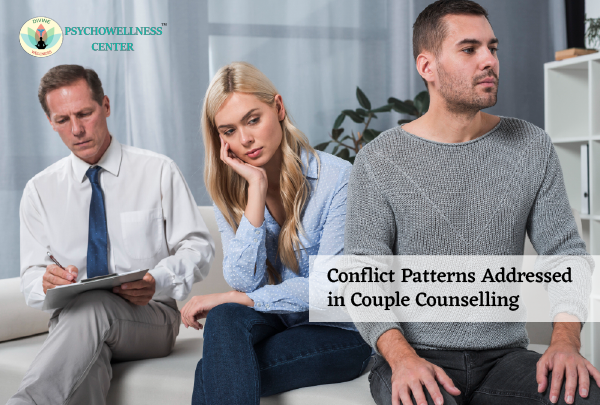
Conflicts are a natural part of any relationship, but when disagreements become repetitive, emotionally intense, or unresolved, they can strain the bond between partners. Couples counselling focuses on identifying unhealthy interaction cycles and replacing them with healthier communication patterns. Understanding these patterns is the first step toward healing and growth.
Understanding couple conflicts
Every couple experiences disagreements, but not all conflicts are harmful. Problems arise when patterns become rigid, repetitive, and emotionally charged. Research shows that many conflicts in relationships are “perpetual,” meaning they stem from deeper differences in values, personality, or needs rather than temporary issues. Couples counselling helps partners recognise that conflict itself is not the problem—it is how they engage with it that determines the outcome.
Common Conflict Patterns in Couples
- The Demand–Withdraw Cycle:- One of the most frequently observed patterns is the demand-withdrawal dynamic. In this cycle, one partner seeks discussion or resolution, while the other avoids or withdraws. This eventually causes frustration and emotional detachment. The “pursuer-distancer” pattern highlights how one partner pushes for communication while the other retreats, creating a cycle of misunderstanding and unmet needs. This pattern is often linked to anxiety, where one partner fears disconnection, and the other feels overwhelmed.
- Escalation of anger:- Some couples fall into a pattern where conflicts quickly intensify. Small disagreements turn into major arguments, often involving raised voices, blame, or criticism. According to relationship research, repeated exposure to negative communication patterns can erode trust and emotional safety over time. Counselling helps individuals recognise triggers and develop healthier responses, improving emotional control and reducing emotional reactivity.
- The “Four Horsemen” Pattern:- Psychologist John Gottman identified four destructive communication styles—criticism, contempt, defensiveness, and stonewalling—that predict relationship breakdown. These behaviours often appear in distressed relationships and can significantly damage intimacy. Therapy focuses on replacing these with constructive communication, empathy, and active listening.
- Repetitive or Unresolved Conflicts:- The same argument is frequently reported by couples. These recurring issues often mask deeper emotional needs or unresolved past experiences. Research indicates that a large percentage of conflicts are ongoing and require management rather than complete resolution. Counselling helps couples move from “gridlock” to dialogue by exploring underlying values and beliefs.
- Trust Issues and cheating & infidelity:- Betrayal-related conflicts are among the most emotionally intense. Infidelity often leads to broken trust, insecurity, and heightened emotional distress. Therapy in such cases focuses on rebuilding trust, improving transparency, and addressing the emotional impact of betrayal. It also helps partners understand the underlying causes, such as unmet needs or communication gaps.
- Emotional dependence vs. independence:– Another common conflict pattern arises when one partner becomes overly dependent while the other seeks autonomy. This imbalance can lead to feelings of suffocation for one partner and neglect for the other. Relational dialectics theory explains that relationships naturally involve tensions between opposing needs, such as closeness and independence. Counselling helps couples balance these needs effectively.
- Poor Communication and Misinterpretation:- Miscommunication often fuels conflict. Partners may misinterpret each other’s words, tone, or intentions, leading to unnecessary arguments. Couples counselling teaches skills such as active listening, validation, and clear expression of needs. These skills reduce misunderstandings and improve emotional connection.
How Couple Counselling Addresses These Patterns
- Building Awareness:- The first step in therapy is identifying unhealthy patterns. Many couples are unaware of their repetitive cycles until they are pointed out by a professional.
- Improving Emotional Regulation :-Therapy helps individuals manage overwhelming emotions like anxiety and anger, enabling them to respond thoughtfully rather than react impulsively.
Enhancing Communication Skills
Couples learn techniques such as:
- Using “I” statements instead of blame
- Practising active listening
- Taking breaks during heated arguments
These strategies help break negative cycles and foster healthier interactions.
Strengthening Emotional Connection
By addressing unresolved issues and improving communication, therapy enhances intimacy and emotional closeness between partners.
Encouraging goal setting
Couples counselling often involves setting shared goals for the relationship. These may include improving communication, rebuilding trust, or spending quality time together. Clear goals provide direction and motivation for change.
Seeking Professional Help
If conflicts feel overwhelming or repetitive, seeking professional help can make a significant difference. Many individuals search for the best couple counselling near me or a therapist near me when they begin to notice strain in their relationship. For those in Delhi NCR, accessing the best couple counselling in Delhi NCR or the best couple counselling in Janakpuri can provide structured support and evidence-based interventions tailored to individual needs.
Conclusion
Conflict is not a sign of failure in a relationship—it is an opportunity for growth and deeper understanding. However, when patterns such as frequent arguments, emotional withdrawal, or mistrust become persistent, they can weaken the foundation of a partnership. Addressing these challenges with awareness and timely action can help couples rebuild connection and strengthen their bond. Seeking professional support can make a meaningful difference when issues feel overwhelming or repetitive. Many individuals look for Relationship Counselling near me or a trusted relationship counsellor in Delhi when they begin to notice strain in their relationship. For those in Delhi NCR, connecting with the best Relationship counsellor in Janakpuri at Psychowellness Center with an experienced counselling psychologist team provides personalised guidance in-person at Dwarka and Janakpuri, New Delhi (Contact: 011-47039812 / 7827208707), provides access to structured, evidence-based guidance tailored to individual and couple needs. Their experienced therapists create a safe, non-judgmental space to improve communication, resolve conflicts, rebuild trust, and enhance emotional intimacy.
Additionally, Psychowellness Center offers an informative video on relationship counselling that helps individuals understand couple conflict patterns, emotional responses, and healthier ways of connecting with their partner. This resource can be a helpful first step in recognising when professional guidance may be beneficial.
Ultimately, taking the step toward counselling reflects strength and commitment. With the right support, couples can transform challenges into opportunities for growth, leading to a more balanced, fulfilling, and resilient relationship.
Contributions: Dr. R.K. Suri, Clinical Psychologist, and Ms. Mahima, Counselling Psychologist
REFERENCES
- Gottman Institute. (2024). Everything turns into an argument: How to break the conflict cycle. Retrieved from https://www.gottman.com/blog/everything-turns-into-an-argument/
- Gottman Institute. (2024). Managing vs. resolving conflict in relationships. Retrieved from https://www.gottman.com/blog/managing-vs-resolving-conflict-relationships/
- Knapp, M. L., & Daly, J. A. (Eds.). (2011). The cascade model of relational dissolution. In Handbook of interpersonal communication.