
Autism Spectrum Disorder (ASD) is a neurodevelopmental condition that influences how a child communicates, interacts socially, processes sensory information, and understands the world around them. While awareness around autism has grown in recent years, many families still struggle to understand what meaningful support truly looks like. Searching for counselors near me for autism is often the first step parents take, but navigating therapy options, professional roles, and long-term care plans can feel overwhelming.
Effective autism support is not limited to one therapy or professional. It is a holistic, collaborative, and evolving process that places the child’s strengths, challenges, and emotional wellbeing at the center. Understanding what real support involves can empower families to make informed decisions and help children reach their fullest potential.
Understanding Autism Beyond Labels
Autism is not a single, uniform condition. Each child on the spectrum presents differently, with unique abilities, communication styles, and behavioral patterns. Some children may have strong verbal skills but struggle with social cues, while others may be non-verbal yet highly perceptive and creative. Because of this diversity, a one-size-fits-all approach rarely works.
True support begins with recognizing autism as a difference in neurological functioning rather than a deficit. Counsellors and mental health professionals aim to support emotional regulation, adaptive functioning, and social understanding while respecting the child’s individuality and dignity.
The Role of Early Identification and Assessment
Early identification plays a crucial role in improving developmental outcomes for children with autism. Comprehensive assessments often involve behavioral observations, developmental history, standardized tools, and input from parents and teachers. These evaluations help identify communication delays, sensory sensitivities, emotional challenges, and learning styles.
A trained child counselor or child psychologist works closely with families to interpret assessment results and design a personalized intervention plan. Early intervention does not aim to change who the child is but rather to support skill development during critical growth periods.
What Autism Counseling Really Involves
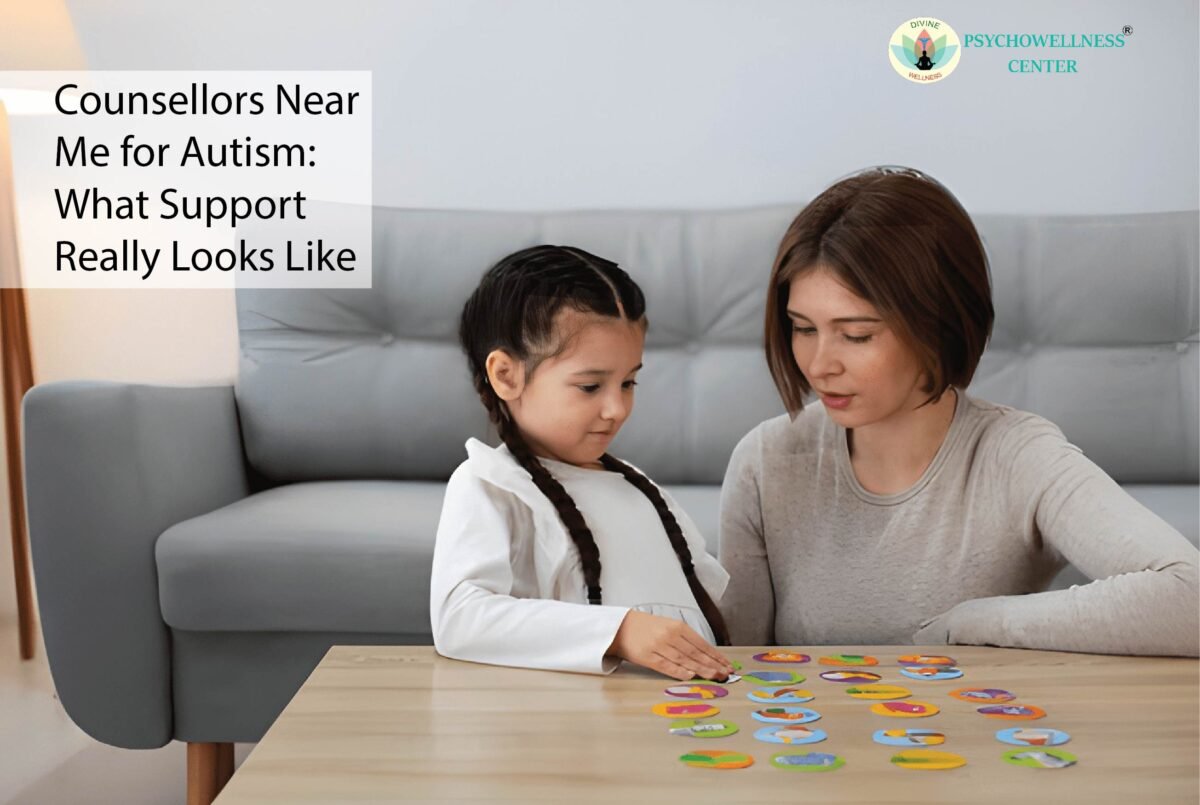
Autism counseling goes far beyond managing behaviors. It focuses on emotional understanding, coping skills, self-expression, and relationship-building. Sessions may include play-based therapy, cognitive-behavioral strategies, social skills training, and emotional regulation techniques adapted to the child’s developmental level.
Counseling also supports children in managing anxiety, frustration, sensory overload, and transitions. Many autistic children experience emotional distress that may not always be visible through words. A safe therapeutic space allows them to express feelings through structured activities, visual tools, or creative mediums.
Equally important is parent counseling. Families receive guidance on understanding their child’s emotional needs, managing daily challenges, and creating supportive home environments. This collaborative approach ensures consistency across therapy sessions, home, and school settings.
Multidisciplinary Support: A Team Effort
Effective autism support often involves a multidisciplinary team. Alongside counseling professionals, speech therapists, occupational therapists, special educators, and developmental specialists may be involved. Each professional contributes to different areas such as communication, motor skills, sensory integration, and academic readiness.
Mental health professionals coordinate care to ensure that emotional wellbeing is addressed alongside developmental goals. This integrated approach reduces stress for the child and family while promoting balanced growth.
Supporting Emotional and Mental Health in Autism
Children with autism are at a higher risk for co-occurring mental health concerns such as anxiety disorders, attention difficulties, emotional dysregulation, and low self-esteem. These challenges may intensify during adolescence due to social pressures and increased self-awareness.
Counseling helps children develop coping strategies, emotional vocabulary, and resilience. It also supports identity development, helping children understand and accept themselves in a world that may not always accommodate neurodiversity. Addressing mental health early reduces the risk of long-term emotional difficulties and improves overall quality of life.
The Importance of Family-Centered Care
Autism affects not just the child but the entire family system. Parents often experience stress, guilt, confusion, or burnout while navigating therapies, education plans, and social expectations. Siblings may also struggle to understand their autistic brother or sister’s needs.
Family-centered care acknowledges these dynamics. Counseling offers emotional support for parents, strengthens communication within the family, and helps caregivers build confidence in their parenting approach. When families feel supported, children benefit from more stable and nurturing environments.
Accessing the Right Support Services
With increasing awareness, families today have access to various autism support services, including online counseling platforms and specialized therapy centers. Digital mental health services have made professional guidance more accessible, especially for families facing geographical or time constraints. Structured online sessions can complement in-person interventions and provide continuity of care.
However, choosing the right professional requires careful consideration of qualifications, experience with autism, therapeutic approach, and ethical practices. Ongoing collaboration and regular progress reviews are key indicators of quality support.
What Happens Inside a Clinical Autism Counseling Session
In a clinical setting, autism counseling sessions are structured, with the “best child psychologist near me” and “best child psychologist in Delhi”, focusing on emotional safety, communication, and adaptive skills. At Psychowellness Center, sessions begin with rapport-building through play, visual tools, or preferred activities to help the child feel comfortable and understood. Clinicians assess emotional regulation, sensory responses, social interaction, and communication patterns while introducing tailored interventions such as social stories, emotional labeling, routine-based coping strategies, and sensory regulation techniques. Regular parent feedback sessions ensure continuity of care across home and school environments. Families seeking expert autism support can connect with Psychowellness Center at 011-47039812 / 7827208707 for professional guidance and evidence-based intervention.
Conclusion: Finding Meaningful Autism Support
Finding the right support for autism goes far beyond searching for counsellors near me for autism, it is about building a compassionate, informed, and collaborative care system around the child. Meaningful autism support recognizes individuality, nurtures emotional well-being, and empowers families through guidance and understanding. With early identification, personalized interventions, multidisciplinary collaboration, and family-centered care, children on the autism spectrum can develop essential life skills while embracing their unique strengths. Whether through in-person clinical sessions or trusted online platforms from TalktoAngel, the goal remains the same: to create a supportive environment where children feel understood, valued, and capable of thriving. When expertise is paired with empathy, autism care becomes not just therapeutic but truly transformative.
Explore More: https://www.instagram.com/reel/DMISp5avTPp/
https://www.instagram.com/psychowellness_center/reel/DQ6qXCoiT8z/?hl=zh-tw
Contribution: Dr. R.K. Suri, Clinical Psychologist, and Ms. Tanu Sangwan, Counselling Psychologist
References
American Psychiatric Association. (2022). DSM-5-TR: Diagnostic and statistical manual of mental disorders (5th ed., text rev.). APA Publishing.
Baron-Cohen, S. (2020). The pattern seekers: How autism drives human invention. Basic Books.
Centers for Disease Control and Prevention. (2023). Autism spectrum disorder (ASD): Data and statistics. CDC.
Lord, C., Elsabbagh, M., Baird, G., & Veenstra-VanderWeele, J. (2018). Autism spectrum disorder. The Lancet, 392(10146), 508–520.
Volkmar, F. R., & McPartland, J. C. (2019). From Kanner to DSM-5: Autism as an evolving diagnostic concept. Annual Review of Clinical Psychology, 15, 193–216.
https://www.psychowellnesscenter.com/Blog/best-counselling-psychologist-in-lajpat-nagar-delhi/
https://www.psychowellnesscenter.com/Blog/best-special-educator-in-tilak-nagar-delhi/
https://www.psychowellnesscenter.com/service-autism-treatment-in-delhi/
https://www.psychowellnesscenter.com/Blog/best-child-psychologists-in-dwarka-sector-17-dwarka-delhi/
https://www.psychowellnesscenter.com/Blog/best-aba-therapist-in-janakpuri-delhi/
https://www.psychowellnesscenter.com/Blog/best-child-psychologists-in-south-east-delhi/
https://www.psychowellnesscenter.com/Blog/best-counselling-psychologists-in-rk-puram-new-delhi/
https://www.psychowellnesscenter.com/Blog/best-aba-therapist-in-dwarka-delhi/
https://www.psychowellnesscenter.com/service-autism-occupational-therapy/
https://www.psychowellnesscenter.com/Blog/the-best-speech-therapist-in-delhi/
https://www.psychowellnesscenter.com/Blog/the-best-psychologist-in-noida-uttar-pradesh/
https://www.psychowellnesscenter.com/Blog/best-child-psychologist-in-north-east-delhi/
https://www.psychowellnesscenter.com/Blog/best-special-educator-in-vikaspuri-delhi/