
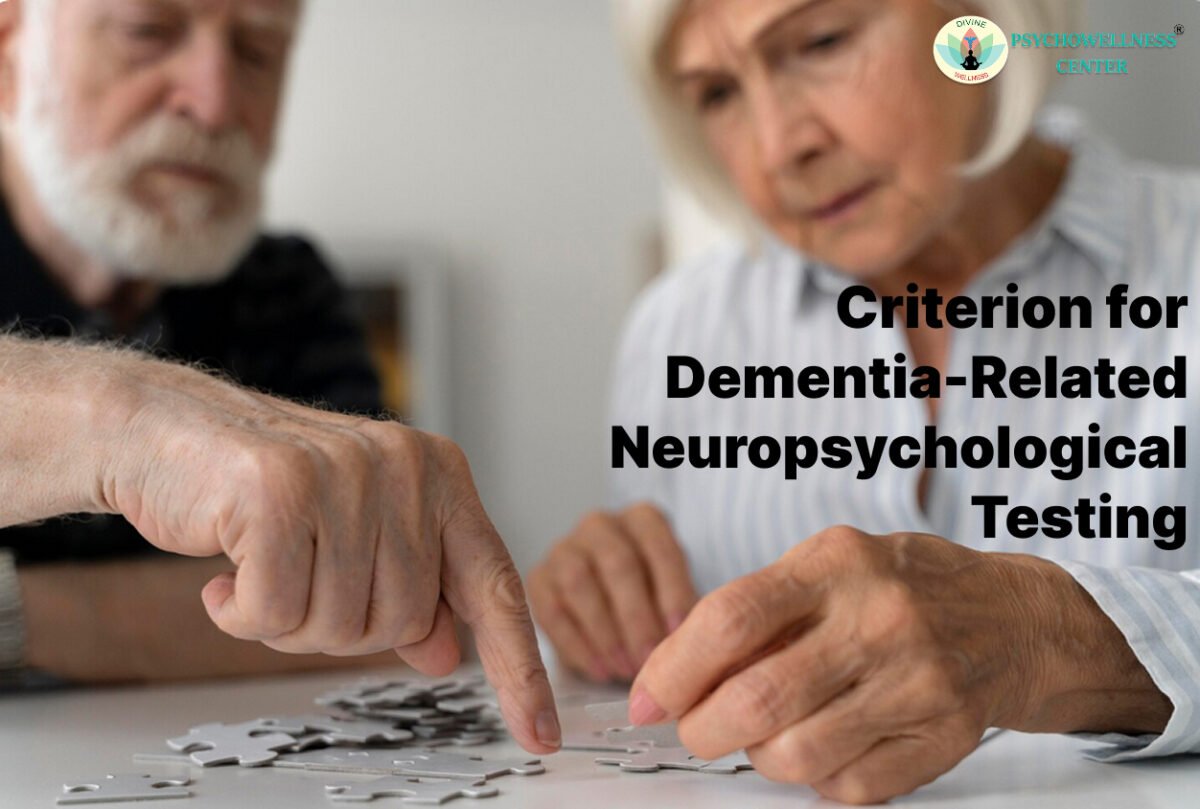
Neuropsychological testing plays a central role in the diagnosis and management of dementia. While brain imaging, laboratory assessments, and clinical interviews contribute valuable information, formal cognitive testing remains one of the most reliable ways to understand how dementia affects thinking, behaviour, and functional abilities. As people age, occasional memory lapses or slowed thinking are common and often normal. However, when cognitive changes interfere with daily life or appear to accelerate, clinical psychologists and neurologists turn to neuropsychological evaluation to clarify what is happening and to identify the most appropriate interventions.
The criteria that guide dementia related neuropsychological testing are rooted in decades of research in cognitive ageing, clinical neuropsychology, and neurology. These criteria help determine when testing is warranted, which cognitive domains must be assessed, how results are interpreted, and how impairments are distinguished from typical age-related changes. Individuals and families often begin this process after consulting a psychologist near me or being referred through medical services.
Understanding Why Neuropsychological Testing Matters
Dementia is not a single condition but a broad category that includes Alzheimer’s disease, vascular dementia, frontotemporal dementia, Lewy body dementia, and several less common forms. Each type of dementia affects the brain differently and produces distinct cognitive and behavioural profiles. Neuropsychological testing allows clinicians to capture these patterns with precision.
Testing helps answer several key questions:
Are the person’s cognitive difficulties outside the range of normal ageing
- Which cognitive domains are most affected
- Are the impairments mild, moderate, or severe
- Is the pattern consistent with a known dementia syndrome
- How might the cognitive profile guide treatment, planning, and support
The data obtained through testing assist in diagnosis, but they also provide direction for rehabilitation planning, caregiver education, and long-term care decisions. Increasingly, families also explore online psychological counselling for guidance and psychoeducation during the diagnostic process.
When Should Dementia Related Neuropsychological Testing Be Considered
Observable Cognitive Decline Beyond Normal Ageing
Everyone experiences some degree of cognitive slowing with age. Mild word-finding difficulty or forgetting where one placed an item does not necessarily indicate dementia. Testing becomes important when individuals experience:
- Persistent memory loss that disrupts daily functioning
- Difficulty learning new information
- Confusion in familiar environments
- Increased reliance on others to manage tasks they previously handled independently
When these symptoms progress or significantly affect quality of life, a neuropsychological evaluation is recommended.
Concerns Reported by Family or Caregivers
Often, family members notice changes before the individual does. Reports of repeated questions, mismanagement of finances, difficulty following conversations, or increased irritability can indicate emerging cognitive impairment. Emotional changes such as heightened stress, anxiety, or withdrawal may also coexist, complicating the clinical picture. Such collateral information is critical in determining whether testing is warranted.
Medical Conditions Associated With Cognitive Risk
Referral is appropriate when individuals have medical conditions known to affect cognition, including:
- Stroke or transient ischemic attack
- Parkinson’s disease
- Traumatic brain injury
- Chronic cardiovascular conditions
- Long-term, untreated psychiatric disorders such as depression
Testing helps distinguish temporary cognitive changes related to medical events from persistent deficits that may indicate dementia.
Differential Diagnosis Needs
Misdiagnosis is possible because mood disorders, sleep disturbances, medication effects, and chronic emotional strain can mimic dementia. Neuropsychological testing helps clarify whether symptoms stem from true neurodegeneration or from potentially reversible conditions.
Cognitive Domains Assessed in Dementia Testing
Neuropsychological evaluations are comprehensive and tailored. They cover multiple domains because dementia does not affect cognition uniformly.
- Memory:- Memory impairment is one of the most common symptoms associated with dementia, particularly Alzheimer’s disease. Testing includes immediate and delayed recall, recognition memory, and both verbal and visual memory tasks.
- Attention and Processing Speed:- These measures assess sustained focus and mental efficiency. Marked slowing beyond what is expected for age may signal vascular or neurodegenerative involvement.
- Executive Functioning:- Executive skills involve planning, reasoning, inhibition, and flexibility. Executive dysfunction is particularly common in vascular and frontotemporal dementia.
- Language:- Language testing examines naming, fluency, comprehension, and semantic knowledge. Certain profiles help identify language-based dementias.
- Visuospatial Skills:- Visuospatial assessment evaluates navigation, visual interpretation, and constructional abilities. Deficits may appear early in some dementia subtypes.
- Mood and Behaviour:- Although not strictly cognitive, emotional and behavioural changes frequently accompany dementia. Screening for mood symptoms provides important context, especially when individuals experience emotional distress or seek support through online psychologists or mental health services.
Criteria for Reliable Interpretation of Test Results
Interpreting neuropsychological data requires specialised training. Diagnosis is never based on test scores alone.
- Comparison With Normative Data:- Scores are interpreted relative to age, education, and cultural background to avoid misclassification.
- Assessment of Functional Impairment:- Dementia requires evidence of real-world impact on daily functioning, gathered through patient and caregiver interviews.
- Evaluation of Pattern Consistency:- Different dementias produce distinct cognitive patterns, and recognising these improves diagnostic accuracy.
- Repeated Assessments When Needed:- Follow-up testing can clarify whether changes are progressive or stable.
Screening Tools Versus Comprehensive Testing
Brief tools such as the MMSE or MoCA are useful for initial screening but cannot replace full evaluation. Comprehensive testing offers deeper insight, guides treatment planning, and supports families navigating complex decisions. Many individuals begin with in-person care and later supplement support through online counselling services for ongoing guidance.
How Results Guide Treatment and Planning
The ultimate purpose of neuropsychological testing is to improve quality of life. Results guide referrals to occupational therapy, speech and language services, neurology, psychology, and social work. Families gain clarity around safety, independence, caregiving needs, and future planning. Emotional adjustment support may also be recommended, particularly when individuals and caregivers experience uncertainty or overwhelm.
Conclusion
Criteria for dementia-related neuropsychological testing ensure that assessments are meaningful, accurate, and clinically sound. Such evaluations play a crucial role in differentiating normal age-related changes from pathological cognitive decline, supporting early diagnosis, treatment planning, and compassionate care. When conducted by trained professionals and interpreted within medical, emotional, and psychosocial contexts, neuropsychological testing becomes a powerful tool for guiding individuals and families through cognitive changes with clarity and dignity.
In addition to assessment, therapeutic approaches such as CST, Reminiscence Therapy, CBT, ACT, MBCT, and EFT are often used to support individuals and caregivers in managing emotional distress, adjustment difficulties, and stress associated with cognitive decline. Online counselling platforms like TalktoAngel offer access to licensed psychologists who provide evidence-based psychological support from the comfort of home. For in-person consultations and comprehensive psychological care, the Psychowellness Center in Dwarka Sector-17 and Janakpuri (011-47039812 / 7827208707) offers personalised services with some of the best psychologists near me, ensuring professional guidance throughout the assessment and care process.
Ultimately, the goal of dementia-related neuropsychological testing is not only diagnosis, but deeper understanding, informed decision-making, and preserving quality of life—ensuring that individuals and their families receive support, respect, and reassurance at every stage of the journey.
Contribution: Dr. R.K. Suri, Clinical Psychologist, and Ms. Arushi Srivastava, Counselling Psychologist
References
- Albert, M. S., DeKosky, S. T., Dickson, D., Dubois, B., Feldman, H. H., Fox, N. C., Gamst, A., Holtzman, D. M., Jagust, W. J., Petersen, R. C., Snyder, P. J., Carrillo, M. C., Thies, B., & Phelps, C. H. (2011). The diagnosis of mild cognitive impairment due to Alzheimer’s disease. Alzheimer’s & Dementia, 7(3), 270–279. https://doi.org/10.1016/j.jalz.2011.03.008
- American Psychiatric Association. (2022). Diagnostic and statistical manual of mental disorders (5th ed., text rev.). https://doi.org/10.1176/appi.books.9780890425787
- Graham, N. L., Emery, T., & Hodges, J. R. (2004). Distinctive cognitive profiles in Alzheimer’s disease and subtypes of frontotemporal dementia. Journal of Neurology, Neurosurgery & Psychiatry, 75(3), 342–349. https://doi.org/10.1136/jnnp.2003.020479
- Harvey, P. D. (2019). Domains of cognition and their assessment. Dialogues in Clinical Neuroscience, 21(3), 227–237. https://doi.org/10.31887/DCNS.2019.21.3/pharvey
- O’Brien, J. T., Thomas, A., Ballard, C., McKeith, I., Burn, D., & Holmes, C. (2014). Visual hallucinations in neurological and ophthalmological disease. Journal of Neurology, Neurosurgery & Psychiatry, 85(6), 622–628. https://doi.org/10.1136/jnnp-2013-305855