
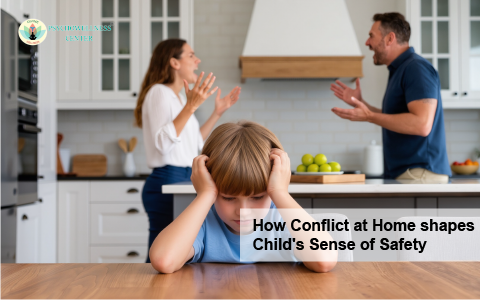
Home is usually the first place where children learn about love, trust, communication, and emotional security. It is where they develop a sense of belonging and learn how relationships function. However, when frequent conflict, arguments, or tension occur within the household, children may begin to perceive their home environment differently. Instead of feeling safe and supported, they may experience uncertainty, fear, or emotional confusion. Understanding how conflict at home shapes a child’s sense of safety is essential for parents, caregivers, and mental health professionals who aim to create healthier family environments.
Children do not always express distress through words. Often, they internalise emotional experiences or express them through behaviour. When conflict becomes a regular part of their environment, it can influence their emotional development, sense of stability, and relationships with others.
The Importance of Emotional Safety for Children
Emotional safety refers to the feeling that one is protected, valued, and secure within their environment. For children, emotional safety is deeply connected to their relationships with caregivers. When parents communicate respectfully, manage disagreements calmly, and show affection toward each other, children learn that relationships can be both loving and stable.
However, repeated exposure to conflict can disrupt this sense of security. Children may begin to feel uncertain about the stability of their family or worry about the well-being of their parents. Over time, this uncertainty can lead to emotional distress, increased stress, anxiety, depression, and difficulties in emotional regulation.
When children feel emotionally unsafe at home, they may also become hyperaware of changes in tone, facial expressions, or tension between family members. This constant alertness can affect their ability to relax and enjoy everyday experiences.
How Children Interpret Parental Conflict
Children often interpret parental conflict in ways that adults may not expect. Even when disagreements seem minor to parents, children may perceive them as threatening or overwhelming. Young children, in particular, may assume that they are somehow responsible for the conflict.
This misunderstanding can create feelings of guilt, confusion, or fear. Some children may try to intervene or “fix” the situation, while others withdraw emotionally. When arguments involve harsh language or emotional distance, children may experience family issues that shape how they understand relationships and trust.
Children may internalize conflict as a typical aspect of relationships in certain situations. Their interactions with siblings, peers, and potential spouses may be impacted by this view.
Emotional and Psychological Impact on Children
Exposure to frequent household conflict can have a range of emotional and psychological effects. Children may experience persistent worry, sadness, or frustration, especially when conflicts are unresolved.
One common response is emotional withdrawal. Children who feel overwhelmed may distance themselves from family interactions, leading to social isolation or reluctance to express their feelings openly.
Some children may also develop behavioural challenges such as irritability, aggression, or difficulty concentrating. These responses can sometimes appear in school settings as Work or school problems, where teachers notice changes in behaviour, academic performance, or social interactions.
If the conflict involves ongoing hostility or emotional neglect, children may struggle with Low Self-Confidence, questioning their own worth or feeling uncertain about their role within the family.
The Role of Emotional Regulation
Children learn emotional control largely through observing adults. When caregivers manage disagreements calmly and respectfully, children develop skills for handling conflict constructively. However, youngsters may find it difficult to learn how to control their own emotions when discussions turn into yelling, assigning blame, or extended periods of silence.
In such environments, children may exhibit intense Mood swings, difficulty calming themselves, or impulsive reactions. Over time, these patterns can influence their emotional development and their ability to form healthy relationships.
Parents who model respectful communication and conflict resolution help children understand that disagreements are a natural part of relationships but can be managed with empathy and understanding.
Long-Term Effects on Relationships
Children who grow up in environments marked by frequent conflict may carry certain beliefs about relationships into adolescence and adulthood. They might become overly cautious in relationships, fearing rejection or instability. Others may replicate the same patterns of communication they observed growing up.
These experiences can sometimes contribute to Relationship problems later in life, particularly if individuals struggle with trust, emotional expression, or conflict resolution. In some cases, unresolved childhood experiences may also contribute to difficulties such as Generalised Anxiety Disorder or persistent emotional distress.
However, it is important to note that childhood experiences do not determine a person’s future entirely. With support, self-awareness, and guidance, individuals can learn healthier ways of forming and maintaining relationships.
Helping Children Feel Safe During Conflict
Conflict in families is inevitable. Disagreements are a natural part of human relationships. What matters most is how these conflicts are managed and how children are supported through them.
Parents can help children feel safe by:
- Avoiding hostile arguments in front of children whenever possible
- Reassuring children that disagreements are not their fault
- Demonstrating respectful communication and compromise
- Maintaining consistent routines that provide stability
- Encouraging children to express their feelings openly
Open communication is particularly important. When parents acknowledge conflict and reassure children that the family remains stable, children are less likely to internalise fear or uncertainty.
The Role of Professional Support
When family conflicts become persistent or begin affecting a child’s emotional well-being, seeking professional guidance from child psychologists near me can be beneficial. Mental health professionals can help families understand underlying patterns and develop healthier communication strategies.
Therapeutic approaches such as Family counseling near me focus on improving communication, strengthening emotional connections, and resolving conflicts constructively. Through guided discussions, families can explore the emotional needs of each member and develop healthier relationship patterns.
In some cases, Cognitive-behavioral therapy may also help children process their thoughts and emotions related to family conflict. CBT techniques encourage children to understand their feelings, challenge negative beliefs, and develop effective coping strategies.
Conclusion
Conflict within families can significantly influence how children perceive safety, relationships, and emotional stability. While occasional disagreements are a natural part of family life, repeated or unresolved conflict may lead to emotional distress, behavioural challenges, and long-term difficulties in forming healthy relationships. Children rely on caregivers to create a stable and supportive environment where they feel protected, heard, and understood.
By modelling respectful communication, addressing disagreements constructively, and supporting children emotionally, families can strengthen trust and resilience. When parents actively work toward creating a calm and nurturing home environment, children are more likely to develop emotional security, confidence, and healthier relationship patterns in the future.
The Psychowellness Center (Contact: 011-47039812 / 7827208707), located in Dwarka Sector-17 and Janakpuri, New Delhi, offers specialised therapeutic care for families and children through personalised counselling approaches that focus on emotional regulation, family communication, and overall well-being. Additionally, for individuals searching for counseling psychologists Delhi and best child psychologists in Dwarka or seeking flexible access to professional guidance, online platforms like TalktoAngel connect families with experienced psychologists who support children and parents in managing family conflict and strengthening emotional resilience. Together, these evolving mental health services make compassionate, effective, and individualised psychological support more accessible for families and children.
Contribution: Dr. R.K. Suri, Clinical Psychologist, and Ms. Arushi Srivastava, Counselling Psychologist
References
Cummings, E. M., & Davies, P. T. (2010). Marital conflict and children: An emotional security perspective. Guilford Press.
American Psychological Association. (2020). Children and family conflict: Understanding emotional impact.
Grych, J. H., & Fincham, F. D. (2001). Interparental conflict and child development. Cambridge University Press.
Siegel, D. J., & Bryson, T. P. (2012). The Whole-Brain Child. Random House.
https://www.psychowellnesscenter.com/Blog/parenting-through-the-difficult-times-in-marriage
https://www.psychowellnesscenter.com/Blog/what-triggers-anxiousness-in-children
https://www.psychowellnesscenter.com/Blog/creating-a-mental-health-friendly-home
https://www.psychowellnesscenter.com/Blog/navigating-irritability-and-misconduct-in-children
https://www.psychowellnesscenter.com/Blog/can-continuous-arguments-badly-affect-your-relationship