
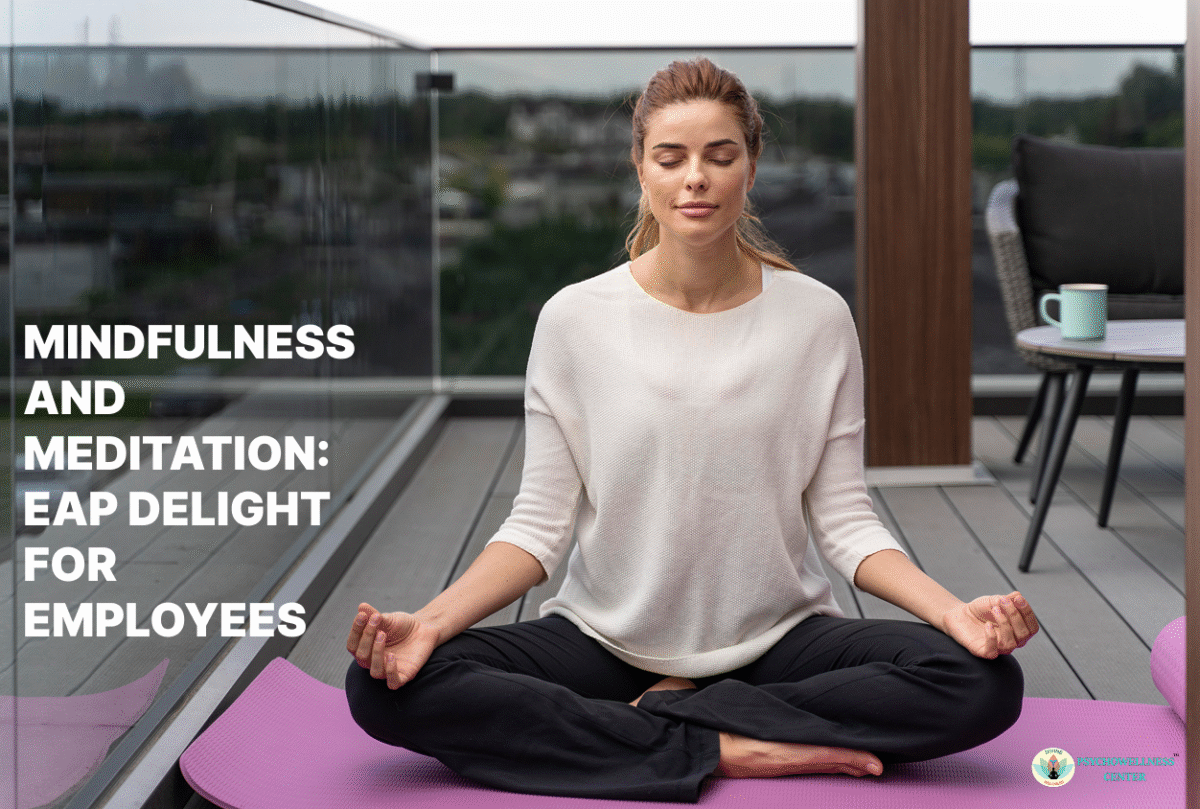
In today’s fast-paced and highly demanding workplace, employees often find themselves juggling tight deadlines, multitasking, and the constant pull of digital notifications. Stress, anxiety, and burnout have become common issues that not only affect individual health but also diminish overall organizational productivity. As a response, progressive companies are integrating mindfulness and meditation practices into their Employee Assistance Programs (EAPs), offering employees a powerful, evidence-based tool to restore focus, emotional balance, and well-being.
The Modern Workplace Dilemma
The evolving work environment, especially post-pandemic, has blurred the boundaries between professional and personal life. Nowadays, a lot of workers say they feel emotionally exhausted or overburdened all the time. This has led to a surge in absenteeism, presenteeism, and mental health-related concerns.
According to a World Health Organization report (2021), depression and anxiety drain the global economy of more than $1 trillion annually through lost productivity. While traditional wellness initiatives like fitness programs and counselling remain valuable, they are no longer sufficient on their own. What employees truly need is the ability to pause, reconnect with themselves, and restore mental clarity, a space where mindfulness and meditation become powerful tools.
Understanding Mindfulness and Meditation
Mindfulness refers to the practice of being fully present in the moment without judgment. It involves noticing your thoughts, emotions, and surroundings with openness and curiosity. Meditation, on the other hand, is a more structured practice that often includes focusing attention, observing breath, or visualizing calming scenarios to cultivate mindfulness and relaxation.
Together, mindfulness and meditation act as a mental fitness regime, helping individuals build awareness, reduce stress, and improve concentration.
Why Mindfulness Belongs in EAPs
Integrating mindfulness and meditation into Employee Assistance Programs (EAPs) is more than just a wellness trend; it’s a strategic investment in employee mental health. Here’s why:
1. Reduces Stress and Anxiety
Numerous studies have shown that mindfulness practices significantly reduce stress. A meta-analysis by Khoury et al. (2015) found that mindfulness-based interventions reduced stress, anxiety, and depression across diverse populations. For employees facing constant pressure, even a few minutes of guided meditation during breaks can lower cortisol levels, enhance mood, and provide emotional control.
2. Boosts Focus and Productivity
Mindfulness meditation enhances attentional control. Employees who meditate regularly report fewer distractions, better task prioritization, and enhanced decision-making. Mindfulness encourages employees to respond to challenges mindfully rather than react impulsively, improving work output and interpersonal relationships.
3. Improves Emotional Intelligence
Mindfulness helps individuals become more aware of their emotional triggers and develop empathy toward others. This is especially valuable in diverse teams or roles requiring high emotional labor, such as HR, customer service, or leadership positions.
4. Supports Mental Health Prevention
EAPs traditionally focus on mental health intervention, stepping in when an employee is already struggling. Mindfulness-based practices shift the focus to prevention, allowing employees to manage their mental health proactively before issues escalate.
5. Accessible and Low-Cost Implementation
Unlike some wellness programs that require extensive infrastructure, mindfulness programs can be implemented with minimal resources. Guided meditations, virtual mindfulness workshops, or short daily reminders can be integrated easily into a company’s existing EAP framework.
Ways to Implement Mindfulness and Meditation in EAPs
1. Daily Guided Sessions
Offer 10-minute virtual or on-site meditation sessions during lunch or breaks to encourage practice and participation.
2. Mindfulness Workshops
Invite certified mindfulness coaches or psychologists to conduct monthly sessions focusing on stress, focus, emotional resilience, or work-life balance.
3. Meditation App Subscriptions
Partner with mindfulness apps like Headspace, Calm, or Insight Timer and offer free subscriptions to employees as part of the EAP benefits.
4. Mindfulness Challenges
Create monthly or quarterly challenges such as “21 Days of Mindfulness” to motivate participation through gamification and rewards.
5. Dedicated Mindfulness Rooms or Zones
If feasible, designate a quiet room where employees can go for mindful breathing or short meditative breaks.
6. Mindful Leadership Training
Train managers in mindfulness techniques so they can model emotional awareness and resilience for their teams.
The Role of Mental Health Professionals
Top psychologists, counsellors, or corporate wellness coaches can play a key role in designing and delivering mindfulness-based interventions. EAP providers like Psychowellness Center in India are now integrating mindfulness-based cognitive therapy (MBCT) and other evidence-based approaches into corporate programs to support stress reduction and emotional agility.
These professionals tailor programs to suit employee needs, whether it’s supporting a burned-out marketing team or helping an HR department navigate conflict management with compassion and calm.
Success Stories from Corporate Mindfulness
Several global companies, including Google, SAP, and Intel, have introduced mindfulness into their employee development plans. For example:
- Google’s “Search Inside Yourself” program integrates mindfulness with emotional intelligence, leading to reduced stress and improved leadership abilities among employees.
- SAP reported higher employee engagement and decreased absenteeism after incorporating mindfulness into its workplace culture.
These success stories show that when mindfulness is embedded in an organization’s values, not just offered as a one-off session, it can lead to long-term transformation.
Challenges to Anticipate
Despite its many benefits, introducing mindfulness at work may face initial skepticism. Some employees may associate it with spirituality, or believe it’s not a “real” solution to mental health issues.
To overcome this:
- Use scientific language: Emphasize research-backed benefits.
- Offer secular approaches: Focus on breathwork, body scans, and awareness exercises.
- Start small: Begin with optional short sessions to build interest.
- Collect feedback: Measure engagement and outcomes to continually refine the program.
Conclusion:
Employee well-being must change along with the demands present at work. Incorporating mindfulness and meditation into EAPs is no longer a luxury; it’s a necessity. These practices provide employees with internal tools to manage stress, improve focus, and nurture emotional strength.
By creating a culture of mindfulness, organizations show that they care not only about productivity but also about the inner lives of their employees. It’s a win-win: employees feel supported and empowered, while companies benefit from a calmer, more focused, and more engaged workforce.
Mindfulness and meditation are powerful tools, but employees often need additional professional support to navigate stress, burnout, and emotional overwhelm effectively. The Psychowellness Center, located in Dwarka Sector-17 (011-47039812 / 7827208707) and Janakpuri (011-47039812 / 7827208707), offers in-person sessions where psychologists integrate evidence-based therapies such as Mindfulness-Based Cognitive Therapy (MBCT), Cognitive Behavioral Therapy (CBT), Dialectical Behavior Therapy (DBT), and Acceptance and Commitment Therapy (ACT) to build resilience and emotional balance. They also provide Stress Management Therapy, Work-Life Balance Coaching, and Corporate Wellness Programs tailored to organizational needs. For employees preferring convenience and privacy, TalktoAngel offers online counseling with licensed experts, making mental health care accessible anytime, anywhere. Both platforms create structured, compassionate spaces that help employees not only manage stress but also enhance focus, emotional intelligence, and long-term well-being.
In this article, esteemed experts, Clinical Psychologist Dr. R.K. Suri and Counselling Psychologist Ms. Sangeeta Pal, offers effective strategies and techniques aimed at strengthening resilience and supporting long-term mental health.
This blog was written on 5 September 2025
References
Khoury, B., Sharma, M., Rush, S. E., & Fournier, C. (2015). Mindfulness-based stress reduction for healthy individuals: A meta-analysis. Journal of Psychosomatic Research, 78(6), 519-528. https://doi.org/10.1016/j.jpsychores.2015.03.009
World Health Organisation. (2021). Mental health and work: Policy brief. https://www.who.int/publications/i/item/9789240053424
Tang, Y. Y., Hölzel, B. K., & Posner, M. I. (2015). The neuroscience of mindfulness meditation. Nature Reviews Neuroscience, 16(4), 213–225. https://doi.org/10.1038/nrn3916
How Mindfulness Changes Our Emotional Life | Psychowellness Center
Understanding Mindfulness Meditation: Benefits & How to Practice
Mindfulness | Therapy, Counselling and Guided Meditation | TalktoAngel