
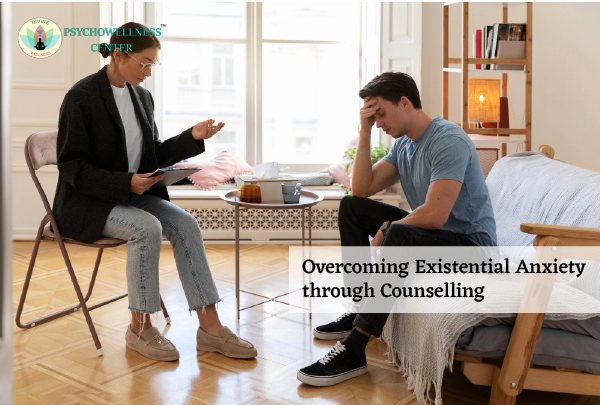
Existential anxiety is a form of psychological distress that arises when individuals begin to question the deeper aspects of life, meaning, purpose, identity, freedom, and mortality. Unlike situational anxiety, which is often linked to specific stress, burnout, social anxiety, or trauma, existential anxiety is more abstract. It can emerge during periods of transition, uncertainty, or introspection, and may leave individuals feeling unsettled, disconnected, or overwhelmed.
While these concerns are a natural part of human experience, they can become distressing when they lead to persistent overthinking, emotional instability, or a sense of emptiness. Counselling provides a structured and reflective space to explore these questions in a grounded and constructive way.
Understanding Existential Anxiety
Existential distress is often linked to questions such “What is the purpose of my life?”. “What really matters in the long run?” These reflections may arise during significant life events, such as career changes, relationship transitions, loss, or personal growth phases.
In some cases, individuals may feel a lack of direction or struggle with the realisation that life does not always provide clear answers. This uncertainty can lead to feelings of confusion, restlessness, or even helplessness.
Rather than viewing these questions as problems to eliminate, counselling approaches them as opportunities for deeper self-understanding.
Common Signs of Existential Distress
Existential anxiety can present in subtle ways. Individuals may experience a persistent sense of dissatisfaction, even when external circumstances appear stable. There may be ongoing rumination about life choices, fear of making the “wrong” decision, or a sense of being stuck without clear direction.
Other signs include emotional detachment, loss of motivation, or questioning previously held beliefs and values. In some cases, existential concerns may coexist with symptoms of general anxiety or low mood.
Why Avoidance Can Intensify the Experience
A common response to existential anxiety is avoidance, distracting oneself with work, social media, or constant activity to avoid uncomfortable thoughts. While this may provide temporary relief, it often prevents meaningful engagement with the underlying concerns.
Over time, avoided thoughts tend to return with greater intensity. Counselling encourages individuals to approach these questions with curiosity rather than fear, reducing their emotional impact.
The Role of Counselling in Existential Anxiety
Counselling provides a safe and structured environment to explore existential concerns without judgment. Top Therapists in India help individuals examine their thoughts, beliefs, and values to promote clarity rather than confusion.
This process often involves identifying what truly matters to the individual, rather than relying on external expectations or societal definitions of success. By aligning actions with personal values, individuals can develop a stronger sense of direction.
Counselling also helps reduce the intensity of overthinking by introducing strategies to manage rumination and emotional distress.
Exploring Meaning and Purpose
One central aspect of addressing existential anxiety is exploring meaning. Rather than searching for a single, fixed purpose, therapy encourages a flexible and evolving understanding of meaning in life.
Individuals may reflect on what brings them a sense of fulfilment, connection, or contribution. This could involve relationships, creative pursuits, personal growth, or helping others.
By focusing on meaningful engagement rather than abstract answers, individuals often experience a greater sense of stability and satisfaction.
Building Tolerance for Uncertainty
Existential concerns often stem from the need for certainty in an inherently uncertain world. Counselling helps individuals build tolerance for ambiguity, reducing the need for definitive answers.
This involves shifting from “needing to know everything” to accepting that some aspects of life are open-ended. Developing this mindset reduces anxiety and allows for more flexible thinking.
Over time, individuals become more comfortable navigating uncertainty without feeling overwhelmed.
Addressing Fear of Mortality
For some individuals, existential anxiety includes thoughts about mortality and the finite nature of life. While these thoughts can be unsettling, they can also lead to a deeper appreciation of time and priorities.
Counselling helps individuals process these concerns in a balanced way, reducing fear while encouraging meaningful engagement with life. Rather than avoiding the topic, therapy provides a space to reflect on it constructively.
This often leads to a shift in perspective, where individuals focus more on how they want to live rather than on fear of the unknown.
Strengthening Identity and Autonomy
Existential anxiety can sometimes arise from uncertainty about identity or life direction. Individuals may feel influenced by external expectations and unsure of their own preferences or values.
Counselling supports the development of a clearer sense of self. This includes understanding personal beliefs, making independent decisions, and taking responsibility for one’s choices.
Strengthening autonomy reduces internal conflict and increases confidence in navigating life decisions.
Practical Strategies Used in Counselling
Therapeutic approaches for existential anxiety may include reflective dialogue, mindfulness techniques, and cognitive restructuring. These methods help individuals observe their thoughts without becoming overwhelmed by them.
Journaling, value clarification exercises, and guided reflection are also commonly used to support self-exploration. These strategies encourage a balanced approach to thinking rather than excessive rumination.
When to Seek Professional Support
Professional support may be beneficial when existential thoughts become persistent, distressing, low self-confidence, low self-esteem, self-doubt, or interfere with daily functioning. Difficulty making decisions, ongoing feelings of emptiness, or heightened anxiety about the future are indicators that guidance may be helpful.
Seeking counselling does not mean eliminating existential questions. Instead, it allows individuals to engage with them in a way that is constructive and manageable.
Conclusion
Existential anxiety often emerges when individuals begin to reflect more deeply on meaning, purpose, and uncertainty in life. While these questions are a natural part of human experience, they can become difficult to manage without appropriate support. Counselling techniques like CBT, DBT, and mindfulness provide a structured space to engage with these concerns, develop perspective, and strengthen one’s sense of direction and self-understanding.
Individuals considering options such as counselling near me, therapist near me, psychologist in Delhi, or seeking support from best psychologists and top psychologists in Delhi may explore services at Psychowellness Center. With centres based in Janakpuri and Dwarka Sec-17, Delhi, the clinic offers professional and confidential psychological support; appointments can be arranged at 011-47039812 or 7827208707.
For those preferring remote access, Talktoangel provides a structured online counseling platform connecting individuals with experienced counsellors, supporting them in navigating existential concerns with greater clarity and stability.
Contributions: Dr. R.K. Suri, Clinical Psychologist, and Ms. Charavi Shah, Counselling Psychologist
References
- Frankl, V. E. (1985). Man’s search for meaning (Rev. ed.). Washington Square Press.
- Iverach, L., Menzies, R. G., & Menzies, R. E. (2014). Death anxiety and its role in psychopathology: Reviewing the status of a transdiagnostic construct. Clinical Psychology Review, 34(7), 580–593. https://doi.org/10.1016/j.cpr.2014.09.002](https://doi.org/10.1016/j.cpr.2014.09.002
- May, R. (1950). The meaning of anxiety. Ronald Press.
- Pyszczynski, T., Greenberg, J., & Solomon, S. (1999). A dual-process model of defense against conscious and unconscious death-related thoughts: An extension of terror management theory. Psychological Review, 106(4), 835–845. https://doi.org/10.1037/0033-295X.106.4.835](https://doi.org/10.1037/0033-295X.106.4.835
- Steger, M. F. (2012). Making meaning in life. Psychological Inquiry, 23(4), 381–385. https://doi.org/10.1080/1047840X.2012.720832](https://doi.org/10.1080/1047840X.2012.720832
- https://www.psychowellnesscenter.com/Blog/anxiety-counselling-in-delhi-for-high-pressure-careers/
- https://www.psychowellnesscenter.com/Blog/best-psychologist-in-dwarka-for-anxiety-and-depression/
- https://www.psychowellnesscenter.com/service-anxiety-counselling-delhi/
- https://www.psychowellnesscenter.com/Blog/understanding-different-theories-of-anxiety/
- https://www.psychowellnesscenter.com/Blog/online-vs-offline-counselling-in-delhi-pros-and-limitations/