
In every close relationship, emotions flow constantly—sometimes gently, sometimes like a storm. When two individuals come together, they bring their histories, expectations, attachment styles, and emotional triggers. Over time, misunderstandings, unexpressed needs, and repeated patterns can create distance. One of the most powerful tools used in couples therapy to bridge this emotional gap is emotional mirroring. Emotional mirroring is the ability to accurately reflect your partner’s feelings without judgment, correction, or defence. It sounds simple, but in practice, it can transform how couples connect, resolve conflict, and rebuild trust.
What Is Emotional Mirroring?
Emotional mirroring involves listening deeply to your partner and reflecting what you hear and perceive. The purpose is not to agree or disagree. It is to validate emotional experience. Many couples’conflicts escalate not because of the issue itself, but because one or both partners feel unseen or unheard. When a partner feels emotionally acknowledged, their nervous system calms. This reduces defensiveness and allows constructive dialogue to emerge.
Why Couples Struggle Without Mirroring
Many couples seek therapy because of recurring arguments, emotional distance, or growing resentment. Often, the deeper issue is not the topic of the argument—it’s the lack of emotional validation. When one partner shares vulnerability and the other responds with logic, criticism, or dismissal, emotional safety weakens. Over time, this can contribute to:
- Heightened anxiety in the partnership
- Emotional withdrawal
- Increased defensiveness
- Communication breakdown
Without mirroring, partners may feel like adversaries instead of teammates.
The Science Behind Emotional Mirroring
From a psychological perspective, emotional mirroring activates empathy circuits in the brain. When a person feels understood, their stress response reduces. Cortisol levels decrease, and oxytocin—the bonding hormone—increases. Therapeutic approaches like Emotionally Focused Therapy (EFT) rely heavily on mirroring because it creates secure emotional attachment. When couples practice reflecting emotions instead of reacting impulsively, they strengthen emotional regulation and relational trust. This process enhances emotion control, not by suppressing feelings, but by helping partners respond thoughtfully rather than react defensively.
How Emotional Mirroring Improves Communication
- Reduces Misinterpretation:– Often, partners assume intent instead of clarifying emotion. Mirroring ensures clarity before responding.
- Builds Emotional Safety:- When someone feels heard without interruption, they are more likely to soften their tone and openness.
- De-escalates Arguments:- Instead of escalating blame, mirroring slows down the conversation and shifts focus from accusation to understanding.
- Encourages Vulnerability:- Vulnerability deepens intimacy. When emotional sharing is met with empathy rather than judgment, closeness increases.
Emotional Mirroring in Therapy Sessions
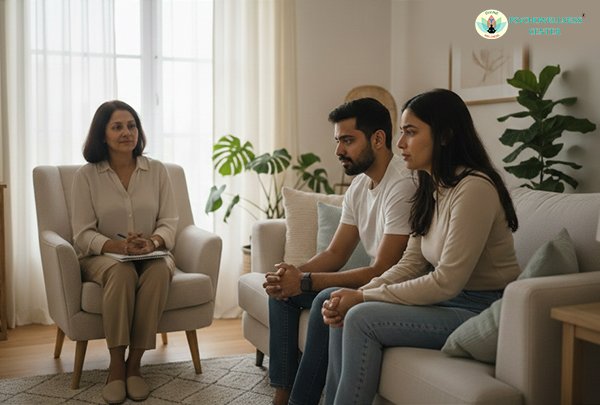
In therapy, the counsellor guides couples through structured mirroring exercises. One partner speaks while the other:
- Listens without interrupting
- Reflects what they heard
- Asks if the reflection is accurate
The therapist may ask:
- “Can you identify what your partner may be feeling at this moment?”
- “Can you put that into your own words?”
This structured format reduces chaos in communication. It teaches couples a skill they can practice at home. At clinics offering the best couple counselling, emotional mirroring is often foundational because it addresses core attachment needs.
Emotional Mirroring and Conflict Resolution
During heated discussions, partners often focus on proving who is right. Emotional mirroring shifts the focus to understanding who is hurting.
For example, instead of saying:
- “You never listen to me.”
- A mirrored response would be:
- “It appears you feel unnoticed when I don’t respond quickly.”
That subtle shift changes the tone of the interaction.
Over time, couples begin to identify emotional triggers beneath surface arguments. What appears as anger may hide fear of abandonment. What looks like criticism may mask longing for reassurance. This awareness transforms reactive patterns into opportunities for self-improvement.
Setting Emotional Limits
Mirroring does not mean tolerating harmful behaviour. It works best when combined with a healthy boundary. A partner can validate feelings wh ile still expressing limits.
For example:
“I understand that you’re feeling frustrated, and I truly want to hear what you have to say. But I cannot continue this conversation if voices are raised.”
Rebuilding Connection Through Mirroring
Couples experiencing long-standing couple conflicts often report feeling emotionally disconnected. Emotional mirroring rebuilds connection gradually:
- It restores respect.
- It nurtures empathy.
- It reduces blame cycles.
- It strengthens attachment security.
Many couples in urban areas search for support using phrases like Couple Counselling near me when they feel stuck and unsure how to reconnect. Therapy provides structured tools like mirroring that may not develop naturally without guidance.
Centres offering the best couple counselling in Janakpuri and the best couple counselling in Dwarka often incorporate experiential communication exercises that allow partners to practice empathy in real time, under professional supervision.
Practical Steps to Practice at Home
If you want to try emotional mirroring today:
- Choose a calm moment.
- Set a timer for five minutes—one person speaks, the other listens.
- Reflect on what you heard before responding.
- Ask, “Did I understand you correctly?”
- Switch roles.
Avoid defending yourself during the listening phase. The goal is understanding, not winning.
CONCLUSION
Emotional mirroring is more than a communication skill—it builds emotional safety and deeper understanding between partners. By listening with empathy and reflecting feelings accurately, couples reduce conflict, strengthen trust, and restore closeness. Over time, this mindful practice replaces defensiveness with compassion, helping relationships grow stronger even during disagreements.
For those seeking counselling in Delhi or the best relationship counselling near me, Psychowellness Center Contact: 011-47039812 / 7827208707), located in Dwarka Sector-17 and Janakpuri, New Delhi, offers professional and personalised support. You can also opt for online counselling at TalktoAngel for flexible and accessible therapy from home.
To understand relationship dynamics more deeply and gain practical insights into improving emotional connection, you can watch this informative video on relationship counselling. It offers valuable guidance on strengthening communication, rebuilding trust, and understanding how professional therapy supports couples in creating healthier and more fulfilling partnerships.
Contribution: Dr. R.K. Suri, Clinical Psychologist, and Ms. Riya, Counselling Psychologist
REFERENCE
- Gottman, J. M., & Silver, N. (2015). The seven principles for making marriage work (Revised ed.). Harmony Books.
- Greenberg, L. S., & Johnson, S. M. (1988). Emotionally focused therapy for couples. Guilford Press.
- Johnson, S. M. (2019). Attachment theory in practice: Emotionally focused therapy (EFT) with individuals, couples, and families. Guilford Press.
- Reis, H. T., & Shaver, P. (1988). Intimacy as an interpersonal process. In S. Duck (Ed.), Handbook of personal relationships (pp. 367–389). Wiley.