
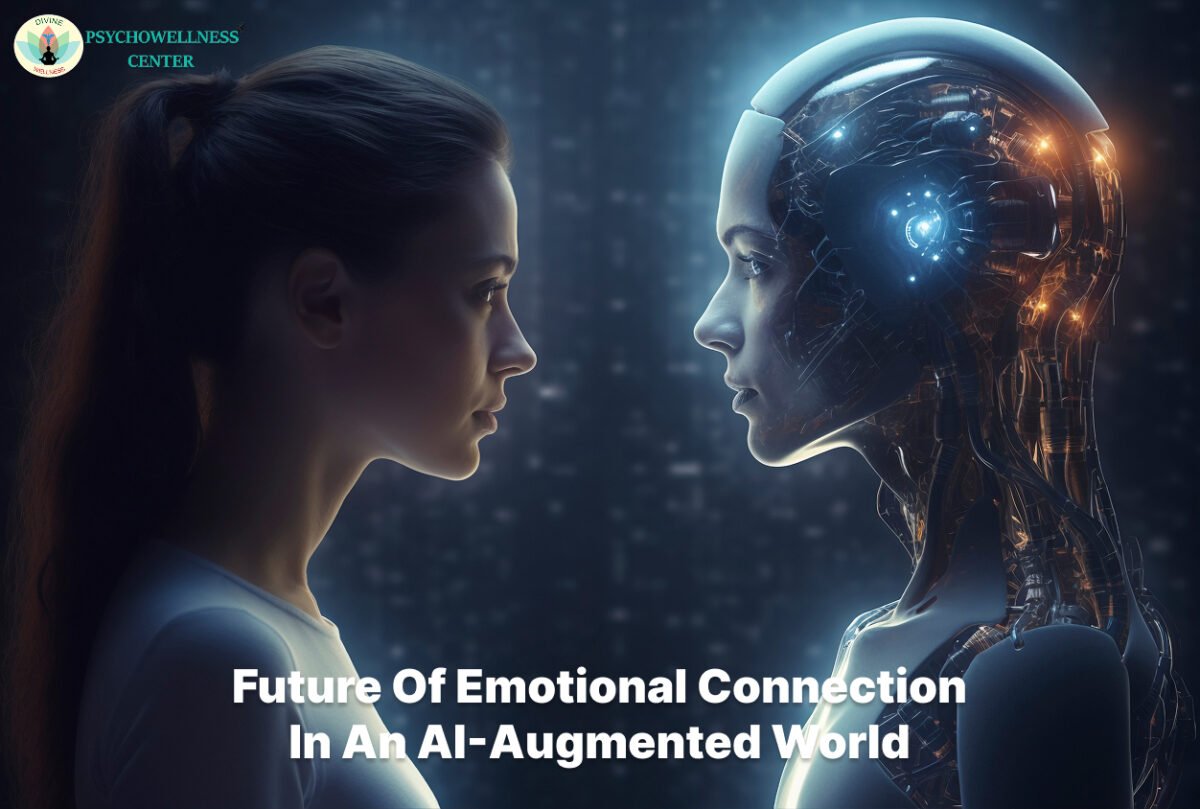
Human beings are fundamentally wired for emotional connection. From early attachment bonds to adult relationships, our psychological well-being relies on empathy, a sense of belonging, and meaningful social interactions. As artificial intelligence becomes increasingly embedded in daily life—through chatbots, virtual companions, emotion-sensing systems, and social algorithms—the nature of emotional connection is undergoing a profound transformation. This raises an essential question: What will emotional connection look like in an AI-augmented world? Will technology enhance human empathy, or will it quietly erode our capacity for authentic relationships?
Emotional Connection: A Psychological Foundation
In psychology, emotional connection is rooted in attachment theory, emotional attunement, and interpersonal neurobiology. Humans develop a sense of safety and identity through responsive relationships. Emotional connection involves:
- Mutual empathy
- Emotional reciprocity
- Nonverbal cues and shared experiences
- Psychological presence
Neuroscience shows that emotional bonding activates brain systems involving oxytocin, dopamine, and the mirror neuron system, reinforcing trust and social cohesion. AI, however, does not experience emotions—it simulates emotional responses. This distinction is critical to understanding both the promise and the risks of AI-mediated connection.
How AI Is Already Shaping Emotional Interaction
AI is no longer a distant concept—it already participates in emotional spaces through:
- Conversational AI and mental health chatbots
- Virtual companions and social robots
- Emotion recognition algorithms
- Algorithm-driven social media interactions
These systems are designed using affective computing, a field focused on detecting and responding to human emotions. While AI can recognise emotional patterns and respond empathetically, it does so through data modelling rather than lived emotional experience. Yet for many individuals—especially those experiencing stress, loneliness, anxiety, or social isolation—AI offers a sense of perceived emotional support.
The Psychological Benefits of AI-Augmented Emotional Support
- Increased Accessibility and Emotional Availability
AI-based emotional support tools are available 24/7, reducing barriers such as cost, stigma, and geographical limitations. For individuals hesitant to seek human connection due to fear of judgment or social anxiety, AI can serve as a low-risk emotional entry point. Research shows that people often disclose sensitive emotions more freely to nonjudgmental systems, a phenomenon known as the online disinhibition effect.
2. Emotional Skill Development
AI tools can help users practice:
- Emotional labeling
- Cognitive reframing
- Self-reflection
- Stress regulation
These skills are central to emotional intelligence and psychological resilience. When designed ethically, AI can support emotional growth rather than replace human relationships.
3. Support for Mental Health and Neurodiversity
AI can be particularly helpful for individuals with:
- Autism spectrum conditions
- Social communication difficulties
- Trauma-related hypervigilance
In these contexts, predictable and structured AI interactions may feel safer than complex human dynamics.
The Risks: Emotional Substitution and Relational Atrophy
Despite its benefits, AI-mediated emotional connection raises serious psychological concerns.
- Illusion of Emotional Reciprocity:- AI can simulate empathy, but it cannot offer mutual emotional vulnerability, a core requirement for authentic connection. Over-reliance on AI may create an emotional illusion, where users feel understood without true relational engagement. This can weaken real-world social skills and increase emotional avoidance.
- Attachment to Non-Human Entities:- Psychologists warn of maladaptive attachment to AI companions, particularly among emotionally vulnerable individuals. Unlike human relationships, AI interactions lack boundaries, conflict, and growth—elements essential for psychological maturity. Without these challenges, emotional development may stagnate.
- Reduced Tolerance for Human Complexity:- Human relationships are unpredictable, emotionally demanding, and imperfect. AI, by contrast, is optimized for responsiveness and agreement. This may lower tolerance for emotional discomfort, disagreement, and repair in real relationships. Over time, this could contribute to relational withdrawal and emotional numbness.
Redefining Emotional Connection in the AI Era
The future of emotional connection will likely involve augmentation rather than replacement. Healthy integration requires intentional psychological and ethical frameworks.
Human–AI Emotional Collaboration
AI can:
- Support emotional awareness
- Encourage reflection
- Facilitate access to human care
But it should never replace:
- Human intimacy
- Therapeutic relationships
- Community belonging
Psychologists emphasize the importance of relational depth, something AI cannot authentically replicate.
Ethical and Psychological Design Principles
To protect emotional well-being, AI systems must be designed with:
- Emotional transparency (AI clearly identified as non-human)
- Boundaries that encourage human connection
- Trauma-informed design
- Avoidance of emotional dependency
Mental health professionals play a crucial role in shaping these ethical standards.
The Role of Emotional Literacy
As AI becomes more emotionally interactive, emotional literacy will be a critical future skill. Individuals must learn to:
- Distinguish simulated empathy from genuine connection
- Recognise emotional needs that require human presence
- Use AI consciously rather than compulsively
Education systems and mental health services must adapt to teach these competencies.
Conclusion
The future of emotional connection in an AI-augmented world is not predetermined—it is a conscious choice. Artificial intelligence can either deepen emotional disconnection or enhance self-awareness and empathy, depending on how thoughtfully it is integrated into our lives. While AI tools may assist in emotional monitoring, mental-health support, and self-reflection, human connection remains irreplaceable. True emotional bonds are built through shared vulnerability, mutual growth, and authentic psychological presence—experiences no algorithm can fully replicate.
As technology increasingly mediates our emotional lives, seeking meaningful human support becomes even more vital. Centres such as Psychowellness Center, with clinics in Dwarka Sector-17 and Janakpuri, provide professional psychological assessment and therapy for stress, anxiety, emotional regulation, and relational challenges arising in a digitally driven world. Online counselling platforms like TalktoAngel further bridge the gap by offering accessible emotional support from qualified professionals—making it easier for individuals searching for the best psychologist near me to find timely, compassionate care. In an increasingly digital era, choosing intentional human connection—supported by ethical AI and guided by skilled mental-health professionals—may be one of the most important psychological acts for sustaining emotional well-being and humanity itself.
Contribution: Dr. R.K. Suri, Clinical Psychologist, and Ms. Mansi, Counselling Psychologist
References
- Bowlby, J. (1988). A secure base: Parent-child attachment and healthy human development. Basic Books.
- Turkle, S. (2011). Alone together: Why we expect more from technology and less from each other. Basic Books.
- Damasio, A. (1999). The feeling of what happens: Body and emotion in the making of consciousness. Harcourt Brace.
- Picard, R. W. (1997). Affective computing. MIT Press.
- Fogg, B. J. (2003). Persuasive technology: Using computers to change what we think and do. Morgan Kaufmann.