
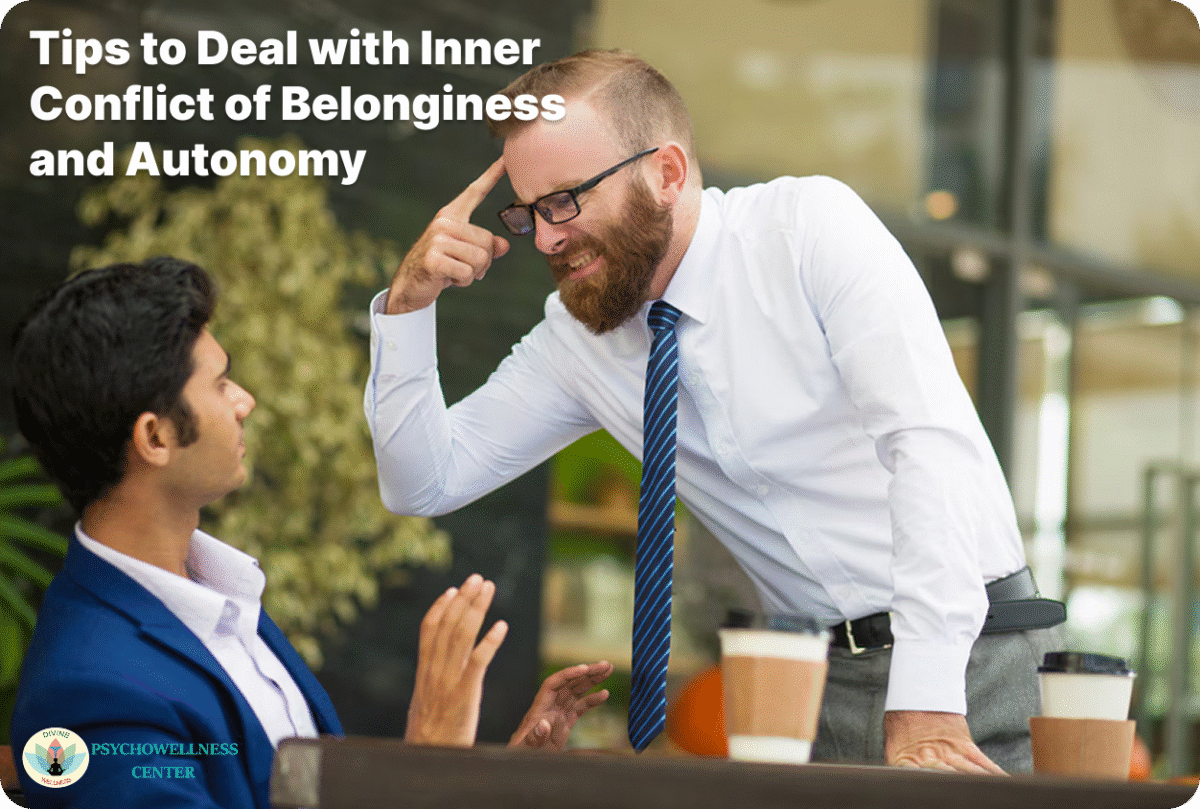
Have you ever found yourself torn between wanting to feel deeply connected to others and wanting to protect your independence? That quiet tug-of-war inside, between belonging and autonomy, is something most of us face at some point in life. On one hand, we long to belong. We crave closeness, understanding, and the comfort of being accepted by someone who sees us as we are. On the other hand we fear losing ourselves, our voice, our freedom, our individuality, in the process of connecting too much. This emotional push and pull can create an inner storm that leaves us feeling confused, restless, and unsure of where we stand in relationships.
This conflict isn’t a flaw in your personality disorder. It’s a reflection of two deeply human needs. The need for belongingness makes us social and compassionate. The need for autonomy gives us strength, self-direction, and confidence. When either of these needs dominates or is neglected, imbalance and emotional distress often follow.
Understanding the Tug Within
Think of belongingness as the warmth of being part of a circle, friends, family, community, a space where you feel seen and valued. It fulfils our instinct to connect and to share life with others. But when belonging becomes dependence, when we start defining our worth through others’ approval, we begin to lose touch with our own inner compass.
Autonomy, in contrast, is the space we carve for ourselves, the right to choose, to explore, and to stand alone. It’s what helps us grow, learn, and stay true to our values. Yet, when autonomy becomes isolation or defensiveness, we risk pushing people away, even those who genuinely care. The goal isn’t to pick one side. It’s to find a rhythm where both coexist peacefully, where you can love deeply without losing yourself and be independent without feeling lonely.
Learning to Listen to Both Voices
Start by slowing down and tuning in. When you feel torn between wanting closeness and needing distance, ask yourself: What do I need right now? Maybe it’s reassurance. Maybe it’s space to breathe. Neither answer is wrong. The trick is to recognise your shifting needs with compassion rather than judgment. It helps to remember that belongingness and autonomy are not enemies; they are dance partners. Sometimes one leads, sometimes the other, but both must move together for the dance to flow.
If you tend to lean too much toward belonging, practice small acts of independence, spend time alone, make a personal decision without seeking validation, or pursue a hobby that’s purely yours. This strengthens your sense of self. If you often guard your autonomy fiercely, try allowing others in, ask for help, share your fears, or expressing affection. Vulnerability does not erase your independence; it deepens it.
Building Emotional Balance
Balancing these forces begins with self-awareness. Journaling, mindfulness, or quiet reflection can help you notice when you’re overextending in relationships or withdrawing too much. Pay attention to your emotional triggers. Do you feel guilty when you say no? Do you feel anxious when someone gets too close? These patterns reveal where healing is needed.
Developing healthy boundaries is another cornerstone. Boundaries aren’t walls; they are bridges that define where you end and the other person begins. They allow connection without confusion, closeness without control. Self-compassion also matters. Many people blame themselves for being “too needy” or “too distant.” The truth is, both needs are valid. Healing begins when you accept your dual nature, the part that yearns to connect and the part that values freedom.
Seeking Support When It Feels Overwhelming
Sometimes, the inner conflict between belongingness and autonomy can feel paralysing. You might find yourself repeating unhealthy relationship patterns, clinging too tightly or distancing too soon, without knowing why. Professional help can offer clarity and tools to break the cycle.
Online counselling at TalktoAngel provides access to trained therapists who help individuals understand the roots of this conflict, often linked to early attachment patterns or past emotional experiences. Therapy helps you build emotional control, assertiveness, and self-trust, all essential for balancing closeness and independence.
For those who prefer face-to-face interaction, offline counselling at Psychowellness Center offers a compassionate and structured environment to work through these inner struggles. Through personalised therapy sessions, clients learn how to nurture relationships while maintaining a strong sense of self.
Conclusion
When belonging and autonomy find balance, life starts to feel lighter. You no longer chase connection out of fear of being alone, nor guard your freedom out of fear of being hurt. You begin to live from a place of choice, not conflict. True belonging happens when you show up as your authentic self, not the version others expect, but the one that feels real and whole. True autonomy isn’t about isolation; it’s about having the confidence to love freely without losing your voice. You can stand tall in your individuality while still holding someone’s hand. That’s not a contradiction; that’s harmony.
If you find yourself caught between the need to belong and the desire to be free, take a breath. Healing is not about silencing either voice; it’s about letting both sing in tune. With patience, self-reflection, and sometimes a bit of guidance, you can discover that belonging to others and belonging to yourself are two sides of the same beautiful truth.
For those who feel stuck or overwhelmed by these emotional conflicts, support is available. The Psychowellness Center in Dwarka Sector-17 and Janakpuri, New Delhi (011-47039812 / 7827208707) offers in-person therapy to help you strengthen self-worth, navigate relationship patterns, and build emotional balance. If you prefer flexible, private support from home, TalktoAngel provides trusted online counselling with experienced top psychologists who can guide you in creating healthier boundaries, deeper connections, and a more grounded sense of self.
Contribution: Dr. R.K. Suri, Clinical Psychologist, and Ms. Mansi, Counselling Psychologist
References
- Deci, E. L., & Ryan, R. M. (2000). The “what” and “why” of goal pursuits: Human needs and the self-determination of behaviour. Psychological Inquiry, 11(4), 227–268. https://doi.org/10.1207/S15327965PLI1104_01
- Baumeister, R. F., & Leary, M. R. (1995). The need to belong: Desire for interpersonal attachments as a fundamental human motivation. Psychological Bulletin, 117(3), 497–529. https://doi.org/10.1037/0033-2909.117.3.497
- Bowlby, J. (1988). A secure base: Parent-child attachment and healthy human development. Basic Books.
- Ryan, R. M., & Deci, E. L. (2017). Self-determination theory: Basic psychological needs in motivation, development, and wellness. Guilford Press.