
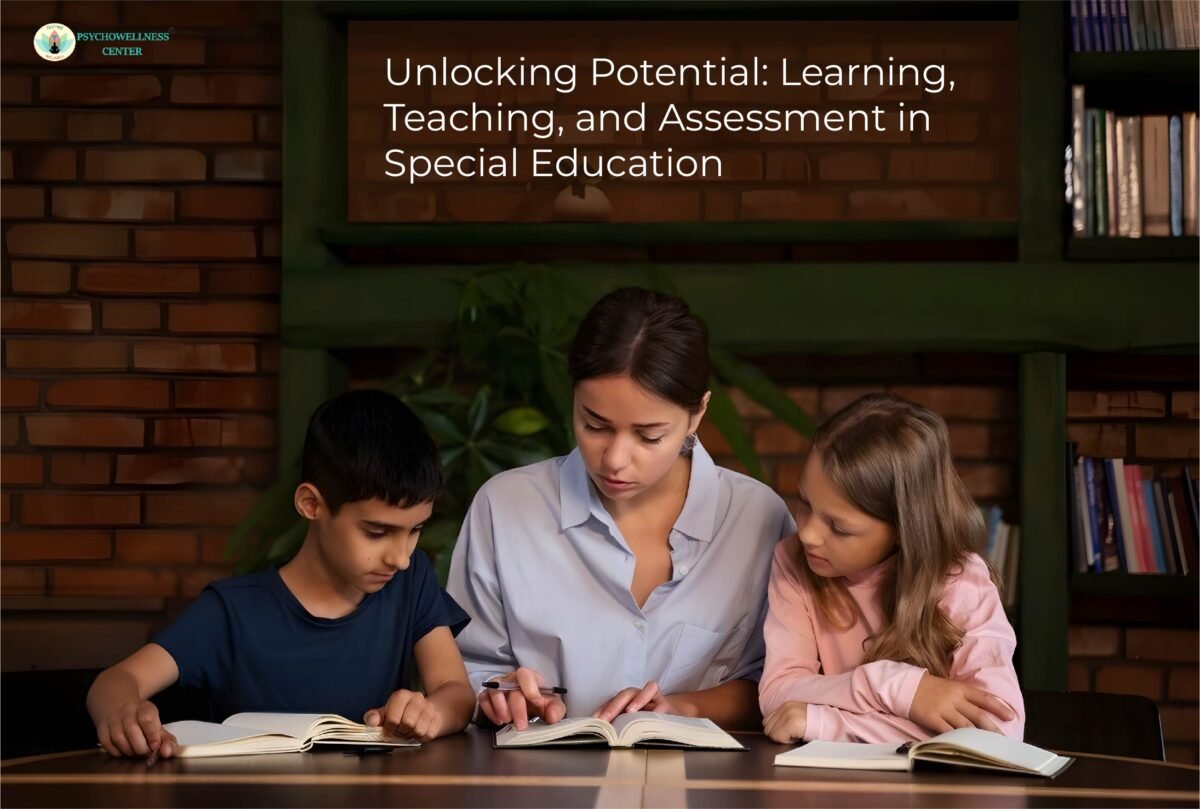
Special education is not a separate or inferior system of learning—it is a highly specialised, psychologically informed approach designed to meet the diverse needs of children who learn differently. Rooted in empathy, evidence-based practices, and individualised planning, special education supports learners across cognitive, emotional, behavioural, and developmental domains. For many child & adolescent learners, this approach becomes the foundation for confidence, independence, and long-term well-being.
At the heart of special education lies an understanding that learning challenges are not failures, but variations in development. Children may experience developmental delay, emotional dysregulation, or neurodevelopmental conditions that affect how they process information, communicate, and interact with the world. When education is aligned with psychological insight and therapeutic support, learning becomes accessible and empowering.
Learning in Special Education: Understanding Diverse Needs
Learning in special education extends far beyond academic achievement. It includes communication, attention, emotional regulation, social skills, and adaptive functioning. Learners may present with specific learning disabilities such as dyslexia, dysgraphia, or dyscalculia, which impact reading, writing, or mathematical reasoning despite average or above-average intelligence.
Some children experience learning difficulties linked to attention, memory, or processing speed, often seen in learners with ADHD. Others may face challenges related to autism, where social communication, sensory processing, and flexibility of thinking require structured and supportive learning environments. Students with a communication disorder may struggle with expressive or receptive language, articulation, or pragmatic social language, affecting both academic performance and peer relationships. Emotional and behavioural challenges can also influence learning. Conditions such as conduct disorder may present as persistent difficulties with rule-following, impulse control, and emotional regulation, requiring coordinated educational and psychological intervention. Understanding these diverse profiles allows educators and mental health professionals to design learning experiences that align with each child’s strengths while addressing their specific needs.
Teaching in Special Education: Individualised and Therapeutic
Teaching in special education is intentional, adaptive, and deeply individualised. Instruction is designed and delivered by trained special educators who collaborate closely with psychologists, therapists, and families. Together, they create structured yet flexible environments where children feel safe to learn and grow.
The Individualised Education Program (IEP) acts as a personalised roadmap, outlining academic goals, functional skills, accommodations, and therapeutic services. Teaching strategies often include explicit instruction, task analysis, multisensory learning, visual supports, and predictable routines—approaches particularly effective for children with attention, communication, or sensory challenges.
Behavioural and emotional support are critical components of effective teaching. Evidence-based psychological approaches such as CBT (Cognitive Behavioural Therapy) and ACT (Acceptance and Commitment Therapy) principles are often integrated into classroom strategies to help children manage anxiety, frustration, negative thought patterns, and emotional outbursts. These approaches support emotional regulation, resilience, and positive behaviour change.
Therapeutic Support in Special Education
Special education is most effective when combined with therapeutic services that address developmental and functional needs. Many learners benefit from allied health interventions such as OT and PT (Occupational Therapy and Physical Therapy), which support fine motor skills, sensory integration, posture, mobility, and daily living skills.
Speech Therapy (ST) plays a vital role for children with speech delays, language impairments, and social communication challenges. Speech therapists work on articulation, vocabulary, comprehension, and pragmatic language, enabling learners to express themselves confidently and engage meaningfully with others. This multidisciplinary approach ensures that learning is supported not just academically, but physically, emotionally, and socially.
Assessment in Special Education: Measuring Growth Meaningfully
Assessment in special education focuses on progress rather than comparison. Educators use formative assessments, curriculum-based measurements, and functional observations to understand how a child is developing over time. Accommodations and modifications ensure that assessments accurately reflect a learner’s true abilities rather than their limitations.
For children with developmental or psychological challenges, assessment is a tool for understanding—not labeling. It guides instructional planning, therapeutic intervention, and goal setting, ensuring that support remains responsive and effective.
Collaboration: A Shared Responsibility
Successful special education relies on collaboration among educators, therapists, psychologists, parents, and the students themselves. Families provide essential insight into a child’s strengths, challenges, and emotional needs, while students are encouraged to develop self-awareness and self-advocacy skills. When education and mental health work together, children experience consistency, trust, and meaningful progress.
Redefining Success in Special Education
Success in special education is not defined by grades alone. It is seen in improved emotional regulation, increased independence, better communication, stronger relationships, and reduced anxiety. For children facing complex learning and behavioral challenges, these outcomes represent powerful, life-changing growth.
Conclusion
Special education is a commitment to understanding, inclusion, and possibility. By integrating psychological insight, therapeutic support, and individualized teaching, it empowers every learner to reach their potential—academically, emotionally, and socially. When learning challenges, developmental concerns, or emotional difficulties feel overwhelming for children and families, timely professional guidance can make a meaningful difference. If you are searching for the best special educator near me, along with comprehensive psychological and therapeutic support, remember that help is easily accessible.
TalktoAngel is a leading platform for online therapy and mental health support, offering specialized services for children, adolescents, parents, and educators. With a team of experienced psychologists and mental health professionals in India, TalktoAngel provides expert guidance for learning difficulties, behavioral concerns, emotional regulation, and developmental needs. For compassionate, confidential, and evidence-based support, you can also reach out to the Psychowellness Center at (+91 78272 08707) or (+91 11 4707 9079) and take a confident step toward holistic growth and wellbeing for every learner.
Contribution: Dr. R.K. Suri, Clinical Psychologist, and Ms. Drishti Rajore , Counselling Psychologist
References
- American Psychiatric Association. (2022). DSM-5-TR: Diagnostic and statistical manual of mental disorders (5th ed., text rev.). American Psychiatric Publishing.
- Florian, L., & Black-Hawkins, K. (2011). Exploring inclusive pedagogy. British Educational Research Journal, 37(5), 813–828. https://doi.org/10.1080/01411926.2010.501096
- National Research Council. (2001). Educating children with autism. National Academies Press. https://doi.org/10.17226/10017