
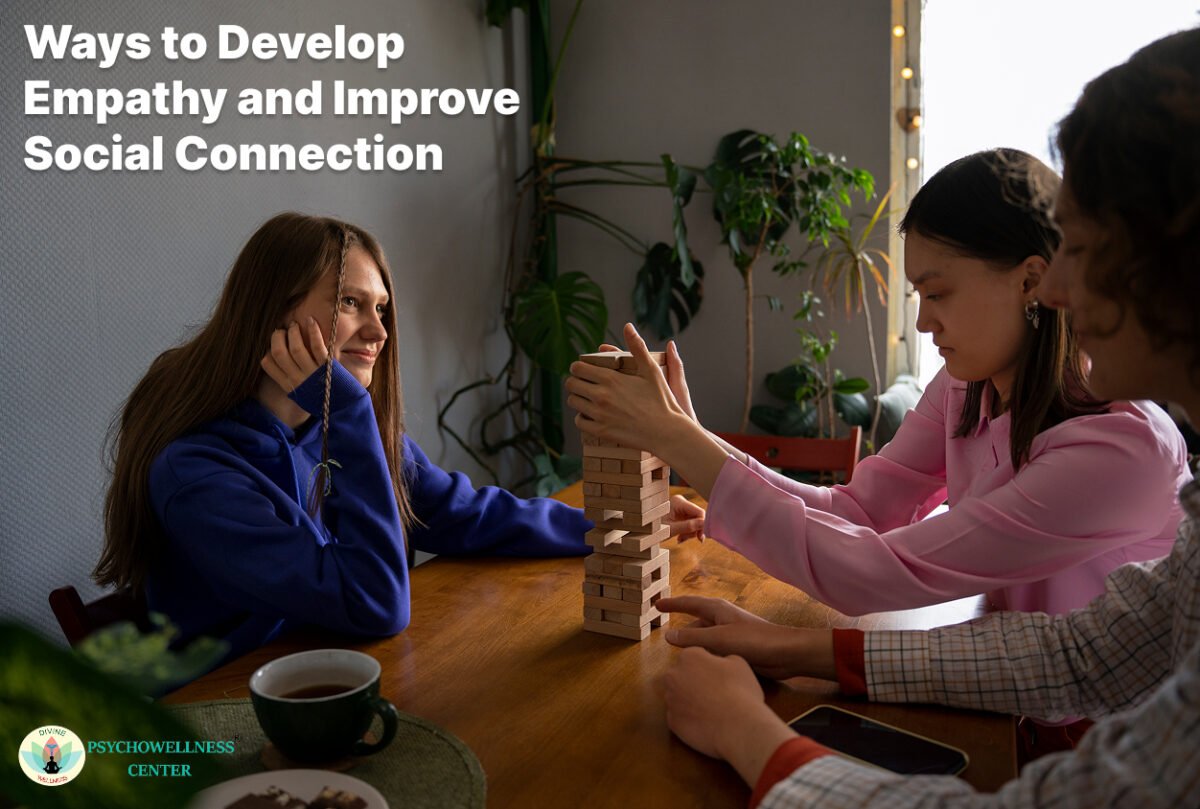
In an increasingly fast-paced and digital world, meaningful social connections have become more challenging to maintain. Despite being more “connected” than ever through social media, many individuals report feelings of isolation, loneliness, and emotional disconnection. At the core of healthy relationships lies empathy, the ability to understand and share the feelings of another person. Empathy serves as the foundation of strong social relationships, fostering cooperation, trust, and emotional closeness (Decety & Cowell, 2014).
Developing empathy is not just a desirable social skill; it has significant psychological benefits. Individuals with higher empathy tend to experience greater life satisfaction, better mental health, and more fulfilling relationships (Zaki, 2014). Fortunately, empathy is not a fixed trait, it can be cultivated through deliberate practice, reflection, and social engagement. This article explores evidence-based strategies to develop empathy and enhance social connection.
- Practice Active Listening
Active listening is more than hearing words; it involves fully attending to the speaker, understanding their message, and responding thoughtfully. Many social conflicts arise not from differing opinions but from miscommunication and the feeling of being unheard.
Key components of active listening include:
- Maintaining eye contact and an open posture
- Avoiding interruptions or judgment
- Reflecting back what the person is expressing (“It sounds like you felt…”)
Research shows that active listening strengthens interpersonal trust and emotional intimacy, making others feel valued and understood (Weger et al., 2014). Practicing this skill consistently can create deeper connections in both personal and professional relationships.
- Cultivate Emotional Awareness
Empathy begins with recognizing and understanding one’s own emotions. Emotional awareness allows individuals to distinguish between their feelings and those of others, reducing projection and bias. Mindfulness practices, journaling, or therapy can enhance self-awareness and emotional regulation, which are essential for empathic engagement (Goleman, 2006).
By understanding their own emotional responses, individuals are better equipped to interpret others’ feelings accurately and respond with compassion rather than defensiveness or judgment.
- Engage in Perspective-Taking
Perspective-taking involves imagining oneself in another person’s situation to understand their thoughts, feelings, and motivations. This cognitive aspect of empathy helps bridge gaps in understanding and reduces judgment.
Strategies to improve perspective-taking include:
- Asking open-ended questions about someone’s experience
- Imagining yourself in the same situation to understand the feelings involved.
- Considering cultural, social, or personal factors that shape others’ behavior
Studies indicate that training in perspective-taking enhances empathic accuracy and fosters prosocial behavior, including cooperation, support, and conflict resolution (Batson et al., 2002).
- Develop Compassion Through Small Acts of Kindness
Empathy is closely linked with compassion, the desire to alleviate another person’s suffering. Engaging in small acts of kindness, volunteering, or offering support in daily interactions can enhance emotional sensitivity and social connection.
Studies suggest that compassion strengthens social connections and boosts the giver’s psychological well-being while benefiting the recipient (Singer & Klimecki, 2014).
Intentional acts of empathy create a positive feedback loop, encouraging reciprocal trust and connection.
- Reflect on Biases and Assumptions
Implicit biases and assumptions can hinder empathic understanding. Individuals often interpret others’ actions through the lens of their own experiences, which can lead to misunderstanding or judgment.
Counseling, journaling, or mindful reflection can help identify these biases and foster a more open and nonjudgmental attitude. Being aware of personal prejudices enables individuals to respond to others’ experiences with greater empathy, promoting deeper and more authentic social connections.
- Engage in Social and Emotional Learning (SEL)
Social and emotional learning (SEL) programs, commonly used in educational and organizational settings, teach skills such as self-awareness, relationship management, and social problem-solving. Practicing these skills in daily life enhances empathy, cooperation, and communication.
For example, exercises such as role-playing, group discussions, and conflict-resolution activities help individuals understand diverse perspectives and navigate social challenges with sensitivity (Durlak et al., 2011). Incorporating SEL principles into adult learning or personal development can significantly improve interpersonal effectiveness.
- Foster Meaningful Face-to-Face Interactions
While technology enables constant virtual communication, research indicates that in-person interactions promote deeper empathy and connection. Nonverbal cues such as facial expressions, tone of voice, and body language convey emotional information that is often lost in digital communication.
Spending quality time with family, friends, or community members, participating in group activities, or joining clubs or volunteer organizations can enhance social skills and empathy. Even brief moments of genuine face-to-face engagement can strengthen trust and emotional closeness.
- Practice Mindfulness and Compassion Meditation
Mindfulness and compassion-based meditation practices cultivate awareness of one’s own and others’ emotions, promoting empathic concern and emotional control. Techniques such as loving-kindness meditation (LKM) encourage individuals to focus on the well-being of themselves and others, enhancing prosocial attitudes and reducing social anxiety (Klimecki et al., 2013).
Regular mindfulness practice has been linked to increased activity in brain regions associated with empathy and emotional processing, suggesting that it can create lasting neurobiological changes that support social connection.
Conclusion
Empathy is a foundational skill for building meaningful relationships, fostering trust, and improving social connection. By practicing active listening, cultivating emotional awareness, engaging in perspective-taking, performing acts of kindness, reflecting on biases, participating in social-emotional learning, and nurturing face-to-face interactions, individuals can develop deeper empathic skills. Complementing these strategies with mindfulness and compassion-based practices can further enhance emotional attunement and prosocial behavior.
Developing empathy is not only beneficial for personal relationships but also contributes to mental health, community cohesion, and overall life satisfaction. In a world where isolation and digital distraction are increasingly common, cultivating empathy is an essential step toward more connected, compassionate, and fulfilling human interactions.
For anyone struggling to build empathy, manage emotions, or form meaningful social connections, seeking support from a mental health professional can make the journey easier and more effective. The Psychowellness Center in Dwarka Sector-17 and Janakpuri offers specialized services such as emotional regulation therapy, interpersonal skills training, mindfulness-based therapy, and family or relationship counseling to help individuals enhance their capacity to comprehend and relate to others. You may contact them at 011-47039812 / 7827208707. For those who prefer the convenience of online therapy, TalktoAngel provides access to experienced psychologists who focus on empathy development, communication skills, social anxiety, and emotional intelligence. With expert guidance, you can cultivate deeper emotional awareness, build healthier relationships, and create more meaningful connections in your everyday life.
Contribution: Dr. R.K. Suri, Clinical Psychologist, and Ms. Sakshi Dhankhar, Counselling Psychologist
References
Batson, C. D., Early, S., & Salvarani, G. (2002). Perspective taking: Imagining how another feels versus imagining how you would feel. Personality and Social Psychology Bulletin, 28(6), 731–739. https://doi.org/10.1177/0146167202289007
Decety, J., & Cowell, J. M. (2014). The complex relation between morality and empathy. Trends in Cognitive Sciences, 18(7), 337–339. https://doi.org/10.1016/j.tics.2014.04.008
Durlak, J. A., Weissberg, R. P., Dymnicki, A. B., Taylor, R. D., & Schellinger, K. B. (2011). The impact of enhancing students’ social and emotional learning: A meta-analysis of school-based universal interventions. Child Development, 82(1), 405–432. https://doi.org/10.1111/j.1467-8624.2010.01564.x
https://www.psychowellnesscenter.com/Blog/tips-to-strengthen-your-social-connections/
https://www.psychowellnesscenter.com/Blog/how-to-build-empathy-and-compassion/
https://www.psychowellnesscenter.com/Blog/10-tips-to-improve-your-emotional-intelligence/
https://www.psychowellnesscenter.com/Blog/why-vulnerability-as-the-key-to-emotional-connection/
https://www.psychowellnesscenter.com/Blog/what-are-the-best-ways-to-improve-eq-in-children/
https://www.psychowellnesscenter.com/Blog/how-to-practice-emotional-intelligence-in-daily-life/
https://www.psychowellnesscenter.com/Blog/what-is-emotional-quotient-can-it-be-improved-and-how/