
Emotions are a fundamental part of being human, yet there are moments when feelings become confusing, overwhelming, or even unrecognizable. You may feel uneasy, restless, or emotionally heavy without being able to explain why. This inability to identify or express emotions can lead to frustration, strained relationships, and mental exhaustion. In such situations, seeking professional support can be transformative. A Counseling Center Near me can offer the right environment to explore and understand these hidden emotional experiences.
Understanding the Inability to Name Feelings
The experience of not being able to identify or describe emotions is sometimes linked to a psychological concept called alexithymia. People facing this often struggle to differentiate between emotions and physical sensations. For instance, anxiety may feel like chest tightness, or sadness may appear as fatigue rather than a clear emotional state.
This disconnect can stem from various factors such as childhood experiences, trauma, cultural conditioning, or even chronic stress. When emotional awareness is limited, individuals may suppress feelings unintentionally, leading to confusion and internal conflict.
Why It Matters to Identify Your Emotions
Being able to name emotions is essential for mental well-being. Emotions act as signals that guide decision-making, relationships, and self-awareness. When you are unable to pinpoint your feelings:
- You could find it difficult to interact with people in an efficient manner.
- Emotional buildup can lead to anger, burnout, or irritability
- Decision-making becomes difficult
- Relationships may feel distant or misunderstood
If you find yourself searching for a psychologist near me, it may already be a sign that you’re ready to better understand your emotional world.
The Role of a Clinical Psychologist
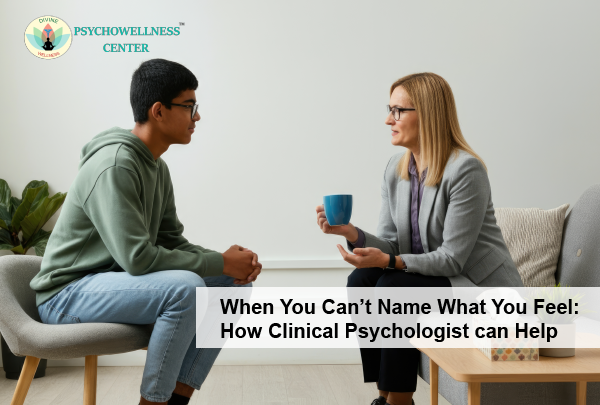
A clinical psychologist is trained to help individuals explore their thoughts, feelings, and behaviors in a safe and structured way. When emotions feel unclear, therapy provides a space to slow down and unpack what’s happening internally.
Here’s how a clinical psychologist can help:
1. Creating Emotional Awareness
Therapists use techniques like mindfulness and guided reflection to help you notice subtle emotional cues. Over time, you learn to recognize patterns and triggers associated with certain feelings.
2. Building Emotional Vocabulary
Sometimes the issue is not the absence of emotion but the lack of language to describe it. Psychologists help expand your emotional vocabulary so you can differentiate between feelings like frustration, disappointment, or sadness.
3. Connecting Mind and Body
Many people experience emotions physically. A clinical psychologist helps bridge the gap between physical sensations and emotional experiences, making it easier to understand what your body is trying to communicate.
4. Addressing Underlying Causes
Unidentified emotions often have deeper roots. Therapy explores past experiences, unresolved conflicts, or suppressed feelings that may be contributing to the current confusion.
5. Developing Healthy Expression
Once emotions are identified, psychologists guide you in expressing them constructively whether through communication, journaling, or behavioral changes.
If you’re considering visiting a Counseling Doctor Near me, know that professional help is not just for crises it’s also for self-discovery and growth.
Common Signs You May Need Help
You might benefit from consulting a clinical psychologist if you notice:
- Frequent mood swings without clear reasons
- Difficulty explaining how you feel
- Feeling emotionally numb or disconnected
- Physical symptoms like headaches or fatigue without medical cause
- Challenges in relationships due to miscommunication
Seeking help from a counseling psychologist near me can provide clarity and direction during such times.
Therapy Approaches That Help
Clinical psychologists use evidence-based therapies tailored to individual needs:
- Cognitive Behavioral Therapy (CBT): Helps identify thought patterns influencing emotions
- Mindfulness-Based Therapy: Enhances present-moment awareness and emotional recognition
- Emotion-Focused Therapy (EFT): Focuses directly on understanding and processing emotions
- Psychodynamic Therapy: Examines unconscious emotions and prior experiences.
These approaches work together to help individuals gradually understand and label their emotional experiences.
Community Support in Delhi’s Janakpuri and Dwarka Sector 17
For individuals living in Delhi, especially around Janakpuri and Dwarka Sector 17, accessible mental health services are available. Seeking professional help locally can make it easier to stay consistent with therapy sessions and build a strong therapeutic relationship.
You can reach out at 011-47039812 / 7827208707 to connect with experienced professionals who provide personalized care and support tailored to your needs.
Breaking the Stigma Around Emotional Confusion
In many cultures, including in India, emotional expression is sometimes discouraged or misunderstood. People are often told to “stay strong” or “ignore feelings,” which can lead to emotional suppression. However, acknowledging that you don’t understand your emotions is not a weakness, it is a step toward self-awareness.
Therapy normalizes these experiences and provides tools to navigate them effectively. Over time, individuals become more confident in understanding and expressing themselves.
The Journey Toward Emotional Clarity
Understanding your emotions is a gradual process. It requires patience, openness, and guidance. With the support of a clinical psychologist, what once felt like a confusing emotional fog can become clearer and more manageable.
You begin to:
- Recognize emotional triggers
- Communicate your needs effectively
- Build healthier relationships
- Develop a stronger sense of self
Conclusion
Not being able to name what you feel can be unsettling, but it is a common and treatable experience. Professional support can help you reconnect with your emotions and lead a more balanced life.
Organizations like Psychowellness Center offer comprehensive mental health services with experienced clinical psychologists who specialize in emotional awareness and therapy. Similarly, TalktoAngel provides accessible online counseling options, making it easier to seek help from the comfort of your home.
Taking the first step toward understanding your emotions can lead to lasting emotional clarity and well-being.
Contributions: Dr. R.K. Suri, Clinical Psychologist, and Ms. Tanu Sangwan, Counselling Psychologist
References
American Psychological Association. (2020). Understanding psychotherapy and how it works. https://www.apa.org
Lane, R. D., & Schwartz, G. E. (1987). Levels of emotional awareness: A cognitive-developmental theory. Journal of Personality Assessment, 55(1-2), 124–134.
LeDoux, J. (2012). Rethinking the emotional brain. Neuron, 73(4), 653–676.
Taylor, G. J., Bagby, R. M., & Parker, J. D. (1997). Disorders of affect regulation: Alexithymia in medical and psychiatric illness. Cambridge University Press.
Greenberg, L. S. (2011). Emotion-focused therapy. American Psychological Association.
https://www.psychowellnesscenter.com/Blog/ways-to-be-real-to-what-you-feel/
https://www.psychowellnesscenter.com/Blog/emotions-vs-feelings-and-ways-to-handle-them-effectively/
https://www.psychowellnesscenter.com/Blog/what-are-the-benefits-of-developing-eq-in-children/
https://www.psychowellnesscenter.com/Blog/5-antidotes-to-overcome-common-fears/