
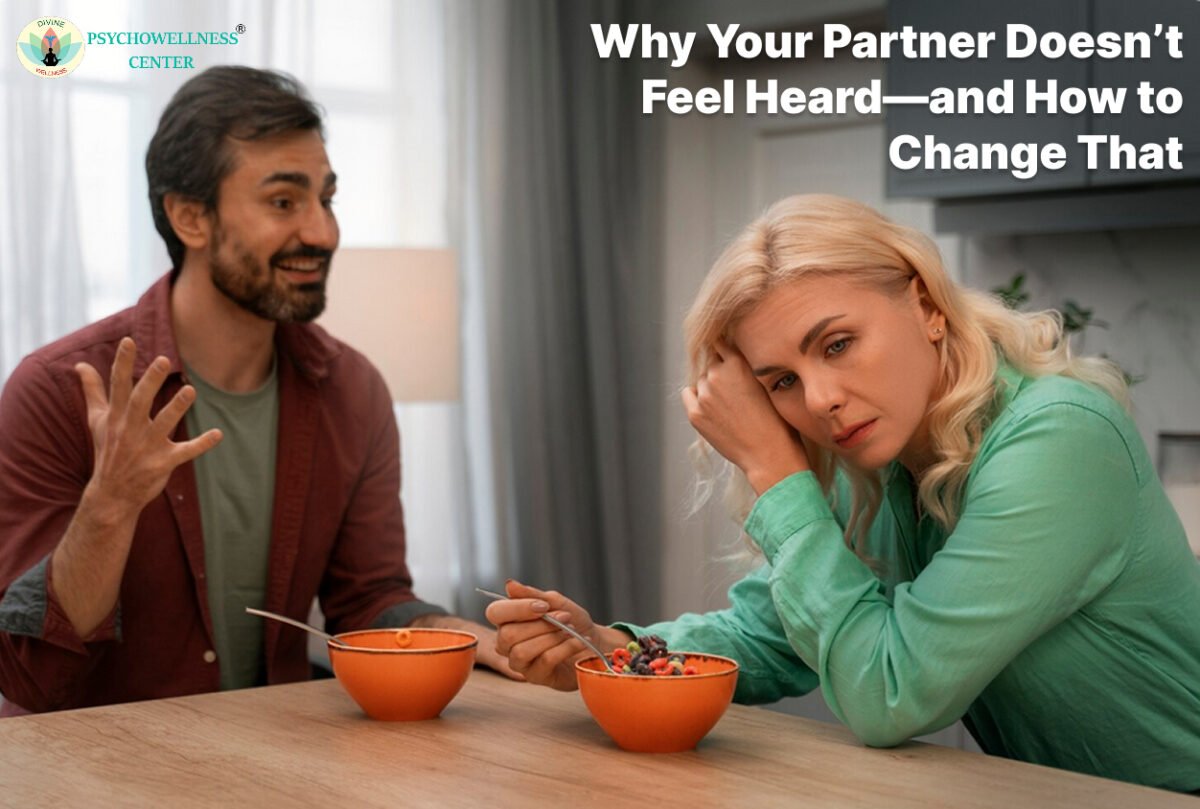
In many relationships, one partner may notice something confusing and painful: “I’m clearly upset, but my partner doesn’t seem hurt at all.” This emotional gap can lead to frustration, anger, loneliness, and growing distance. It may even raise deeper fears about love, care, and intimacy.
However, a partner not showing hurt does not always mean they do not care. Emotional responses are shaped by many factors, including stress, anxiety, depression, past trauma, and even physical health. Understanding why your partner appears unaffected is the first step toward healing and building stronger emotional connections.
Why Your Partner May Not Feel (or Show) Hurt
1. Emotional Shutdown Due to Stress and Anxiety
High levels of stress and anxiety can cause people to emotionally shut down. When someone is overwhelmed by work pressure, family problems, financial worries, or health concerns their nervous system may go into survival mode.
In this state, emotional sensitivity is reduced. Your partner may not be ignoring your pain; they may simply lack the emotional capacity to process it at that moment.
2. Depression and Low Motivation
Depression often blunts emotional reactions. A depressed person may feel numb rather than sad or empathetic. This numbness can look like indifference, but it is actually a symptom of mental exhaustion.
Low motivation can also make it difficult to engage in emotional conversations or respond with warmth. This does not mean your feelings are unimportant; it means your partner may be struggling internally.
3. Past Trauma and Emotional Protection
People with unresolved trauma often develop emotional defenses. If your partner learned early in life that emotions lead to pain, rejection, or emotional abuse, they may have trained themselves not to feel deeply.
This emotional armor once helped them survive, but in adult relationships, it can block closeness and intimacy.
4. Learned Emotional Patterns from Family
Emotional behavior is often learned at home. If your partner grew up in a household where feelings were dismissed, punished, or ignored, they may not recognize emotional hurt as something to respond to.
These early family problem dynamics can silently shape adult communication styles and affect friendships and romantic bonds alike.
5. Anger as a Mask for Vulnerability
Sometimes what looks like emotional coldness is actually hidden anger. Anger can feel safer than sadness or guilt. If your partner reacts defensively or aggressively instead of empathetically, it may be because they do not know how to sit with vulnerability.
6. Physical Health and Emotional Capacity
Poor physical health, chronic pain, lack of sleep, or hormonal imbalances can strongly affect emotional regulation. When the body is depleted, empathy often suffers. Emotional connection requires energy, and sometimes that energy is simply not available.
When It Becomes Harmful
It is important to make a clear distinction:
- Emotional unavailability due to stress or trauma is not the same as intentional emotional abuse.
- However, consistently dismissing, minimizing, or invalidating your feelings can become harmful over time.
If you feel unheard, unsafe, or constantly doubting your emotions, that deserves attention and support.
How to Change the Dynamic
1. Shift From Blame to Curiosity
Instead of saying, “You never care,” try asking,
“I notice you don’t react when I’m hurt, can you help me understand what’s going on for you?”
Curiosity opens doors that blame closes.
2. Choose the Right Moment
Emotional conversations during high stress or anxiety rarely go well. Choose a calm, neutral time when neither of you is overwhelmed. Emotional safety is essential for real connection.
3. Name Your Needs Clearly
Your partner may not instinctively know what you need. Be specific:
- “I need reassurance.”
- “I need you to listen without fixing.”
- “I need emotional presence.”
Clear communication reduces misunderstanding and resentment.
4. Rebuild Intimacy Slowly
Intimacy is not only physical, it is emotional availability, trust, and shared vulnerability. Start small:
- Regular check-ins
- Honest conversations
- Shared activities
Consistency helps rebuild emotional safety.
5. Strengthen Individual Resilience
Both partners benefit from emotional resilience. Self-awareness, emotional regulation, and healthy coping skills improve not only romantic relationships, but also friendships and family bonds.
Practices like journaling, mindfulness, exercise, and creative outlets can support emotional growth.
6. Seek Professional Support
Sometimes love and effort are not enough without guidance. Working with a counsellor can help uncover hidden patterns, unresolved trauma, and communication blocks.
When to Pause and Reflect
Ask yourself:
- Am I feeling consistently lonely in this relationship?
- Are my emotional needs repeatedly dismissed?
- Is there space for growth, or only excuses?
Healthy relationships allow room for emotional repair and mutual care.
Conclusions
If your partner does not seem hurt when you are, it does not automatically mean they lack love. Emotional numbness is often a sign of stress, unresolved trauma, depression, or learned emotional survival strategies.
Change is possible, but it requires honesty, patience, and sometimes professional support. Whether through deeper communication, building emotional resilience, or seeking help from a counsellor or online therapy, emotional connection can be rebuilt.
You deserve a relationship where your feelings matter, where intimacy feels safe, and where emotional pain is met with care, not silence.
If you and your partner are struggling with emotional disconnect, professional support can make a meaningful difference. Relationship counselling, Emotion-Focused Therapy (EFT), Cognitive Behaviour Therapy (CBT), trauma-informed therapy, and communication skills training can help uncover emotional blocks, improve empathy, and rebuild intimacy. You can seek in-person support at Psychowellness Center in Dwarka Sector-17 and Janakpuri (011-47039812 / 7827208707), where experienced psychologists work with couples and individuals to strengthen emotional awareness and connection. For flexible support, TalktoAngel offers online counselling, making it easier to access guidance from the comfort of your home. With the right therapeutic approach, emotional understanding and closeness in relationships can gradually be restored.
Contribution: Dr. R.K. Suri, Clinical Psychologist, and Ms. Drishti Rajore, Counselling Psychologist
REFERENCE
American Psychological Association. (2023). Stress effects on the body.
https://www.apa.org/topics/stress/body
American Psychological Association. (2023). Anxiety disorders.
https://www.apa.org/topics/anxiety
American Psychological Association. (2023). Depression.
https://www.apa.org/topics/depression
Bowlby, J. (1988). A secure base: Parent-child attachment and healthy human development. Basic Books.
https://psycnet.apa.org/record/1988-97335-000
Cleveland Clinic. (2022). Emotional detachment: Symptoms, causes, and treatment.
https://my.clevelandclinic.org/health/symptoms/21739-emotional-detachment
https://www.psychowellnesscenter.com/Blog/feeling-unheard-by-your-partner-things-to-try/
https://www.psychowellnesscenter.com/Blog/how-phubbing-can-be-a-threat-to-your-relationship/
https://www.psychowellnesscenter.com/Blog/why-partners-often-bring-up-the-past/
https://www.psychowellnesscenter.com/Blog/understanding-the-psychology-of-enduring-painful-love/
https://www.psychowellnesscenter.com/Blog/emotional-consequences-of-inconsistent-dating/
https://www.psychowellnesscenter.com/Blog/is-your-hidden-depression-affecting-your-relationship/
https://www.talktoangel.com/blog/how-couple-therapy-bridges-men-logic-and-women-emotion
https://www.psychowellnesscenter.com/Blog/sure-signs-of-defensiveness-in-relationship/
https://www.psychowellnesscenter.com/Blog/evolving-rather-than-revolving-in-your-love-life/