
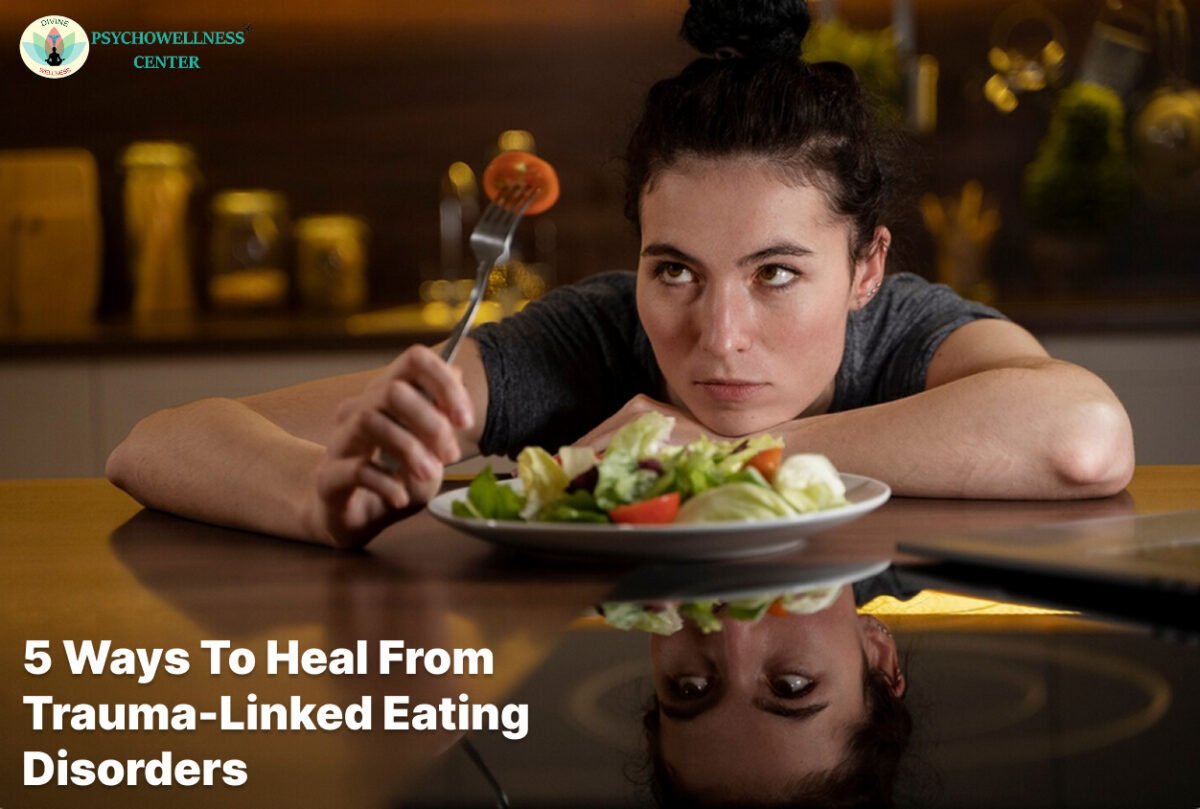
Eating disorders are often misunderstood as issues solely related to food, weight, or appearance. However, psychological research consistently shows that for many individuals, disordered eating behaviours are deeply connected to unresolved trauma. Experiences such as childhood adversity, emotional neglect, bullying, abuse, or prolonged stress can significantly shape how a person relates to food, body image, and control. In such cases, eating disorders are not the core problem but a coping mechanism—an attempt to manage overwhelming emotions when safer strategies feel unavailable.
A compassionate, trauma-informed strategy that treats both psychological traumas and behavioural patterns is necessary to heal from eating disorders connected to trauma. Below are five evidence-based ways to support recovery and rebuild a healthier relationship with food, body, and self.
- Understand the Trauma–Eating Disorder Connection
The first step toward healing is awareness. Trauma affects the brain’s stress-response systems, particularly the amygdala, hippocampus, and prefrontal cortex. People may resort to restricted eating, bingeing, purging, or emotional eating as a means of regaining control, numbing distress, or self-soothing while the nervous system is in a protracted state of fight, flight, or freeze.
From a psychological perspective, eating disorders can function as maladaptive coping mechanisms. They temporarily reduce anxiety, emotional pain, or feelings of helplessness, even though they create long-term harm. Understanding this reduces self-blame and shame, which are major barriers to recovery. Recognising that disordered eating is a survival response—not a personal failure—creates space for self-compassion and openness to therapeutic support.
2. Focus on Nervous System Regulation
Trauma keeps the body in a state of high alert. Until the nervous system feels safe, lasting behavioural change is difficult. This is why trauma-informed care emphasises regulation before restriction or rigid control.
Practices that support nervous system regulation include:
- Mindfulness-based techniques
- Grounding exercises
- Slow breathing and body-based awareness
- Gentle movement (rather than compulsive exercise)
Psychological approaches like Mindfulness-Based Cognitive Therapy and somatic therapies help individuals reconnect with bodily signals in a non-threatening way. Over time, this improves interoceptive awareness—the ability to recognise hunger, fullness, and emotional cues—without fear or judgment. Healing occurs not by forcing “normal eating,” but by helping the body feel safe enough to release survival behaviors.
3. Address Core Beliefs and Emotional Patterns
Trauma often leads to deeply ingrained negative core beliefs such as:
- “I am not good enough”
- “I must be in control to be safe”
- “My body is not acceptable”
- “My needs don’t matter”
These beliefs fuel both eating disorders and emotional distress. Cognitive Behavioural Therapy (CBT) and Acceptance and Commitment Therapy (ACT) are highly effective in identifying and restructuring these patterns. CBT helps challenge distorted thinking related to food, weight, and self-worth, while ACT focuses on psychological flexibility—learning to tolerate discomfort without resorting to harmful behaviours. Together, they help individuals separate their identity from the eating disorder and build healthier coping strategies. Emotional regulation skills learned in therapy also reduce reliance on food-related behaviours to manage stress, anxiety, or trauma triggers.
4. Heal the Relationship with the Body
Trauma can cause individuals to disconnect from their bodies, viewing them as unsafe, shameful, or out of control. This disconnection is a key factor in trauma-linked eating disorders.Body image healing is not about loving how you look—it is about developing body respect and neutrality.
Psychological work focuses on:
- Rebuilding trust in bodily cues
- Reducing body-based shame
- Shifting focus from appearance to functionality
- Practising self-compassion
Trauma-informed therapies, including Emotion-Focused Therapy (EFT), support emotional processing related to body image, while mindfulness practices help individuals observe bodily sensations without judgment.
5. Seek Trauma-Informed Psychological Support
Recovery from trauma-linked eating disorders is rarely linear and should not be attempted alone. Professional psychological support plays a vital role in addressing both trauma history and current eating behaviours in a safe, structured manner.
Therapeutic approaches commonly used include:
- Trauma-focused CBT
- ACT and MBCT
- Emotion-Focused Therapy (EFT)
- Compassion-based interventions
- Supportive counselling
In addition to assessment, therapy helps individuals develop healthier coping strategies, process unresolved trauma, and build resilience. Online counselling platforms like TalktoAngel provide access to licensed psychologists offering evidence-based psychological care in a confidential and supportive environment. For those seeking in-person care, the Psychowellness Center in Dwarka Sector-17 and Janakpuri offers personalised, trauma-informed treatment with some of the best psychologists near me, ensuring professional guidance throughout the recovery journey.
Conclusion
Healing from trauma-linked eating disorders is not about perfection or quick fixes—it is about safety, understanding, and patience. As trauma is processed and emotional regulation improves, disordered eating behaviours gradually lose their protective role. Recovery becomes less about controlling food and more about rebuilding trust with the body, reclaiming autonomy, strengthening self-worth, and restoring emotional balance.
With the right psychological support, evidence-based therapy, and a compassionate, trauma-informed approach, individuals can move beyond survival mode toward lasting mental well-being. The Psychowellness Centre, located in Dwarka Sector-17 and Janakpuri, New Delhi, supports individuals in healing from trauma-linked eating disorders through specialised, personalised counselling focused on emotional regulation, trauma processing, body awareness, and sustainable coping strategies. Healing is not only possible—it is achievable, meaningful, and deeply transformative. The Psychowellness Centre can be reached at (+91 78272 08707) or (+91 11 4707 9079) for compassionate and confidential support.
Contribution: Dr. R.K. Suri, Clinical Psychologist, and Ms. Mansi, Counselling Psychologist
References
- Brewerton, T. D. (2007). Eating disorders, trauma, and comorbidity: Focus on PTSD. Eating Disorders, 15(4), 285–304. https://doi.org/10.1080/10640260701454311
- Herman, J. L. (2015). Trauma and recovery: The aftermath of violence—from domestic abuse to political terror (2nd ed.). Basic Books.
- van der Kolk, B. A. (2014). The body keeps the score: Brain, mind, and body in the healing of trauma. Viking.