
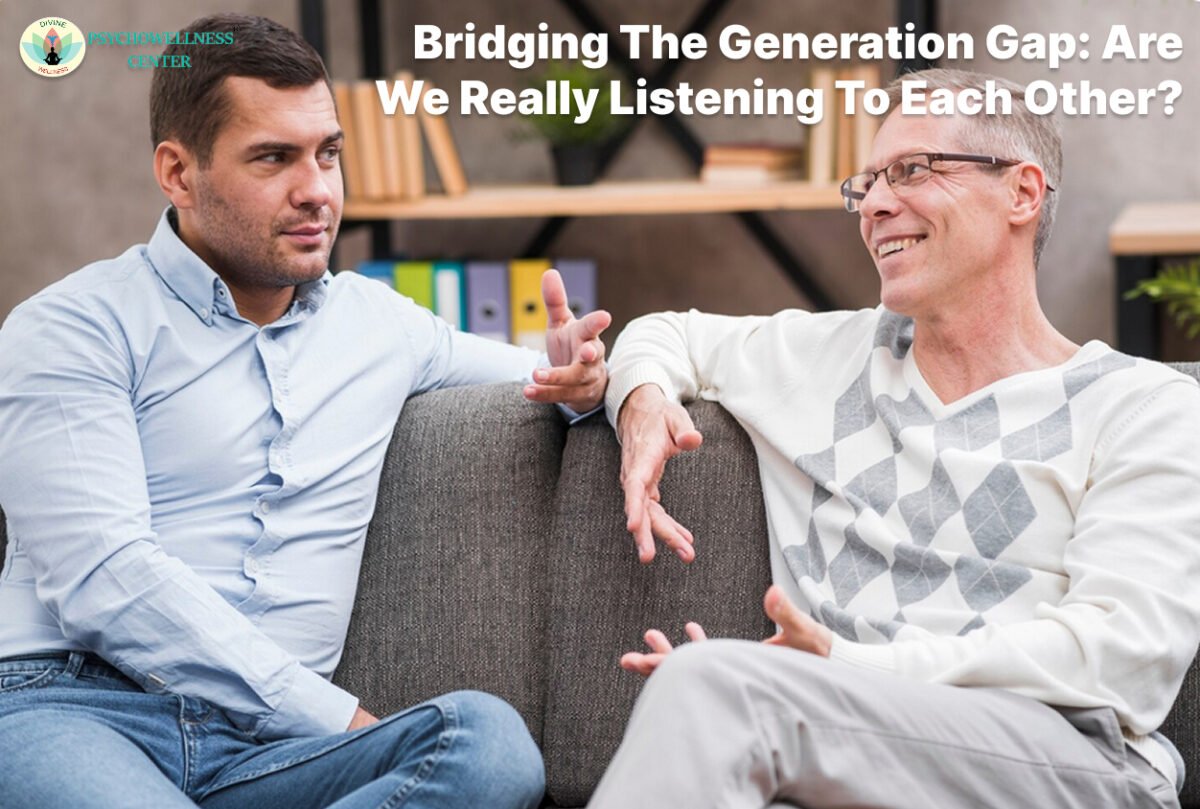
In today’s fast-paced, ever-changing world, one topic that continues to spark conversations in families, workplaces, and communities alike is the generation gap. While differences in opinions and lifestyles between generations are not new, the modern gap seems wider than ever. Technology, social values, mental health awareness, and communication styles have all evolved rapidly, leaving many to wonder are we really listening to each other anymore?
The truth is, much of the stress, conflicts, and family problems that exist today stem not from a lack of love but from a lack of understanding. The older generation often feels their experiences and wisdom are undervalued, while younger people feel dismissed, unheard, and pressured to conform to outdated expectations. This emotional divide, if left unaddressed, can create deep wounds that manifest as emotional abuse, anxiety, depression, and even isolation within families and society.
Understanding the Roots of the Generation Gap
The term generation gap refers to the differences in opinions, values, and communication styles between people of different age groups. Traditionally, this gap has existed between parents and children, teachers and students, or employers and young workers. However, with the rise of digital culture, the gap has expanded beyond personal relationships and now affects how society at large functions.
Baby Boomers, for instance, grew up valuing hard work, stability, and discipline. Generation X emphasises independence and adaptability. Millennials prioritise creativity and work-life balance, while Gen Z values mental health, inclusivity, and social justice. Each generation has developed its identity based on the unique historical, economic, and technological conditions in which it grew up.
Yet, these differing values often collide. Older generations may perceive younger ones as entitled or overly sensitive, while younger individuals see older people as rigid or dismissive. What often gets lost in this tug-of-war is empathy the simple act of trying to understand where the other person is coming from.
When the Gap Turns into Emotional Distance
Communication breakdowns between generations are not just philosophical, they have real emotional consequences. When a teenager’s voice is ignored at home, or when an elderly parent feels replaced by technology, it creates silent walls. These walls are often built on unspoken emotions, unresolved conflicts, and the inability to communicate vulnerability.
In many families, conversations about emotions, mental health, or personal struggles are still taboo. Older generations may have been taught to suppress emotions to avoid appearing weak, while younger generations are more open to discussing anxiety, depression, and the fear of missing out (FOMO). This clash of emotional cultures often leads to family problems where one side feels invalidated, and the other feels attacked.
Even simple interactions can become emotionally charged. A parent criticizing their child’s lifestyle choices or a young adult dismissing their parent’s advice can spiral into patterns of emotional abuse not always intentional, but deeply damaging nonetheless. The result? Both sides withdraw, leading to isolation and resentment instead of connection.
The Role of Technology: A Bridge or a Barrier?
Technology has revolutionized communication yet paradoxically, it’s also one of the biggest contributors to the generation gap. While younger generations use social media and messaging apps as lifelines for social connection, older individuals often feel alienated by these new modes of communication.
Platforms like Instagram, TikTok, and Snapchat create a culture of comparison, fueling stress and FOMO among younger users. On the other hand, older people may find these platforms superficial or confusing, further isolating them from the younger world.
However, technology doesn’t have to divide us. When used mindfully, it can become a bridge. Video calls can connect grandparents with grandchildren across continents. Family chat groups can strengthen bonds. Online platforms can host intergenerational discussions where wisdom meets innovation. The key lies not in rejecting technology but in using it as a tool to foster genuine connection.
Mental Health Across Generations
Mental health has become a crucial part of the generational dialogue. While awareness around anxiety, depression, and stress has grown, the understanding of these issues varies widely among age groups. Older generations might still see mental health struggles as a sign of weakness or moral failure, whereas younger generations view them as legitimate health conditions requiring empathy and support.
This difference often leads to conflicts and misunderstandings. For example, a young adult struggling with burnout might be told to “just toughen up,” or an older family member showing signs of loneliness and isolation might be overlooked because they seem “strong.” Bridging this gap means recognizing that every generation experiences mental health differently, and that compassion not criticism should guide our conversations.
Encouraging open discussions about emotional wellbeing within families can prevent much of the stress and resentment that builds up silently over time.
Maintaining Boundaries Without Building Walls
One of the healthiest ways to bridge the generation gap is through maintaining healthy boundaries not as barriers, but as respectful limits that protect everyone’s emotional space. Boundaries help us communicate our needs clearly without resorting to blame or guilt.
For example, a young person might set boundaries around career choices or relationships, while parents may set boundaries regarding respect and communication. These boundaries prevent family problems from escalating and encourage mutual respect.
However, maintaining boundaries requires active listening. It’s not about one generation dominating the other but creating a safe space where both sides feel heard. Empathy becomes the foundation for understanding the glue that holds generations together despite their differences.
Are We Really Listening?
Listening is the bridge that can close the widest gap. But real listening goes beyond hearing words; it means acknowledging feelings, understanding perspectives, and resisting the urge to respond defensively.
When a teenager says they feel anxious, they don’t need a lecture, they need validation. When an elderly parent talks about feeling left out, they don’t need pity, they need inclusion. True listening transforms conflict into connection, stress into support, and isolation into belonging.
Intergenerational dialogue should not be a competition of who is right, but a collaboration toward mutual growth. The younger generation brings fresh ideas, creativity, and adaptability, while the older generation offers wisdom, patience, and life experience. When these qualities combine, they create a balance that strengthens families and communities alike.
Conclusion
The generation gap is not an enemy to be defeated, but an opportunity to learn, evolve, and deepen our relationships. By embracing open communication, empathy, and respect for individual boundaries, we can reduce misunderstandings, ease emotional stress, and prevent conflicts that often arise from feeling unheard or invalidated. In a world where loneliness and isolation are increasingly common, bridging the generation gap is not just about preserving harmony it is about preserving humanity. When communication challenges persist or emotional distance deepens, professional psychological support can play a vital role.
Evidence-based approaches such as Cognitive Behavioural Therapy (CBT), family and interpersonal therapy, mindfulness-based interventions, and emotional regulation training help individuals and families improve communication, manage generational differences, and foster mutual understanding. Support is available through in-person counselling at The Psychowellness Center, located in Dwarka Sector-17 and Janakpuri, New Delhi (Contact: 011-47039812 / 7827208707). Additionally, for those searching for the best psychologist near me or preferring flexible access to care, TalktoAngel offers online counselling with experienced psychologists who support individuals and families in strengthening relationships, resolving conflicts, and building emotional connection. Sometimes, all it takes is guided understanding and compassion to turn generational divides into meaningful bridges.
Contribution: Dr. R.K. Suri, Clinical Psychologist, and Ms. Drishti Rajore, Counselling Psychologist
References
Baber, H. (2024). The effects of generational gap on wellbeing of older adults. Journal of Population Therapeutics and Clinical Pharmacology, 31(2), Article 6353. https://www.jptcp.com/index.php/jptcp/article/view/6353 Journal of Population Therapeutics
Gong, W., Jiang, L. C., Guo, Q., & Shen, F. (2023). The role of family communication patterns in intergenerational COVID-19 discussions and preventive behaviours: A social cognitive approach. BMC Psychology, 11, 290. https://doi.org/10.1186/s40359-023-01331-y BioMed Central
Hassan, M. S., Hadi, S. N. I. A., Husani, N. H. Q., Anuar, N. A. Q. K., Baharen, N. S., Hamdi, N. N. I., & Yunus, W. A. M. M. (2022). Communication of parent-child among Gen Z: A preliminary study. International Journal of Academic Research in Business and Social Sciences, 12 (8), 807–817. https://doi.org/10.6007/IJARBSS/v12-i8/14468 HRMARS+1
Hwang, W., Fu, X., Brown, M. T., & Silverstein, M. (2023). Intergenerational solidarity with digital communication and psychological well-being among older parents during the COVID-19 pandemic. Family Process, 63(3), 1356–1372. https://doi.org/10.1111/famp.12910 PMC
Kyalo, J. (2022). The impact of communication technology on family dynamics. Journal of Communication (JCOMM). https://doi.org/10.47941/jcomm.1981 CARI Journals
https://www.psychowellnesscenter.com/Blog/how-to-build-empathy-and-compassion/
https://www.psychowellnesscenter.com/Blog/exploring-the-intersection-of-millennial-and-family-life/
https://www.psychowellnesscenter.com/best-special-educator-near-me/delhi-ncr/
https://www.talktoangel.com/blog/multigenerational-aspect-of-emotional-intelligence