
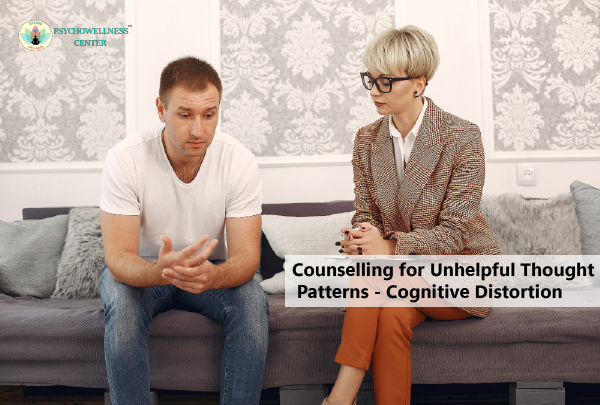
The way individuals think directly influences how they feel and behave. Often, emotional distress is not caused solely by situations, but by how those situations are interpreted. When thinking patterns become rigid, exaggerated, or biased, they are referred to as cognitive distortions. These patterns can quietly shape perception, reinforce negative beliefs, and contribute to ongoing stress, anxiety, or low mood. While cognitive distortions are common and part of everyday thinking, they can become problematic when they are frequent, automatic, and left unexamined. Counselling offers a structured approach to identifying and modifying these patterns, enabling individuals to develop more balanced, realistic ways of thinking.
What are Cognitive Distortions?
Cognitive distortions are habitual ways of thinking that are often inaccurate or unhelpful. They often develop over time through past experiences, learned beliefs, and repeated emotional responses. Because they operate automatically, individuals may not always recognise that their thoughts are distorted. These thinking patterns can influence how people interpret events, relationships, and their own abilities. Over time, they reinforce negative emotional states and may limit problem-solving or decision-making. Recognising cognitive distortions is the first step toward reducing their impact.
Common Types of Cognitive Distortions
Several patterns are frequently observed in counselling settings. All-or-nothing thinking is a cognitive pattern where situations are interpreted in absolute terms, without recognising any middle ground or shades of grey. Overgeneralisation occurs when a single negative experience is seen as a pattern that will always repeat. Catastrophising refers to expecting the worst possible outcome, even when there is little evidence to support it. Personalisation involves taking excessive responsibility for events that may not be entirely within one’s control. Other distortions include mind-reading (assuming others’ thoughts without evidence), emotional reasoning (believing that feelings reflect facts), and discounting the positive (minimising achievements or positive experiences). These patterns may vary in intensity but can significantly affect emotional well-being when persistent.
How Cognitive Distortions Affect Emotional Health
Unhelpful thought patterns create a feedback loop between thoughts, emotions, and behaviours. For example, a person who frequently engages in catastrophising may experience heightened anxiety, which in turn reinforces the belief that situations are threatening. Similarly, persistent self-critical thoughts can contribute to low self-esteem and reduced motivation. Over time, these patterns can affect relationships, work performance, and overall quality of life. Because these distortions feel automatic and convincing, individuals may accept them as accurate reflections of reality rather than interpretations.
Why These Patterns Are Difficult to Change
Cognitive distortions are often deeply ingrained. They may have developed as coping mechanisms in earlier experiences and can feel familiar or protective, even when they are no longer helpful. Additionally, individuals tend to seek information that confirms existing beliefs, which strengthens these patterns over time. Without conscious effort, distorted thinking can remain unchallenged. Counselling provides the structure and guidance needed to interrupt this cycle.
The Role of Counselling in Addressing Cognitive Distortions
Counselling focuses on helping individuals become aware of their thought patterns and understand how these patterns influence emotions and behaviour. Rather than attempting to eliminate thoughts, therapy works toward modifying how individuals respond to them.
A core approach used in counselling is identifying automatic thoughts and evaluating their accuracy. This process helps individuals recognise when their thinking may be biased or incomplete. Through guided exploration, individuals learn to replace distorted thoughts with more balanced and evidence-based perspectives.
Developing Awareness of Thought Patterns
The first stage of change involves increasing awareness. Individuals are encouraged to observe their thoughts, especially during emotionally intense situations. This may involve tracking patterns, identifying triggers, and noting recurring themes. Journaling and reflective exercises are commonly used to support this process. Over time, individuals become more skilled at recognising distortions as they occur. Awareness reduces the automatic nature of these patterns and creates space for more deliberate responses.
Challenging and Reframing Thoughts
Once distortions are identified, counselling focuses on evaluating their validity. This involves asking structured questions such as: What evidence supports this thought? Are there alternative explanations? What would a more balanced perspective look like? Reframing does not mean replacing negative thoughts with unrealistic positivity. Instead, it involves developing thoughts that are grounded in evidence and proportionate to the situation. This shift reduces emotional intensity and supports more adaptive behaviour.
Building Healthier Thinking Habits
Changing thought patterns requires consistent practice. Counselling supports the development of new cognitive habits that gradually replace distorted ones. This may include practising self-compassion, focusing on problem-solving rather than rumination, and learning to tolerate uncertainty. Over time, these habits become more automatic, reducing reliance on unhelpful thinking patterns. The process is gradual, but it leads to more stable emotional responses.
Impact on Behaviour and Relationships
As thinking patterns become more balanced, individuals often notice changes in behaviour and interactions. Reduced anxiety may lead to increased participation in activities, while improved self-perception can enhance confidence in relationships. Clearer thinking also supports better communication, as individuals are less likely to assume or misinterpret others’ intentions. This contributes to healthier and more stable relationships. The benefits of addressing cognitive distortions extend beyond internal experiences to overall functioning.
Conclusion
Cognitive distortions are common patterns of unhelpful thinking that, when left unaddressed, can negatively impact emotional well-being and everyday functioning. Counselling offers a structured and evidence-based approach to identifying, challenging, and reshaping these thoughts into more balanced and realistic perspectives, ultimately improving mental resilience and quality of life.
For individuals seeking professional support—such as a therapist near me, psychologist near me, counselling doctor near me, or the best psychologists in Delhi—Psychowellness Center provides dependable and confidential counselling services. With centres in Janakpuri and Dwarka Sec-17, Delhi, appointments can be scheduled at 011-47039812 or 7827208707. Additionally, Talktoangel offers access to qualified counsellors through a convenient online platform, ensuring flexible mental health support.
To further enhance awareness, a video available on the Psychowellness YouTube channel focuses on counselling awareness and the importance of open conversations around mental health. It highlights how counselling helps reduce stigma, encourages individuals to seek support without hesitation, and provides a safe, supportive space to address emotional challenges and unhelpful thought patterns.
Contributions: Dr. R.K. Suri, Clinical Psychologist, and Ms. Charavi Shah, Counselling Psychologist
References
- Beck, A. T. (1976). Cognitive therapy and the emotional disorders. International Universities Press.
- Clark, D. A., & Beck, A. T. (2010). Cognitive therapy of anxiety disorders: Science and practice. Guilford Press.
- Hofmann, S. G., Asnaani, A., Vonk, I. J. J., Sawyer, A. T., & Fang, A. (2012). The efficacy of cognitive behavioral therapy: A review of meta-analyses. Cognitive Therapy and Research, 36(5), 427–440. https://doi.org/10.1007/s10608-012-9476-1
- Mathews, A., & MacLeod, C. (2005). Cognitive vulnerability to emotional disorders. Annual Review of Clinical Psychology, 1, 167–195. https://doi.org/10.1146/annurev.clinpsy.1.102803.143916