
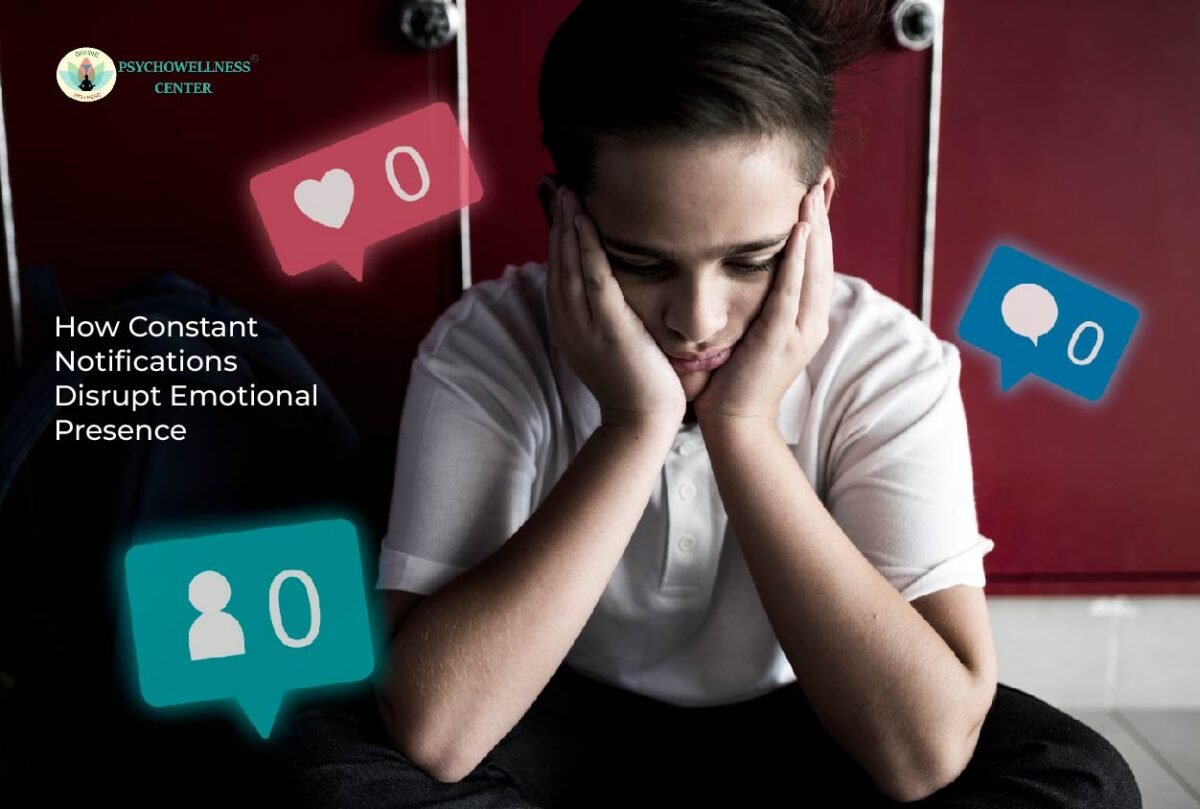
Every time your phone lights up with a new alert, it’s like a tiny thread pulling at the fabric of your focus. We’ve become so accustomed to living our lives in five-minute intervals that we often forget what it feels like to be truly immersed in a thought or a conversation. While these devices claim to keep us “linked,” the constant barrage of digital noise often leaves us feeling more isolated and emotionally stretched than ever. To protect our mental health and rediscover a genuine sense of emotional presence, we need to look closely at how these persistent interruptions are quietly reshaping our inner lives.
Connection vs. emotional presence
We often mistake being “reachable” for being “present.” Emotional presence is the ability to be fully engaged in the current moment, tuned into our own feelings and the emotions of those around us. However, when our pockets buzz every few minutes, our brain undergoes a “switching cost.” Each notification serves as a micro-interruption, pulling us out of our immediate environment. This constant state of alertness triggers the body’s stress response. When we are perpetually waiting for the next alert, our nervous system remains in a state of high arousal, similar to the “fight or flight” mode seen in anxiety. This physiological state makes it nearly impossible to experience deep empathy or quiet reflection, both of which are cornerstones of healthy relationships.
The impact on mental health
The psychological toll of digital overstimulation is significant. It indicates a strong link between excessive gadget use and various clinical issues. When our focus is constantly fractured, we lose the ability to engage in “deep work” or “deep feeling.” This can lead to a sense of emptiness and low motivation, as we are busy reacting to the world rather than living in it.
For many, the inability to disconnect becomes a form of addiction. The dopamine hit from a “like” or a message creates a feedback loop that mirrors substance abuse. Over time, this can escalate into more severe conditions, such as depression or obsessive-compulsive disorder, where the urge to check notifications becomes a compulsive behaviour that interferes with daily life and social anxiety.
Disrupting the flow of relationships
Perhaps the most visible damage occurs in our personal lives. Relationship conflicts often stem from a lack of communication, but today, they also stem from phone snubbing. When you are in a conversation and your eyes drift to a screen, you signal to the other person that they are secondary to the digital world.
This lack of presence can lead to family problems and marital discord. Children, in particular, are sensitive to their parents’ digital distractions. Regular interruptions in the growth of children and teenagers can hinder the formation of secure attachment, as the child realizes they have to compete for attention with a device. For couples, the lack of quality time can necessitate couple counselling to re-establish boundaries and rediscover intimacy.
The digital distraction
From a therapeutic perspective, constant notifications block our path to mindfulness. While mindfulness therapy encourages observing the moment without judgment, digital alerts do the opposite they demand immediate reactions by labeling trivial updates as “urgent.” This continual disruption leads to “cognitive overload,” where the mind is overwhelmed and unable to process emotions thoroughly. Over time, this mental clutter manifests as irritability, anger, or a general sense of being overwhelmed.
Strategies for reclaiming your presence
Reclaiming emotional presence requires intentionality. It is not about abandoning technology but about managing it through better self-improvement habits. Here are a few strategies:
- Scheduled disconnection: Designate “tech-free zones” or times, such as during meals or the hour before sleep.
- Notification audit: Disable all non-essential notifications. If it isn’t a person trying to reach you directly, it probably doesn’t need your immediate attention.
- Mindful checking: Instead of reacting to every ping, set specific times to check your apps. This moves you from a responsive position to an anticipatory one.
- Practice grounding: Use techniques from cognitive behavioural therapy to ground yourself in the physical world when you feel the urge to mindlessly scroll.
Seeking professional guidance
If you find that digital distractions are severely impacting your life, it may be time to seek help. Many individuals struggle with the transition to a digital-heavy lifestyle, and it can exacerbate underlying issues like adhd or post traumatic stress disorder etc.
Professional intervention, such as online counselling, offers a convenient way to address these challenges. Therapists can provide tools for emotional management and help you develop coping strategies to balance your digital and emotional lives. Whether it is through individual counselling or specialized behavioural therapy, professional support can help you navigate the complexities of modern mental health.
Conclusion
Constant notifications are more than just a nuisance; they are a barrier to the deep, meaningful experiences that make life fulfilling. By fragmenting our attention, they strip away our ability to be emotionally present with ourselves and our loved ones. Recognizing the signs of digital burnout and the impact on our mental health is the first step toward healing. If you feel overwhelmed by the digital noise or find that it is affecting your relationships and inner peace, remember that help is just a click away. TalktoAngel is a leading platform for online therapy and mental health support, offering a wide range of services tailored to your needs. With a team of the best psychologists in india, TalktoAngel provides expert guidance for various life challenges. Don’t let the pings of the world drown out your inner voice reach out to TalktoAngel today and start your journey toward well-being. For compassionate and confidential support, call the Psychowellness Center at (+91 78272 08707) or (+91 11 4707 9079).
Contribution: Dr. R.K. Suri, Clinical Psychologist, and Ms. Mansi, Counselling Psychologist
References:
- McDaniel, B. T., & Coyne, S. M. (2016). “Technoference”: The interference of technology in couple relationships and implications for women’s well-being.
- Stothart, C., et al. (2015). The attentional cost of receiving a cell phone notification. Journal of Experimental Psychology.