
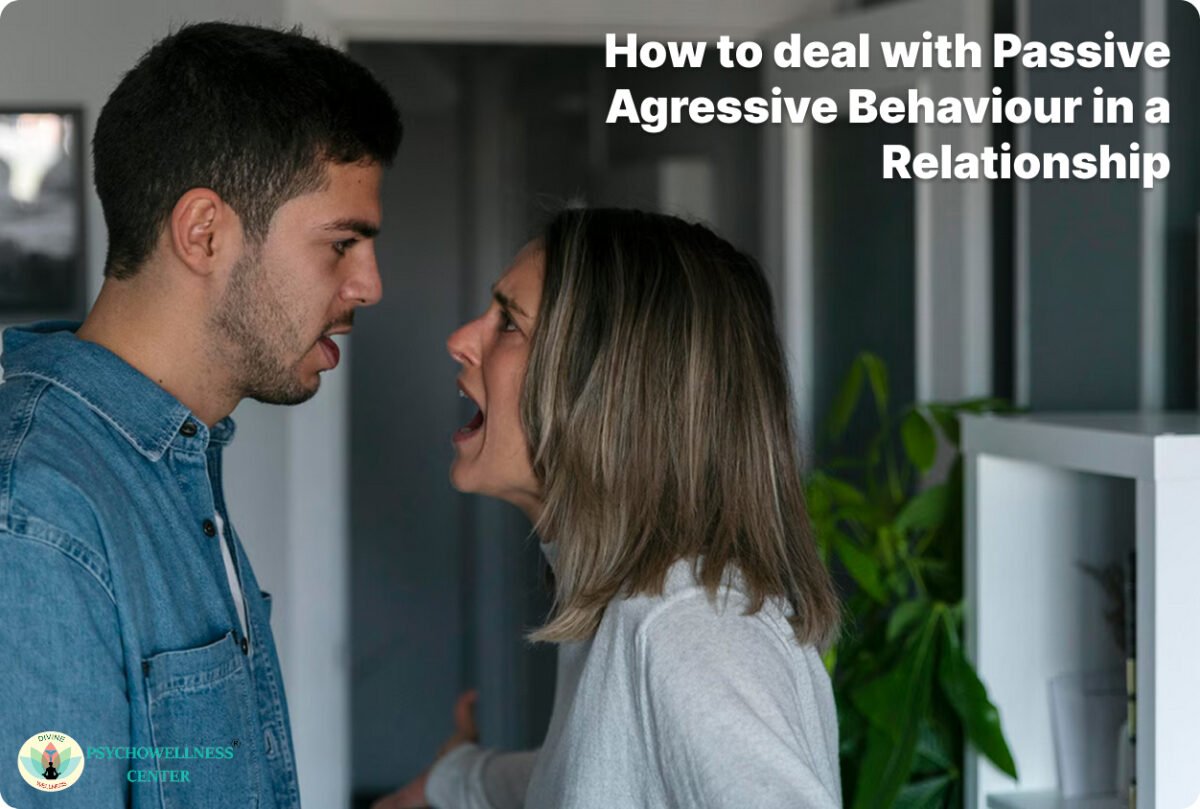
Relationships are built on communication, but what happens when that communication turns into a frustrating, confusing game of unspoken resentment? We’re talking about passive-aggressive behaviour; the silent treatment, the backhanded compliments, the forgotten “favours,” and the “I’m fine” when they are clearly not. It’s a subtle yet damaging pattern that can leave even the most resilient partner feeling helpless and worn down, especially when these patterns begin feeding into chronic relationship problems.
If you’ve ever felt like you’re constantly walking on eggshells, trying to guess what your partner is really upset about, you’re not alone. The good news is that you can learn to recognise this pattern and, with a few intentional, psychologically sound strategies, create a path toward more honest, direct, and fulfilling communication.
Understanding the Roots of the “Silent” Conflict
Before we can address passive-aggressive behaviour, we must understand its origins. At its core, passive aggression is a defence mechanism; a way of expressing anger, frustration, or disagreement without having to directly confront the source of the feeling.
In a psychological sense, it’s a failure to integrate the emotion of anger. The person feels the anger, but perhaps due to past experiences (such as confrontation being met with danger, feeling unproductive, or leading to rejection), they have learned that expressing it overtly is “not safe” or “not allowed.” Instead of saying, “I’m angry that you forgot our date night,” they might arrive late, “accidentally” break something, or agree to a plan and then sabotage it through intentional procrastination.
It’s essential to remember this distinction: Passive-aggressive actions are not about the action itself (e.g., lateness, forgotten chores); they are about the disguised expression of an unvoiced emotion, typically resentment or anger. Recognising this shifts the focus from arguing over a minor incident to addressing a deeper relational pattern something that often shows up in marital dynamics as well.
Spotting the Signs: Decoding the Behaviour
Passive aggression is so tricky because it often hides behind plausible deniability. Here are some of the most common ways this behaviour manifests in relationships:
- Agreeing to do a task but doing it poorly or late, providing an excuse like, “Oh, I’m just so forgetful!”
- Delivering a seemingly positive statement that has a sting, such as, “That outfit looks amazing! You finally wore something that flatters your shape.”
- Saying “Yes” to a request but expressing clear irritation through tone, body language, sighing, or eye-rolling, making you wish you hadn’t asked.
- Using non-response and emotional withdrawal as a form of punishment or control.
- Repeatedly delaying or failing to follow through on commitments that are important to you, and then claiming innocence.
When these behaviours become a pattern, they create a destructive cycle of misunderstanding and distrust. You get frustrated, they feel misunderstood, and the original issue is never resolved. For some couples, this ongoing cycle can become the foundation of persistent relationship problems.
The Impact of Passive-Aggression in the Relationship:
When passive-aggressive behaviour becomes a recurring pattern, it slowly erodes the emotional fabric of the relationship. Partners often find themselves stuck in an exhausting loop of interpreting hidden meanings, managing unspoken resentment, and questioning their own perceptions, which can eventually lead to emotional burnout. The constant second-guessing and lack of direct communication can heighten anxiety, especially for individuals who crave clarity and emotional stability.
Over time, the repeated minimising or denial of legitimate concerns can chip away at self-esteem, leaving one or both partners feeling inadequate or “too sensitive” for wanting honesty.
Perhaps most damaging is the creeping sense of loneliness that emerges when emotional connection becomes replaced with avoidance, sarcasm, or silent treatment. Instead of a partnership built on trust and openness, the relationship begins to feel like two isolated individuals navigating tension that never truly gets resolved.
Psychologically Sound Strategies
Dealing with passive aggression effectively requires patience and a shift from reacting to the behaviour to addressing the underlying feeling. Here are four key strategies to help you navigate this dynamic:
1. Identify and Name the Pattern
The first step is to gently, but clearly, pull the behaviour out of the shadows. When the passive-aggressive act occurs, don’t engage with the distraction (the lateness, the dirty dishes). Instead, focus on the impact of the behaviour and what you are observing.
Instead of:
“Why are you always late? You clearly don’t care about my time.” (This escalates the fight.)
Try:
I’m wondering if there is something you are feeling frustrated about that we haven’t talked about yet?”
This technique introduces a therapeutic principle called “making the covert overt.” You are identifying the emotional state you perceive and inviting them to speak about it directly. This is often a technique encouraged in online counselling sessions when couples work through hidden emotional patterns.
2. Don’t Get Hooked by the Indirectness
The goal of the passive-aggressive person is often to provoke an angry response from you, which allows them to play the victim and justify their resentment. Do not take the bait. When they give you the “I’m fine” with an audible sigh, resist the urge to nag or lecture. Instead, respond with calmness and maintain your boundary.
Try:
“I hear you say you’re fine, but your tone suggests otherwise. When you sigh like that, it makes me feel like you are unhappy with me, but I don’t know why. I’m going to take your word for it, but if you change your mind and want to talk, I’m ready to listen.”
This acknowledges their current statement while firmly and calmly holding space for direct communication.
3. Focus on Solutions, Not Feelings (At First)
For people who fear conflict, talking about “feelings” can be overwhelming. Sometimes, it’s easier to start with practical agreements. When a pattern of passive aggression involves tasks (like chores or logistics), set clear, measurable, and reasonable expectations.
Be specific:
Instead of “Please clean up,” try “Please ensure the kitchen counters are wiped down and all dishes are in the dishwasher by 9 PM.”
Create accountability:
You are not policing them, but clarifying the terms of the relationship.
If they repeatedly fail to meet the agreement, you can return to the first strategy:
“I notice the kitchen isn’t done, as we agreed. What feelings are getting in the way of you completing this task?”
This psychologically validates the structure and boundaries necessary for a healthy partnership.
4. Practice Assertive Empathy
This is perhaps the most advanced and powerful strategy. It involves recognising the partner’s distress while firmly asserting your need for directness. You are showing them that your relationship can handle their anger and that you value their real feelings more than their feigned compliance.
Try:
“I know that discussing issues can be challenging, and perhaps you’re afraid of upsetting me, but leaving out the mail I asked you to deliver doesn’t address the issue; instead, it just leaves me feeling perplexed and irritated. Even if the truth is that you’re upset or don’t want to do something, I need you to be honest with me.
By offering empathy (“I understand that bringing up problems can be difficult”) paired with an assertive statement (“I need you to be honest”), you practice a healthy approach to addressing a potentially stress-induced situation.
Conclusion
Dealing with passive-aggressive behaviour is a journey, not a quick fix. It requires both partners to be willing to change one to learn to be vulnerable and direct, and the other to be patient and receptive to uncomfortable truths. As you consistently apply these strategies, you’re teaching your partner that open communication is a safer, more effective way to express themselves. You’re changing the fundamental dynamics of your relationship, replacing silent sabotage with honest dialogue. Even though it could take some time, every discussion in which resentment is discussed honestly and every argument is resolved amicably rather than by acting it out is a step toward creating a partnership in which both parties feel secure, understood, and genuinely connected. This, in turn, leads to a partnership that’s not just surviving, but genuinely thriving.
If the cycle feels too entrenched or emotionally heavy, seeking professional help can make all the difference. Online counselling through supportive platforms like TalktoAngel offers expert guidance for breaking negative patterns, especially when past trauma is involved. For those seeking in-person support, the Psychowellness Center in Dwarka Sector-17 and Janakpuri (011-47039812 / 7827208707) provides tailored therapy sessions with some of the best psychologists near me, offering compassionate support to help you build emotional resilience and develop long-term coping skills.
Contribution: Dr. R.K. Suri, Clinical Psychologist, and Ms. Charavi Shah, Counselling Psychologist
References:
American Psychological Association. (2017). APA dictionary of psychology (2nd ed.). APA Publishing.
Cramer, P. (2015). Understanding defense mechanisms. Psychodynamic Psychiatry, 43(4), 523–552. https://doi.org/10.1521/pdps.2015.43.4.523
Dykas, M. J., & Cassidy, J. (2011). Attachment and the processing of social information across the life span: Theory and evidence. Psychological Bulletin, 137(1), 19–46. https://doi.org/10.1037/a0021367
Kowalski, R. M. (2000). Affect, aggression, and antisocial behavior. McGraw-Hill.
Sternberg, R. J. (2019). The psychologist’s companion: A guide to writing scientific papers for students and researchers (6th ed.). Cambridge University Press.
Williams, A., & Emich, K. (2014). The experience of anger in conflict: Implications for passive aggression. Journal of Social and Personal Relationships, 31(8), 1090–1115. https://doi.org/10.1177/0265407513515717
https://www.psychowellnesscenter.com/Blog/subtle-ways-disrespect-shows-up-in-relationships/
https://www.psychowellnesscenter.com/Blog/how-to-respond-to-silent-treatment/
https://www.psychowellnesscenter.com/Blog/how-phubbing-can-be-a-threat-to-your-relationship/
https://www.psychowellnesscenter.com/Blog/improve-your-relationship-when-your-partner-isnt-trying/
https://www.psychowellnesscenter.com/Blog/handling-suppressed-anger-when-emotions-go-underground/
https://www.psychowellnesscenter.com/Blog/signs-of-a-broken-relationship-and-ways-to-repair-it/
https://www.psychowellnesscenter.com/Blog/can-continuous-arguments-badly-affect-your-relationship/
https://www.psychowellnesscenter.com/Blog/developing-better-understanding-in-relationships/
https://www.psychowellnesscenter.com/Blog/demystifying-the-thin-line-between-care-and-manipulation/
https://www.psychowellnesscenter.com/Blog/can-fear-of-conflict-ruin-your-relationship/
https://www.psychowellnesscenter.com/Blog/feeling-underappreciated-by-your-partner-what-to-do/
https://www.talktoangel.com/blog/red-flags-to-look-out-for-in-new-relationships