
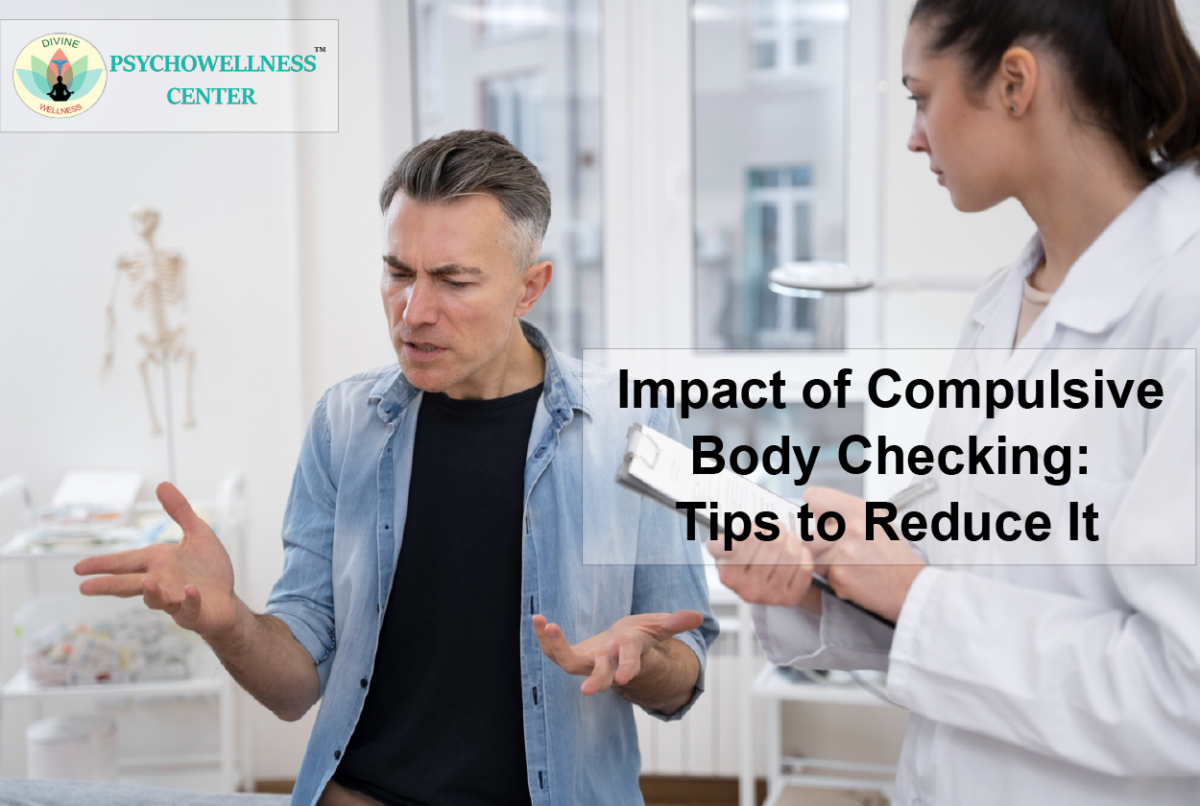
In the modern age of digital perfection and high societal standards, many individuals find themselves trapped in a cycle of constantly monitoring their physical appearance. This behavior, known in clinical terms as compulsive body checking, involves the repetitive habit of examining one’s body to look for perceived flaws, changes in weight, or signs of illness. While it might seem like a simple habit of vanity, it is often a deeply ingrained symptom of somatic symptom and related disorders or body dysmorphia.
When someone spends hours in front of a mirror or pinches their skin to check for fat, they are often attempting to reduce anxiety. However, the paradox of body checking is that it actually increases distress. This blog explores why we do it and how to stop.
The Psychology Behind Body Checking
Compulsive body checking is rarely about the body itself; it is about the need for certainty. In psychology, we refer to this as a safety behavior. Individuals believe that by checking, they can prevent a “catastrophe” (like gaining weight or missing a symptom of a disease).
This behavior is frequently a core component of OCD (Obsessive-Compulsive Disorder). The “obsession” is the intrusive thought about one’s appearance, and the “compulsion” is the checking behavior. Over time, this cycle creates a “feedback loop” where the brain becomes hyper-vigilant, making the individual more likely to notice even the smallest, most natural physical variations.
The Ripple Effect: How it Impacts Your Life
The impact of body checking extends far beyond the mirror. It infiltrates various aspects of a person’s daily existence:
- Mental Health Exhaustion: Constant checking leads to high levels of stress. The brain is kept in a state of “high alert,” which can eventually lead to burnout, a state of emotional and physical exhaustion where even simple daily tasks feel impossible.
- Social and Relationship Strain: When someone is preoccupied with their body, they are less present in their relationship. They might avoid intimacy or social gatherings because they feel “inadequate,” leading to profound feelings of loneliness.
- Physical Health and Sleep: Paradoxically, the high stress of body checking can manifest in physical health issues, such as tension headaches or digestive problems. Furthermore, late-night checking or worrying about appearance often disrupts sleep patterns, leading to insomnia.
- Career and Motivation: For many, this preoccupation results in low motivation and career issues. If your mental energy is consumed by “checking,” you have less cognitive bandwidth for professional creativity or productivity.
5 Tips to Reduce Compulsive Body Checking
Breaking this habit requires a combination of emotional control and behavioral changes. Here are expert-backed strategies to regain control:
1. Implement “Exposure and Response Prevention” (ERP)
ERP is a gold-standard psychological technique. It involves exposing yourself to the urge to check but consciously deciding not to follow through. For example, if you feel the urge to check your reflection in every shop window you pass, challenge yourself to walk past three windows without looking. This teaches your brain that the “danger” isn’t real.
2. Use “Mirror Distancing”
Instead of standing inches away from the mirror to find “flaws,” stand at a distance where you can see your whole self. Practice non-judgmental observation. Instead of saying “My stomach is huge,” try saying “This is my torso, it supports my body.”
3. Log Your Triggers
Keep a journal to see when you check the most. Is it after a stressful meeting? Or when you are feeling depression? Identifying the emotional trigger helps you address the root cause rather than just the symptom.
4. The “10-Minute Rule”
When the urge to check strikes, tell yourself: “I can check, but I have to wait 10 minutes.” Often, the peak of the anxiety will pass during those 10 minutes, and the urge will weaken.
5. Address the Underlying Issues
Sometimes body checking is a coping mechanism for a midlife crisis, family problem, or even chronic pain. By treating the primary source of distress, the secondary symptom (body checking) often diminishes.
Conclusion: Finding Your Way Back to Balance
Compulsive body checking is a heavy burden, but it is not a life sentence. Recovery is found through the balance of self-compassion and disciplined behavioral change. By pivoting your mental energy away from external aesthetics and toward emotion control, you disrupt the checking cycle and initiate the healing process. True wellness comes from managing your triggers and accepting that your value is not defined by a measurement or a reflection.
Whether these behaviors take root during child & adolescent developmental stages or manifest in later adulthood, engaging in a specialized clinical roadmap is the most effective way to secure lasting recovery. A therapist can help you navigate the complexities of panic disorder or body image issues with evidence-based tools.
If you are searching for a therapist near me or a counsellor near me, look for experts who specialize in Cognitive Behavioral Therapy (CBT) and exposure therapy. For those in the capital region, finding the best psychologists in Delhi can provide the structured environment needed for recovery.
Contact Psychowellness Center
At Psychowellness Center, we provide comprehensive mental health evaluations and personalized therapy plans to help you overcome compulsive behaviors and anxiety.
- Phone: 011-47039812 / 7827208707.
Make an appointment with an expert by getting in touch with us right now.
For those who prefer the comfort of their home, TalktoAngel provides professional online counselling services. Connect with experienced therapists through TalktoAngel to receive mental health support anytime, anywhere.
Learn more:
https://www.youtube.com/watch?v=cBrKbp6yMnM
https://www.youtube.com/watch?v=jrrvq70Y7oI
Contribution: Dr. R.K. Suri, Clinical Psychologist, and Mr. Umesh Bhusal, Counselling Psychologist
References
Geiger, G., Opladen, V., Vivell, M.-B., Vocks, S., & Hartmann, A. S. (2024). Longer-term consequences of increased body checking in women at risk for eating disorders–a naturalistic experimental online study. PLOS ONE, 19(12), e0316190. https://doi.org/10.1371/journal.pone.0316190
Goeden, A. V., Schaefer, L. M., Crosby, R. D., Peterson, C. B., Engel, S. G., Le Grange, D., Crow, S. J., & Wonderlich, S. A. (2023). Examining the momentary relationships between body checking and eating disorder symptoms in women with anorexia nervosa. Eating Behaviors, 50, 101751. https://doi.org/10.1016/j.eatbeh.2023.101751
Opladen, V., Vivell, M.-B., Vocks, S., & Hartmann, A. S. (2022). Revisiting the postulates of etiological models of eating disorders: Questioning body checking as a longer-term maintaining factor. Frontiers in Psychiatry, 12. https://doi.org/10.3389/fpsyt.2021.795189
Phillips, K. A., & Kelly, M. M. (2021). Body dysmorphic disorder: Clinical overview and relationship to obsessive-compulsive disorder. Focus, 19(4), 413–419. https://doi.org/10.1176/appi.focus.20210012
Walker, D. C., Gorrell, S., Hildebrandt, T., & Anderson, D. A. (2021). Consequences of repeated critical versus neutral body checking in women with high shape or weight concern. Behavior Therapy, 52(4), 830–846. https://doi.org/10.1016/j.beth.2020.10.005
https://www.psychowellnesscenter.com/Blog/what-are-compulsive-and-ritualistic-behaviors/
https://www.psychowellnesscenter.com/Blog/obsessive-compulsive-and-related-disorder-counseling/
https://www.psychowellnesscenter.com/Blog/how-obsessive-compulsive-disorder-masks-underlying-trauma/