
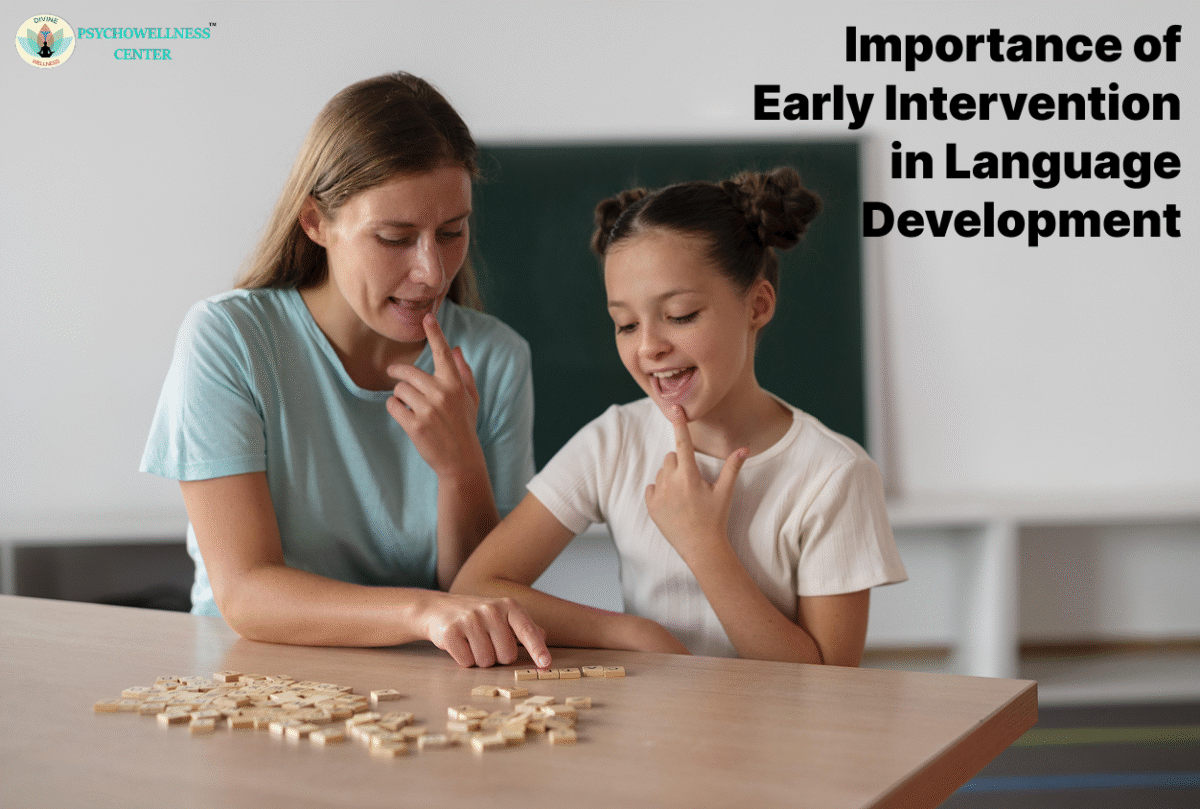
The first five years of a child’s life are a period of explosive brain development, where neural connections are formed at a rate never to be repeated. Within this critical window, language acquisition is not just about learning to talk; it is the fundamental infrastructure for cognitive growth, emotional regulation, and social competence. When a child experiences a language delay, it creates a compounding obstacle that impacts every subsequent developmental domain. This makes early intervention (EI) in language development not merely beneficial, but a non-negotiable necessity for ensuring a child’s successful trajectory into school and life.
The Domino Effect: Why Timing is Everything
The primary importance of early intervention lies in leveraging the brain’s neuroplasticity. During infancy and toddlerhood, the brain is most adaptable and receptive to learning new skills. Addressing language difficulties before the age of three—the peak of this malleability—significantly increases the likelihood that a child will “catch up” to their peers. Delaying intervention, however, allows communication deficits to trigger a devastating “domino effect” on other crucial skills:
The Impact on Development
- Cognitive Development and Literacy: Language is the tool for abstract thought, critical thinking, and problem-solving. Delays in language acquisition form a weak foundation for later academic performance, particularly in literacy (reading and writing), which relies heavily on strong phonological awareness and verbal memory.
- Social and Emotional Well-being: Communication is the currency of social interaction. Children with language delays often struggle to express their needs, ask questions, or participate in turn-taking play, which can lead to profound frustration. This frustration frequently manifests as challenging behaviours (like hitting, biting, or tantrums) because the child lacks the verbal skills to regulate their emotions or resolve conflicts. Early intervention promotes the necessary emotional regulation and social competence required to form friendships and prevents the cycle of isolation and low self-esteem.
- Parental Confidence and Environment: Early intervention is inherently family-centred. It doesn’t just treat the child; it empowers parents and caregivers with the strategies and tools (like focused stimulation, modelling, and recasting) to become the child’s primary language facilitators. This empowerment transforms daily routines—like mealtimes, bath time, and reading—into structured, rich learning opportunities, creating a consistently reinforcing language environment that sustains progress long after the session ends.
How EI Rewires the Brain
The tremendous success of early intervention is fundamentally rooted in brain biology.
- Critical Period: The first three years of life represent a critical period where the neural pathways responsible for language are highly flexible and receptive to input. This high malleability means that new, effective language circuits can be established quickly in response to targeted training.
- Activity-Dependent Development: Language skills are “use-it-or-lose-it.” When a child repeatedly receives a specific linguistic input (like focused stimulation), those neural pathways associated with processing that language are strengthened and become permanent. Conversely, pathways that aren’t stimulated are naturally pruned away.
- Preventing Compounding Delays: By providing intensive and correct input early, EI helps the child build a strong “language infrastructure.” This prevents the initial language delay from escalating into delays across other domains—the domino effect—ultimately reducing the severity of future issues and the need for more intensive services later in life. In essence, early intervention leverages the window of high plasticity to build efficient, robust neural networks that support all future learning and communication.
Components of Effective, Holistic Intervention
Effective early language intervention is not a one-size-fits-all approach. It must be individualised and holistic, addressing the child’s unique needs while fully involving the family in the therapy model.
1. Structured Process
The process typically begins with the Individualised Family Service Plan (IFSP). This document places the family’s priorities at the center, ensuring the goals are functional and meaningful to the child’s daily life. The delivery often follows a coaching model, where the Speech-Language Pathologist (SLP) trains the parent to implement evidence-based strategies consistently during routines like reading, mealtimes, and play.
2. Evidence-Based Strategies
The actual “therapy” involves highly targeted techniques:
- Play-Based Learning: This is the cornerstone. Therapy sessions are transformed into fun, interactive games, allowing children to practice new sounds, words, and social communication skills in a natural, motivating, and low-stress environment.
- Focused Stimulation: The SLP or parent models the target language (e.g., repeating the word “go” ten times) in a high-interest activity, providing intensive, repeated, and correct input without pressuring the child to imitate.
- Recasting/Expansion: When the child makes an incomplete utterance (“Doggy run”), the adult repeats it back correctly, often adding complexity (“Yes, the doggy is running fast!”), reinforcing the child’s attempt while implicitly teaching the correct grammar.
Early Identification: The Red Flags
The success of the entire system hinges on early recognition. Parents and caregivers should monitor for these crucial red flags that warrant an immediate evaluation:
- By 9 months: Absence of babbling or responding to their name.
- By 15 months: Having fewer than ten words or not using any gestures (like pointing or waving).
- By age 2: Inability to spontaneously combine two words (e.g., “more juice,” “daddy go”).
- Any age: Regression or loss of previously acquired speech or social skills.
By prioritising early identification and the immediate implementation of a supportive, structured intervention plan, we are maximising the lifelong potential of the child, giving them the fundamental tools necessary for academic achievement, social connectedness, and emotional health.
Conclusion
In conclusion, early intervention in language development is crucial for laying a strong foundation for a child’s cognitive, social, and emotional growth. The earlier the intervention, the more likely it is that the child will overcome delays and thrive in all areas of development. Addressing language issues before the critical age of three can prevent a domino effect that impacts literacy, social skills, and emotional regulation. Parents play a central role in this process, and a holistic, individualised approach ensures long-term success. If you’re concerned about your child’s language development, seeking help from the best psychologist near me can provide expert guidance and tailored support.
The Psychowellness Center, located in Dwarka Sector-17 and Janakpuri, New Delhi (Contact: 011-47039812 / 7827208707), offers specialised child development assessments, speech-language therapy, and individualised interventions to support early language milestones. Their team of the best psychologists and therapists works closely with parents and children to promote healthy communication skills and developmental progress. For added convenience, TalktoAngel, a trusted online therapy platform, connects families with experienced child psychologists who offer evidence-based support right from the comfort of home. Whether your child is showing signs of speech delay or you’re simply seeking proactive guidance, Psychowellness Center and TalktoAngel are dedicated to helping your child reach their full potential through timely, compassionate, and professional care.
Contribution: Dr. R.K. Suri, Clinical Psychologist, and Ms. Swati Yadav, Counselling Psychologist
References
- Shonkoff, J. P., & Phillips, D. A. (Eds.). (2000). From Neurons to Neighbourhoods: The Science of Early Childhood Development. Washington, D.C.: National Academy Press.
- Roberts, M. Y., & Kaiser, A. P. (2011). The Effectiveness of Parent-Implemented Language Interventions: A Meta-Analysis. American Journal of Speech-Language Pathology, 20(3), 180–199.
- Curtis, P. R., Roberts, M. Y., & Kaiser, A. P. (2018). The Longitudinal Effects of Early Language Intervention on Children’s Problem Behaviours. Journal of Speech, Language, and Hearing Research, 61(1), 186–198.