
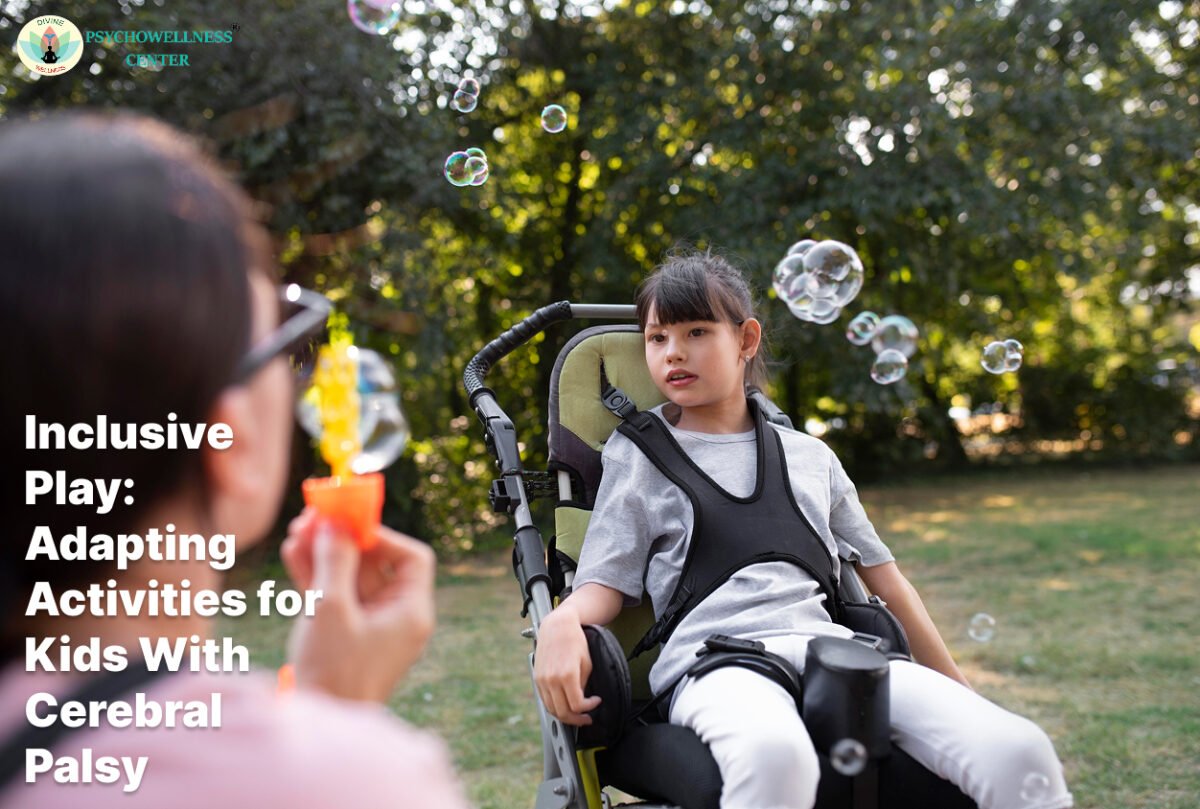
Childhood is meant to be full of play, exploration, friendships, and connection. But for many children and adolescents living with cerebral palsy (CP), these simple joys can become complex challenges. Traditional play settings often fail to accommodate their physical, emotional, or sensory needs, resulting in isolation, loneliness, low motivation, and even long-term effects like anxiety, stress, and low self-esteem.
In this blog, we explore the emotional and social importance of inclusive play, how adaptation and mindfulness can support children with CP, and how to create environments where all kids feel seen, safe, and welcome honoring diversity and inclusion every step of the way.
Why Inclusive Play Matters
Play is more than entertainment; it’s a vital part of development. Children build communication skills, emotional resilience, problem-solving abilities, and early relationship skills through play. When play is inclusive, all children regardless of ability benefit.
But when a child with CP is unable to participate fully, the impact can be profound:
- Emotional stress from feeling excluded
- Social anxiety around group play
- Loneliness due to limited opportunities for connection
- Low motivation after repeated frustration or failure
- Increased risk of depression, emotional withdrawal, and difficulty forming relationships
These challenges can accumulate over time, influencing confidence, mental health, sleep patterns, and long-term social development.
Understanding Cerebral Palsy in the Context of Play
Cerebral palsy is a neurological condition that affects movement, muscle tone, and posture. It develops from an injury to the growing brain, often before birth. Each child’s experience is unique and may involve:
- Spasticity (tight muscles)
- Ataxia (balance and coordination challenges)
- Dyskinetic or involuntary movements
- Speech or communication difficulties
- Sensory sensitivities
In play environments that rely on fast movements, quick reflexes, or verbal cues, children with CP may be unintentionally excluded. Without adaptations, they may experience rising stress, anxiety, or feelings of inadequacy.
The Psychological Impact of Exclusion
Repeated exclusion has emotional consequences that can follow a child into adolescence and adulthood. Children with CP may internalize beliefs that they are incapable or unwelcome. Over time, this can lead to:
- Chronic stress and muscle tension
- Avoidance of group play due to social anxiety
- Isolation from peers
- Depression, anger, or persistent low motivation
- Difficulty maintaining friendships
- Emotional burnout and challenges with stress management
Parents may also feel family problem or stress when trying to help their child navigate these emotional hurdles.
Inclusion as a Core Principle of Healthy Development
True inclusion is not just being present, it’s feeling like you belong. When children with CP are included meaningfully in play:
- Confidence and resilience grow
- Language and communication skills improve
- Physical coordination builds gradually
- Stress and anxiety decrease
- Meaningful relationships and friendships develop
Neurotypical peers also benefit: inclusive play teaches empathy, patience, and understanding, strengthening community bonds and respect for diversity and inclusion.
Practical Adaptations for Inclusive Play
1. Physical Adaptations
- Wheelchair-accessible equipment
- Supportive seating and safe movement spaces
- Switch-adapted toys and tools
- Larger, softer balls and slowed-down games
- Environments designed with developmental delays or physical differences in mind
2. Social Adaptations
- Clear rules using visual schedules
- Buddy systems with supportive peers
- Classroom conversations about differences and inclusion
- Storytelling and role play that highlight empathy and relationships
3. Emotional and Mindfulness Strategies
- Guided imagery, deep breathing, and grounding techniques
- Quiet “reset zones” for stress management
- Emotion check-ins to support self-expression
- Calming rituals to ease transitions
- Practices that reduce anxiety, frustration, or anger
These strategies support self-awareness, emotional regulation, and resilience, especially helpful for children who experience stress, burnout, or social fear.
4. Instructional Adaptations
- Breaking tasks into small steps
- Using simple, consistent language
- Allowing flexible ways to participate (hands, feet, assistive devices)
- Prioritizing connection over performance
Activity Ideas That Support Inclusive Play
Sensory Art Station
- Adapted brushes, easy-grip tools, sponge rollers
- Tactile exploration (sandpaper, feathers, cloth)
- Collaborative murals that celebrate shared creativity
Modified Ball Games
- Lightweight beach balls
- Seated or wheelchair-friendly play
- Slow-paced, non-competitive rules
Mindful Movement Circle
- Gentle stretching or adaptive yoga
- Breathing exercises to reduce stress and anxiety
- Story-based movement for imaginative engagement
Imaginative Role Play
- Props, puppets, and costumes
- Flexible roles based on each child’s abilities
- Focus on connection, storytelling, and relationship-building
Encouraging Peer Friendship and Connection
Friendship is one of the most powerful outcomes of inclusive play. For a child with CP, one moment of kindness, a shared game, an encouraging peer, a small success, can boost confidence and reduce feelings of loneliness or low self-esteem.
Ways to nurture social inclusion:
- Teach empathy through books and conversations
- Highlight every child’s strengths
- Encourage collaborative rather than competitive goals
- Invite families to share insights about their child’s needs and challenges, including any family-related stressors or emotional concerns
Sustaining Inclusive Play Over Time
Inclusive play is not a one-time effort, it’s a culture. Sustaining it requires:
- Ongoing training for educators and staff
- Collaboration with therapists
- Regular evaluation of spaces and activities
- Honest conversations with children about their interests, fears, and stressors
- Awareness of sleep difficulties, burnout, or emotional overwhelm that may affect participation
The Role of Mindfulness in Inclusive Play
Mindfulness practices support emotional resilience and stress management, especially for children with physical differences or developmental delays. Mindfulness helps children with CP:
- Understand their bodies and physical boundaries
- Recognize emotions like anxiety, frustration, or anger
- Stay grounded in the present moment
- Build tolerance for sensory or social challenges
- Improve sleep quality and overall calm
Simple breathing, grounding activities, and guided relaxation can be added to any play session.
Final Thoughts: Building a World Where Every Child Belongs
Inclusive play is not an optional luxury, it is a right, a developmental necessity, and a foundation for emotional health. When we design play environments with adaptation, mindfulness, and inclusion in mind, we reduce isolation, stress, anxiety, and the risk of depression while nurturing belonging and resilience.
Every child deserves joy, friendship, community, and the chance to participate fully in the beautiful world of play. Together, we can build spaces where every child feels welcomed, supported, and celebrated.
For individuals who realize their overthinking may be shaped by unresolved trauma, early emotional wounds, or long-term stress, seeking the right support can be life-changing. Trauma-informed therapy helps people understand why their mind stays on high alert and teaches them healthier ways to regulate emotions, rebuild internal safety, and reduce mental overanalysis. The Psychowellness Center in Dwarka Sector-17 and Janakpuri, New Delhi (011-47039812 / 7827208707) provides specialized trauma therapy, EMDR, CBT, somatic work, and emotional healing interventions that gently guide individuals toward calmer thinking patterns and stronger self-trust. For those who prefer flexibility, privacy, or remote access, TalktoAngel offers online sessions with experienced child psychologists trained in trauma and anxiety-related overthinking. With compassionate, structured support, individuals can gradually move from survival-driven rumination to a more peaceful, grounded, and emotionally confident way of living.
Contribution: Dr. R.K. Suri, Clinical Psychologist, and Ms. Drishti Rajore, Counselling Psychologist
Reference
- Centers for Disease Control and Prevention. (2024). Cerebral palsy: Facts and statistics. https://www.cdc.gov/ncbddd/cp/facts.html
- Rosenbaum, P., Paneth, N., Leviton, A., Goldstein, M., Bax, M., Damiano, D., Dan, B., & Jacobsson, B. (2007). A report: The definition and classification of cerebral palsy. Developmental Medicine & Child Neurology, 49(6), 8–14. https://doi.org/10.1111/j.1469-8749.2007.tb12610.x
- World Health Organization. (2022). Inclusive education and disability. https://www.who.int/publications
- https://www.psychowellnesscenter.com/Blog/components-of-adaptive-curriculum-for-children-with-special-needs-cwsn/
- https://www.psychowellnesscenter.com/service-learning-difficulties-ot/
- https://www.psychowellnesscenter.com/Blog/building-a-healthy-school-environment-for-children-with-special-needs-cwsn/
- https://www.psychowellnesscenter.com/Blog/best-special-educator-in-uttam-nagar-delhi/
- https://www.psychowellnesscenter.com/Blog/outdoor-activities-to-build-resilience-in-children/
- https://www.psychowellnesscenter.com/Blog/how-can-play-therapy-help-children-with-childhood-disorders/
- https://www.psychowellnesscenter.com/Blog/best-special-educator-in-vikaspuri-delhi/
- https://www.psychowellnesscenter.com/Blog/supporting-children-with-sensory-processing-needs/
- https://www.psychowellnesscenter.com/Blog/best-special-educator-in-delhi-cantt/
- https://www.psychowellnesscenter.com/Blog/mental-health-interventions-for-teens-with-developmental-delays/