
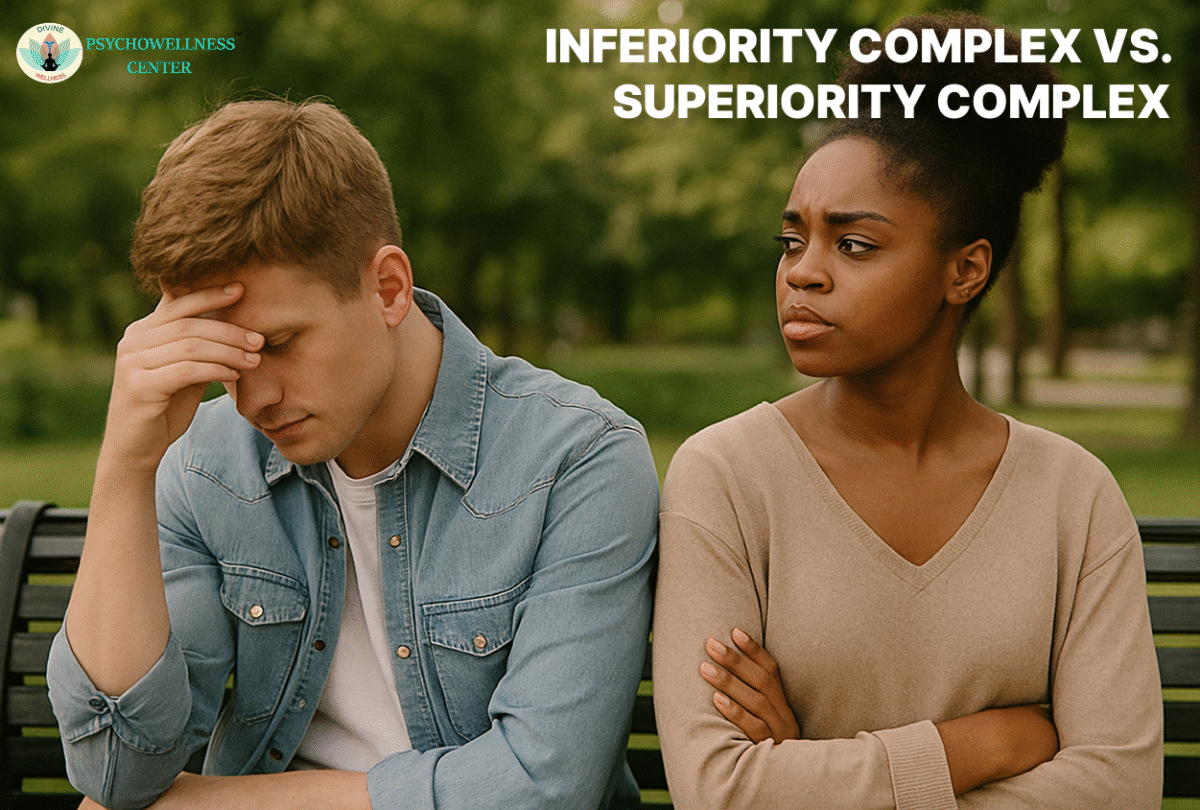
Human behavior is deeply influenced by the way individuals perceive themselves in relation to others. Two common psychological phenomena that reflect distorted self-perception are the inferiority complex and superiority complex. These concepts, introduced and explored by top psychologists Alfred Adler, play a significant role in counseling and psychotherapy today. While they may appear to be polar opposites, both stem from the same root, feelings of inadequacy and the need to compensate for them. Understanding these complexes is crucial for mental health professionals, educators, parents, and individuals who wish to foster healthy self-esteem and relationships.
Defining Inferiority Complex
An inferiority complex is a deep-rooted sense of inadequacy brought on by real or imagined defects. It often begins in childhood, shaped by early experiences of comparison, criticism, or rejection. Children who are constantly belittled, overprotected, or compared unfavorably to others may internalize feelings of being “less than.”
According to Adler (1927), feelings of inferiority are universal and can be motivational when they drive a person toward growth and improvement. However, when these feelings become overwhelming or chronic, they develop into a complex, resulting in low self-esteem, social withdrawal, self-sabotaging behaviors, and an excessive need for approval.
Common signs of an inferiority complex include:
- Persistent self-doubt and insecurity
- Avoidance of challenges or risk-taking
- Excessive sensitivity to criticism
- Envy or resentment toward others’ success
- Difficulty asserting oneself
In counseling, clients with inferiority complexes often present with anxiety, depression, or relationship difficulties, especially when these unresolved feelings influence daily functioning and decision-making.
Understanding Superiority Complex
The superiority complex, also discussed by Adler, is a defense mechanism that emerges as a way to mask or compensate for inferiority. Rather than acknowledging their insecurities, individuals with this complex project confidence, arrogance, or even contempt for others. At the core, however, lies the same insecurity and fear of inadequacy.
- A superiority complex may manifest as:
- Boastful or exaggerated self-confidence
- Looking down on others or acting condescending
- Overcompensating through achievements or status symbols
- Difficulty accepting failure or criticism
- Manipulative or controlling behavior
As Adler (1931) noted, the superiority complex is not about genuine self-esteem, but rather a compensatory mechanism that protects the ego. In therapy, clients may appear resistant, egotistical, or defensive, but the underlying issue is often unresolved pain and unmet emotional needs.
Inferiority and Superiority Complexes: Two Sides of the Same Coin
Despite their seeming contrasts, both complexes are rooted in fundamental notions of inadequacy. Individuals respond differently based on their coping styles, personality disorder traits, and life experiences. One person may withdraw due to feelings of inferiority, while another may seek power or dominance to suppress those same feelings. From a psychodynamic perspective, these complexes serve as psychological defenses. The superiority complex is a form of reaction formation, displaying the opposite of how one truly feels to avoid vulnerability (Freud, 1936). Thus, both require therapeutic exploration of the client’s early experiences, core beliefs, and emotional wounds.
The Role of Culture and Society
In the Indian context, societal expectations, academic pressure, and hierarchical structures often contribute to both complexes. Students in competitive environments may develop inferiority due to constant comparison and unrealistic standards. Conversely, privileged individuals may develop a superiority complex rooted in caste, class, gender, or educational elitism.
Social media also exacerbates both complexes by promoting curated images of success, triggering self-comparison or the urge to showcase superiority for validation. Adolescents and young adults, in particular, are vulnerable to these influences, making counseling intervention essential.
Counseling Approaches to Address Complexes
Mental health professionals play a crucial role in helping individuals recognize and work through their complexes. Some effective counseling approaches include:
- Cognitive Behavioral Therapy (CBT):- CBT supports clients in recognizing and disputing false beliefs about their own value. For those with an inferiority complex, CBT can address automatic negative thoughts like “I’m not good enough” or “I always fail.” For a superiority complex, CBT explores the unrealistic need for perfection or control.
- Psychodynamic Therapy:- This method delves deeply into early events and unconscious drives. It helps clients understand how past relationships and unresolved conflicts influence their present self-image.
- Adlerian Therapy:-Rooted in Adler’s theories, this therapy emphasizes social interest, goal-setting, and a holistic view of the individual. It encourages clients to develop a sense of belonging and overcome feelings of inferiority through meaningful engagement.
- Person-Centered Therapy:- Developed by Carl Rogers, this approach creates a nonjudgmental space where clients feel heard and validated. It’s especially useful for clients with an inferiority complex who struggle with self-worth.
- Narrative Therapy:– This technique helps clients reframe their personal stories, shifting the narrative from “I’m a failure” to “I faced challenges, but I’m growing.” It empowers clients to separate their identity from their complex.
Preventive Strategies and Support
Early emotional education in schools can help children develop healthy self-esteem.
- Family counseling can prevent over-critical or over-indulgent parenting that contributes to these complexes.
- Support groups and peer mentoring can normalize experiences and reduce feelings of isolation.
Encouraging vulnerability and empathy in families, workplaces, and academic institutions can break down superiority complexes rooted in fear and shame.
Conclusion
Both inferiority and superiority complexes are rooted in distorted self-perceptions and emotional wounds. The first step to recovery is acknowledging these behaviors. A healthy and genuine sense of self can be developed, internalized beliefs can be challenged, and these sentiments can be explored in a safe and controlled setting through counseling.
It is more crucial than ever to cultivate self-acceptance and emotional resilience in a society that frequently places a premium on success and comparison. Counseling and compassionate self-awareness are the first steps on the path to psychological development and self-discovery, regardless of whether one feels “better than” or “not enough.”
Whether you’re battling self-doubt or masking insecurity with perfectionism, professional guidance can help you break the cycle. The Psychowellness Center in Janakpuri and Dwarka Sector-17 offers expert-led therapies like CBT, Adlerian therapy, and psychodynamic counseling to address the root causes of inferiority and superiority complexes. Prefer flexible online support? TalktoAngel connects you with therapists who specialize in identity, self-worth, and emotional regulation through evidence-based sessions. To book an in-person or online appointment, call 011-47039812 or 7827208707, and take the first step toward building a healthier self-image.
With expert contributions from Dr. R. K. Suri Clinical Psychologist, and Ms. Sakshi Dhankhar, Counselling Psychologist, this article brings readers valuable tools to enhance mental resilience.
References
- Adler, A. (1927). Understanding human nature. Greenberg.
- Adler, A. (1931). What life should mean to you. Little, Brown and Company.
- Freud, A. (1936). The ego and the mechanisms of defence. International Universities Press.
- Rogers, C. R. (1961). On becoming a person: A therapist’s view of psychotherapy. Houghton Mifflin.
- Beck, J. S. (2011). Cognitive behavior therapy: Basics and beyond (2nd ed.). Guilford Press.
- Corey, G. (2017). Theory and practice of counseling and psychotherapy (10th ed.). Cengage Learning.