
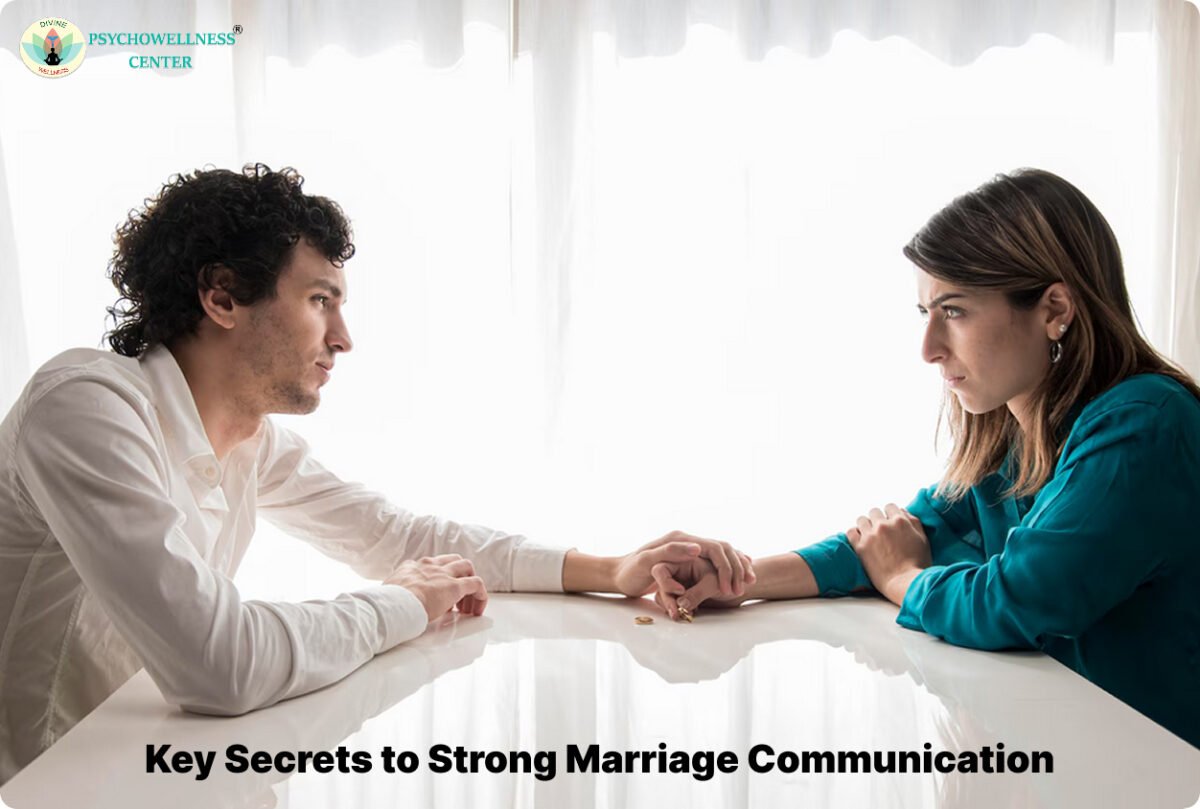
Communication is often cited as the backbone of a successful marriage, and for good reason. It is the invisible thread that weaves two individual lives into a cohesive unit. Yet, when we talk about good communication, it can sound vague. It is not just about talking a lot, but about connecting meaningfully. Strong marital communication relies on a set of skills and attitudes that can be learned, practised, and mastered. These crucial abilities move beyond simply exchanging information; they are fundamentally about fostering deep emotional safety and mutual understanding within the relationship.
The Foundation: Beyond Talking, It’s About Listening
Many couples believe their communication problem is rooted in not talking enough, when the real issue is often a failure to listen effectively. Listening is an active, demanding skill that forms the bedrock of emotional connection.
Practice Active and Reflective Listening
Active listening is a commitment to fully absorbing your partner’s message. This means setting aside distractions, putting down the phone, and giving your undivided attention. The most powerful technique within active listening is reflection, also known as mirroring.
When your partner shares something, whether it is a small frustration about their day or a major concern, respond by briefly summarising or paraphrasing what you heard them say. For example, you might say, “It sounds like you’re feeling really frustrated because your boss keeps changing the deadlines at the last minute.”
This is not just parroting; it serves three vital functions:
- Verification: It ensures you correctly understood the message.
- Validation: It shows your partner that their thoughts and feelings matter enough for you to process and reflect on them.
- De-escalation: It slows down the conversation, preventing assumptions and misinterpretations from taking root, which is especially crucial during disagreements.
Listen to Understand, Not to Reply
During a conflict, our brains often go into defensive mode. We stop listening to our partner and start rehearsing our rebuttal, compiling evidence for our side, or formulating a clever counter-argument. This shift changes the conversation from a joint problem-solving effort into an adversarial debate.
A key secret to strong marital communication is the commitment to seek understanding first. Before defending your own position, ask yourself, “Do I genuinely understand what my partner is feeling and why they feel that way?” Even if you disagree with their conclusion, you must validate their experience. Understanding their perspective does not mean abandoning your own; it simply means honouring theirs.
The Art of Expressing Needs and Feelings
The second pillar of strong communication is the ability to express oneself clearly, honestly, and non-aggressively. This requires a transition from blaming language to language that holds people responsible.
Master the “I Feel” Statements
In the heat of the moment, it is incredibly easy to launch into “You always” or “You never” statements: “You always leave the dishes” or “You never listen to me.” These ‘You’ statements are accusatory, inherently judgmental, and trigger immediate defensiveness in the listener, guaranteeing the conversation will stall or escalate.
The solution is the “I feel” statement, which uses the following structure: “I feel [emotion] when [specific behaviour] because [reason or need].”
For instance, rather than saying, “You always leave the laundry on the floor and it drives me crazy,” try this: “I feel stress and overwhelm when I see the laundry pile on the floor because I need our shared spaces to be organised and tidy for me to relax.”
This structure shifts the focus from your partner’s perceived flaw to your internal experience and unmet needs. It is a crucial secret because it lowers hostility while providing clear, actionable information about what you need.
Be Specific, Not Global
When you have a complaint or a need, focus narrowly on the specific behaviour or situation at hand. Strong communicators avoid “kitchen-sinking,” which is the tendency to throw every past grievance into the current argument.
If you are upset about your partner being late for dinner, do not bring up the time they forgot your birthday three years ago. Stick to the issue: “I am upset that you are 30 minutes late for dinner without calling.” This keeps the conversation manageable and focused on a problem that can actually be solved in the moment. Global complaints, which attack your partner’s character (“You are so inconsiderate”), only breed despair and resistance.
Navigating Conflict: The Relationship’s Stress Test
Conflict is inevitable in any close relationship. The presence of conflict does not predict divorce; the way you handle it does. John Gottman, a leading marriage researcher, has identified key markers of communication failure that strong couples actively avoid.
Banish the Four Horsemen
Gottman’s research identified four communication styles that are highly corrosive to a marriage. Strong communicators work diligently to banish these from their interactions:
- Criticism: Attacking your partner’s personality or character, rather than the specific behaviour. Example: “You’re a selfish person.”
- Contempt: Attacking your partner’s sense of self with disrespect, sarcasm, name-calling, eye-rolling, or hostile humour. This is the single most destructive factor.
- Defensiveness: Seeing yourself as the victim and making excuses, cross-complaining, or meeting a complaint with a complaint.
- Stonewalling: Withdrawing from the conversation, shutting down, or physically leaving. This usually happens when one partner feels flooded or overwhelmed.
The key secret here is to replace these patterns with their antidotes: complaints without blame, building a culture of appreciation, taking responsibility for your actions, and taking a self-soothing break instead of stonewalling.
Learn to Repair and Self-Soothe
During conflict, emotions can run high, leading to what psychologists call flooding, a state of physiological and emotional arousal that makes rational conversation impossible. When this happens, strong couples know how to take a break and, crucially, how to repair the relationship afterwards.
- The Break: Agree on a signal or phrase to call a time-out, such as “I’m feeling flooded. I need a 20-minute break.” Use this time to do something calming, like reading or listening to music. Do not use the time to ruminate or plan your next attack.
- The Repair Attempt: A repair attempt is any statement or action meant to de-escalate the tension and bring the couple back to connection. It can be an apology, a touch, a joke, or a simple, “I am sorry I handled that poorly. Let’s try again.” Successful couples are not those who avoid fighting, but those who are excellent at making and accepting repair attempts.
The Communication of Affection and Appreciation
Communication is not just about solving problems; it is fundamentally about building positivity and goodwill. Strong communication involves intentionally affirming the value of your partner and the relationship.
Communicate Appreciation Daily
In successful marriages, there is a 5:1 ratio of positive to negative interactions. This means that for every negative interaction or piece of criticism, there are five positive ones. A key secret to maintaining this ratio is the daily, explicit communication of appreciation and admiration.
Do not assume your partner knows you appreciate them. Tell them specifically what they did that you are grateful for: “Thank you for filling up my gas tank this morning, it made my commute stress-free,” or “I really admire how patient you were with the kids today.” These small, frequent acknowledgements deposit goodwill into the relationship’s emotional bank account, making it easier to handle withdrawals (conflicts) when they inevitably arise.
Utilise Structured Skills for Better Communication
For people who struggle with clear communication, especially when asserting needs, structured methods like those from Dialectical Behaviour Therapy (DBT) and approaches like Interpersonal Psychotherapy (IPT) can be highly effective tools.
Dialectical Behaviour Therapy (DBT) offers concrete acronyms to guide interactions:
- DEAR MAN focuses on objective effectiveness, helping you state your request clearly and assertively. You describe the facts, express your feelings, assert your need, reinforce the positives, stay mindful of your goal, appear confident, and be ready to negotiate.
- GIVE focuses on relationship effectiveness, ensuring you are gentle, show interest, validate their feelings, and use an easy manner to maintain goodwill.
- FAST focuses on self-respect effectiveness, reminding you to be fair, avoid excessive apologies, stick to values, and be truthful.
- Interpersonal Therapy (IPT) offers a broader view, suggesting that relationship problems, particularly Role Disputes (unmet or non-reciprocal expectations), contribute to emotional distress. An IPT approach would involve analysing chronic communication patterns like passive or aggressive styles, and working to implement the assertive skills (like the DBT tools) to resolve these disputes. The focus is on improving the quality of the interaction to reduce the psychological symptoms related to that stress.
Conclusion
The key secrets to strong marriage communication are not complicated, but they require consistent effort, emotional awareness, and humility. It is a commitment to seeing your partner not as an opponent to be defeated, but as a teammate whose inner world you are devoted to understanding. By moving from passive listening to active reflection, shifting from blaming “You” statements to responsible “I” statements, and embracing repair attempts during conflict, any couple can strengthen the foundation of their relationship. Strong communication is not a destination; it is a continuous, mindful practice of love, honesty, and mutual respect that protects the deep bond of marriage.
For couples who feel they need structured guidance, professional marriage therapy and couple therapy can provide a safe space to rebuild connection. For those who prefer in-person support, the Psychowellness Center, located in Dwarka Sector-17 and Janakpuri, New Delhi (011-47039812 / 7827208707), offers specialised psychological care. Their experienced team—often regarded as among the best psychologists near me—uses evidence-based approaches to help partners strengthen communication, deepen emotional intimacy, and cultivate a healthier, more resilient marriage.
Contribution: Dr. R.K. Suri, Clinical Psychologist, and Ms. Charavi Shah, Counselling Psychologist
References
- Gottman, J. M., & Silver, N. (2015). The seven principles for making marriage work (2nd ed.). Harmony Books.
- Linehan, M. M. (2015). DBT skills training manual (2nd ed.). Guilford Press.
- Weissman, M. M., Markowitz, J. C., & Klerman, G. L. (2017). The guide to interpersonal psychotherapy: Updated and expanded edition. Oxford University Press.