
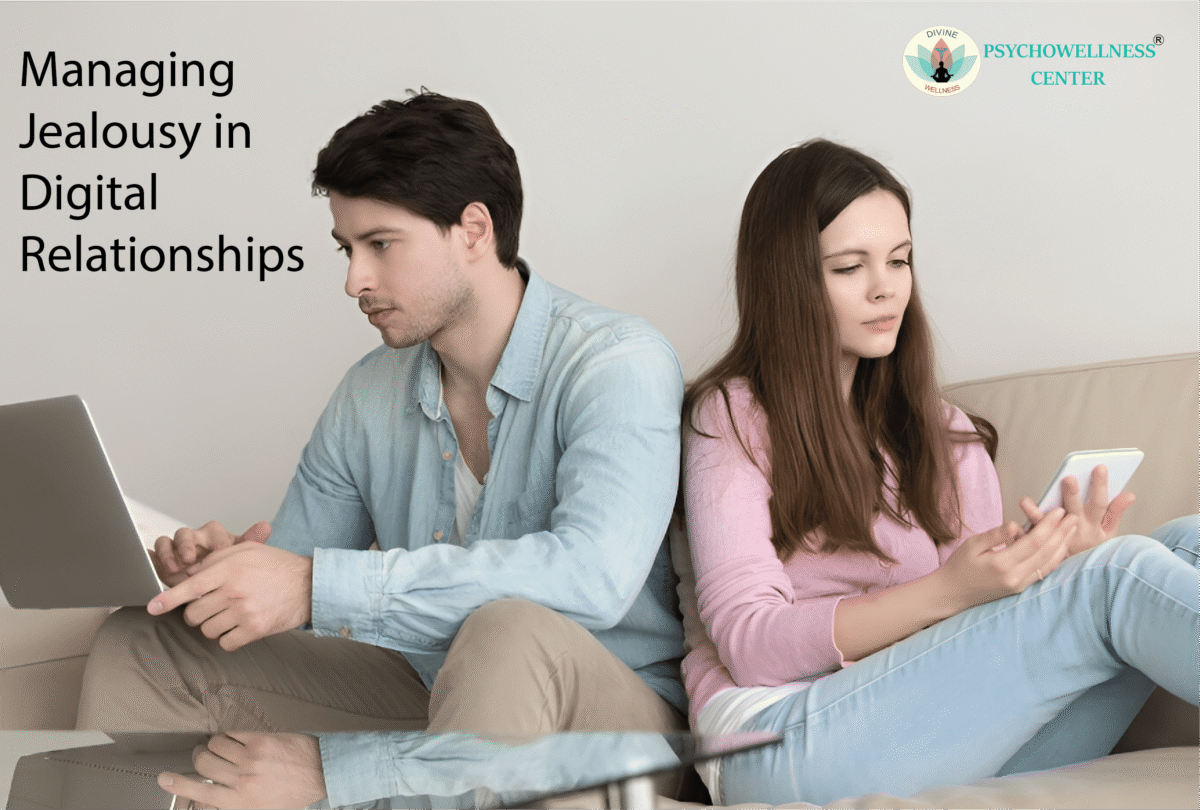
Digital communication has transformed the way relationships are formed, maintained, and experienced. Social media, messaging apps, and online interactions allow couples to stay connected across distances and time zones. However, alongside these benefits, digital spaces have also introduced new emotional challenges—one of the most common being jealousy.
Jealousy in digital relationships is often more intense and ambiguous than in offline interactions. A liked photo, delayed reply, or increased online activity can trigger insecurity, overthinking, and conflict. Understanding why digital jealousy arises and how to manage it is essential for maintaining trust, emotional safety, and connection in modern relationships.
Understanding Jealousy in the Digital Context
Jealousy is a complex emotional response rooted in fear of loss, insecurity, and perceived threat to a valued relationship. In digital relationships, these fears are amplified by limited information, lack of non-verbal cues, and constant access to a partner’s online presence. Unlike face-to-face interactions, digital communication leaves room for interpretation. When information is incomplete, the mind often fills in gaps with assumptions, many of which are shaped by past experiences, attachment patterns, and self-esteem. Digital jealousy is not necessarily a sign of mistrust or possessiveness. In many cases, it reflects unmet emotional needs, fear of abandonment, or difficulty tolerating uncertainty.
Why Digital Relationships Trigger Jealousy More Easily
One major factor is visibility without context. Social media exposes interactions—likes, comments, follows—without explaining their emotional meaning. Seeing a partner interact with others can activate comparison and insecurity, even when there is no real threat.
Another contributor is delayed or inconsistent communication. When responses are slow or unpredictable, individuals may assume disinterest, avoidance, or infidelity. This is particularly common in long-distance or primarily online relationships. Social comparison also plays a significant role. Digital platforms encourage comparison with idealised versions of others, which can intensify feelings of inadequacy and fear of being replaced. Additionally, past relational wounds, such as betrayal or abandonment, can resurface in digital spaces where reassurance is less tangible.
Emotional and Psychological Impact of Digital Jealousy
Unchecked jealousy can gradually erode emotional intimacy. Individuals may become hypervigilant, frequently checking a partner’s online activity or seeking constant reassurance.
Jealousy can also manifest as withdrawal, passive-aggressive communication, or repeated conflict. Over time, this dynamic may reduce trust, increase resentment, and weaken the relationship’s emotional foundation. For the individual experiencing jealousy, it often comes with guilt, shame, and self-criticism. Many people recognise their reactions as excessive but feel unable to control them.
Distinguishing Healthy Concern from Problematic Jealousy
Not all jealousy is unhealthy. Feeling uncomfortable or insecure at times is a normal part of intimate relationships. Healthy jealousy is usually temporary, openly communicated, and responsive to reassurance. Problematic jealousy, however, tends to be persistent, intense, and driven by assumptions rather than evidence. It may involve monitoring behaviour, repeated accusations, or emotional distress that interferes with daily functioning. Understanding this distinction helps individuals respond with self-awareness rather than self-blame.
Psychological Factors Behind Digital Jealousy
Attachment styles play a significant role in how jealousy is experienced. Individuals with anxious attachment may be more sensitive to perceived distance or ambiguity in communication. Those with avoidant attachment may suppress jealousy but express it through emotional withdrawal. Low self-esteem can also intensify jealousy, as individuals may struggle to believe they are enough or fear being replaced by someone “better.” Cognitive patterns such as catastrophizing, mind-reading, and all-or-nothing thinking further fuel jealousy in digital contexts where ambiguity is high.
Healthy Ways to Manage Jealousy in Digital Relationships
The first step in managing jealousy is self-awareness. Recognising jealousy as an emotional signal rather than a flaw allows individuals to respond thoughtfully rather than react impulsively. Open and honest communication is essential. Expressing feelings without blame—using “I” statements—helps partners understand each other’s emotional experiences. For example, saying “I feel insecure when communication feels inconsistent” is more constructive than making accusations. Setting clear digital healthy boundaries can also reduce misunderstanding. Discussing expectations around social media use, online friendships, and communication frequency creates shared understanding and reduces ambiguity.
Challenging unhelpful thoughts is another important step. Asking questions like “What evidence do I have?” or “Is there another explanation?” helps reduce cognitive distortions. Building emotional security outside the relationship is equally important. Maintaining hobbies, friendships, and self-worth independent of the relationship reduces over-reliance on digital reassurance.
The Role of Trust and Reassurance
Trust is built through consistency, transparency, and emotional availability. In digital relationships, reassurance may need to be more intentional. Simple gestures such as checking in, sharing daily experiences, or clarifying misunderstandings can go a long way. However, reassurance should not become compulsive or one-sided. Sustainable trust involves mutual effort and respect for emotional boundaries.
When Jealousy Signals a Deeper Issue
Persistent jealousy may indicate unresolved personal or relational concerns. Past trauma, previous infidelity, or chronic insecurity may require deeper exploration. In some cases, jealousy reflects real relationship issues such as a lack of commitment, inconsistent behaviour, or poor communication. Addressing these concerns openly is essential rather than dismissing jealousy as irrational.
Seeking Professional Support
When jealousy begins to dominate thoughts, disrupt emotional well-being, or lead to repeated conflict, seeking professional help can be beneficial. Therapy provides a safe space to explore emotional triggers, attachment patterns, and communication styles. Mental health professionals help individuals and couples develop healthier ways to manage insecurity, build trust, and strengthen emotional connection—both online and offline.
Conclusion
Jealousy in digital relationships is a common and understandable emotional response shaped by constant connectivity, online visibility, and emotional uncertainty. Addressing these feelings requires self-awareness, honest communication, and intentional trust-building rather than avoidance or blame. When explored thoughtfully, jealousy can become an opportunity to better understand emotional needs, strengthen intimacy, and foster healthier relational dynamics.
Professional relationship counselling can provide individuals and couples with a safe and structured space to explore emotional triggers, improve communication, and rebuild trust. Support from a qualified psychologist in Delhi NCR can be particularly beneficial for those navigating complex relationship patterns. Many individuals seeking the best Relationship counselling in Janakpuri or the best Relationship counsellor near me find that Psychowellness Centre provide therapeutic guidance that helps them develop emotional regulation skills and long-term relationship resilience.
The Psychowellness Center offers thorough counselling and therapy treatments intended to promote relationship healing, emotional reconnection, and self-awareness. For confidential professional guidance, the Psychowellness Centre can be reached at (+91 78272 08707) or (+91 11 4707 9079). Additionally, TalktoAngel online counselling offers accessible and confidential support for individuals and couples who prefer the flexibility of virtual therapy sessions.
“At Psychowellness Centre, we believe that understanding and regulating emotions—rather than suppressing them—is key to building secure, fulfilling relationships. Therapy offers a safe space to explore emotional patterns, heal relational wounds, and reconnect with oneself and others.”
— Psychologists at Psychowellness Centre
Explore More – https://youtube.com/shorts/Fd8BvtTysBw?si=Xs8LrRx7ovuTJpMt
https://youtu.be/LQjGfCJjGDU?si=7Ai7RKACTw6wk71_
https://youtu.be/VP6n5qL7xds?si=g8Du60WO0igWMrkK
https://youtu.be/c9hqAnrhalw?si=5wCAHu4V-hW06uwf
Contribution: Dr. R.K. Suri, Clinical Psychologist, and Ms. Riya Rathi, Counselling Psychologist
References
- Attrill, C., & Jalil, R. (2011). Revealing only the superficial me: Exploring categorical self-disclosure online. Computers in Human Behavior, 27(5), 1634–1642. https://doi.org/10.1016/j.chb.2011.02.001
- Elphinston, R. A., & Noller, P. (2011). Time to face it! Facebook intrusion and the implications for romantic jealousy and relationship satisfaction. Cyberpsychology, Behaviour, and Social Networking, 14(11), 631–635. https://doi.org/10.1089/cyber.2010.0318
- Fox, J., & Warber, K. M. (2014). Social networking sites in romantic relationships: Attachment, uncertainty, and partner surveillance on Facebook. Cyberpsychology, Behavior, and Social Networking, 17(1), 3–7. https://doi.org/10.1089/cyber.2012.0667
- Guerrero, L. K., Andersen, P. A., Jorgensen, P. F., Spitzberg, B. H., & Eloy, S. V. (1995). Coping with the green-eyed monster: Conceptualizing and measuring communicative responses to romantic jealousy. Western Journal of Communication, 59(4), 270–304. https://doi.org/10.1080/10570319509374523