
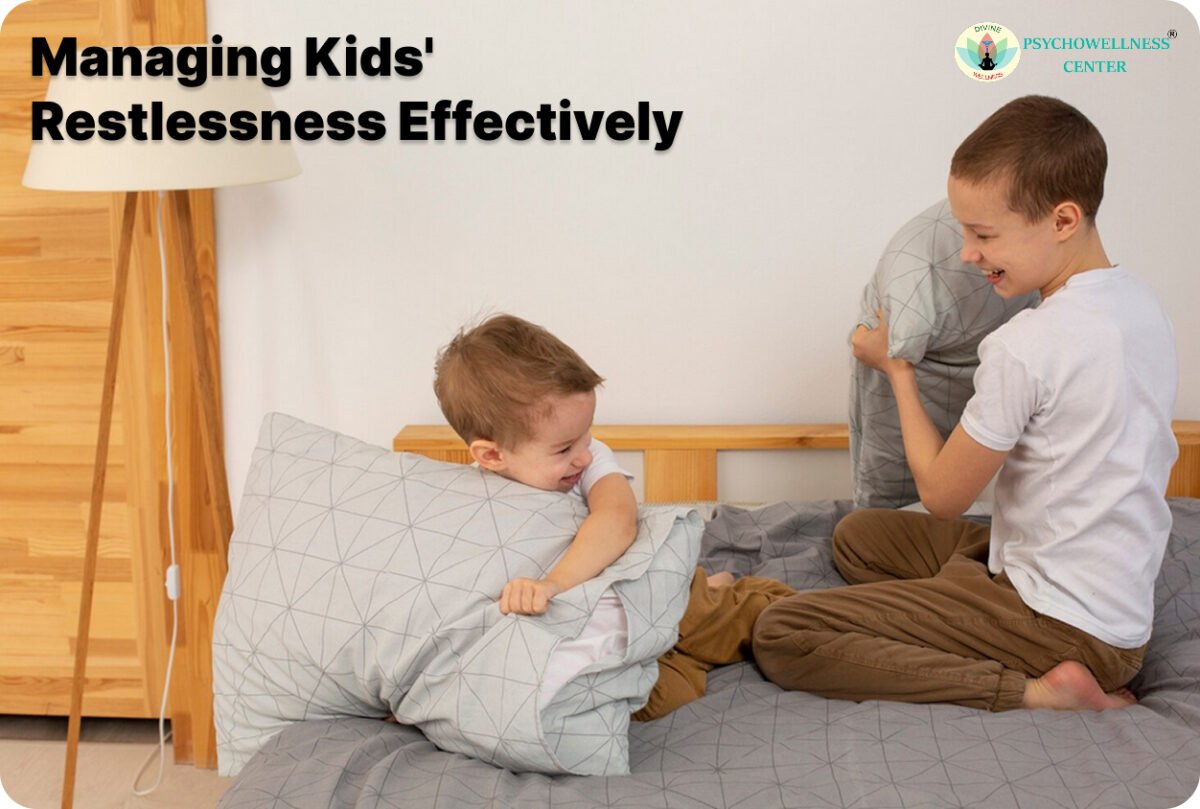
When your child seems to always be on the move, how to understand it, support it and help them settle
Many parents have been there: you call your child to do homework, they bounce to the table, then they’re up asking for a snack, bouncing off the chair, fiddling with toys, resisting sitting down. You might think it’s just “kids being kids,” and often it is. But sometimes restlessness, constant movement, difficulty staying still, trouble settling, can be more than plain high energy. From the vantage point of a child psychologist, restlessness is often a signal of unmet needs, emotional overload, sleep or routine issues, or simply a lack of tools to self-regulate. The good news, it doesn’t mean the child is broken. It means there’s a chance for connection, support and real change.
What does restlessness look like in children?
Restlessness can appear in many ways. A 6-year-old might doodle during dinner, repeatedly ask questions, squirm, fidget, or get up from the table. A 10-year-old might pace, interrupt conversations, struggle to finish tasks, and fidget with objects. The key feature is that their movement or behaviour isn’t just “fun energy” but persistent, distracting, and interfering with learning, family time or calm moments.
For example, Neha (age 8) always has to “get up and move” when doing homework, even though she wants to finish it. She’ll ask to fetch something, stand up, and complain she can’t concentrate. Her parents assumed she must be lazy, but a closer look showed she needed help with focus and routine.
Research shows that such restlessness is more than temperament alone. One study noted preschool‐age children showing elevated restlessness benefited from “customised play therapy”, which reduced symptoms significantly. Another set of findings links poor or irregular sleep in young children to higher levels of inattention and restlessness.
Why children get restless: causes behind the movement
Here are some common underlying causes:
- Sleep or routine disruption: When kids don’t get enough good-quality sleep or the bedtime schedule is inconsistent, their energy system gets dysregulated. Research finds that children with sleep problems are more likely to show externalising behaviours like restlessness.
- Boredom, lack of challenge or engagement: If a task feels too easy or uninteresting, children may fill the gap with movement or distracting behaviour.
- Emotional dysregulation: Kids who feel restless may actually be trying to manage feelings they can’t name, like stress, anxiety, excitement, or overwhelm. For example, one community music therapy study framed children’s restlessness not just as “problem behaviour” but as an expression of internal states.
- Sensory or neuro-developmental needs: Some children are naturally more active or have higher sensory thresholds, so they need more movement, more input, and less stillness.
- Environment and parenting practice: Inconsistent rules, unpredictable routines, lack of structure can increase restlessness. A study linking bedtime routines found that when routines were lax, children had more sleep and behaviour problems.
Why it matters
It can be tempting to dismiss restlessness as “just being a kid,” but when it’s persistent, it affects more than chairs and tables. The consequences include:
- Trouble concentrating or completing schoolwork
- Strained relationships (siblings, parents) when the child’s behaviour becomes frustrating
- Emotional fallout for the child: feeling misunderstood, guilty, or labelled “restless” rather than supported
- Risk of developing patterns of impulsivity, poor self‐regulation or behavioural issues if underlying causes aren’t addressed
The earlier we respond, the more we help the child build self-control, understanding and healthier habits.
What can help: practical strategies for parents and children
Here are strategies that really support children who seem constantly restless:
- Set clear, consistent routines
Children thrive when they know what comes next. Establish predictable bedtimes, homework times, movement breaks, and wind-down routines. Consistency gives their body and brain a rhythm. For example: after homework, allow a 10-minute ‘movement break’ (jumping jacks, dance) before asking for 15 minutes of seated work.
- Integrate movement intentionally
Instead of fighting the movement, build it in. For example, alternating focused table work with a 2-minute “shake out” break helps many kids. This matches their neuro-drive and reduces the strain of forcing stillness.
- Teach self-regulation tools
Simple practices like “take 3 deep breaths before starting homework” or “tap the arms and legs for 30 seconds before sitting” help connect movement with awareness. Mindfulness activities in children have shown benefits for sleep and self-regulation.
- Create a calm environment for focus
Minimise distractions: keep homework area simple, avoid large sensory inputs, and provide clear instructions. Use “movement before stillness” if needed, so the child’s nervous system is ready to settle.
- Positive reinforcement and structure
When a child limits movement or finishes a task despite restlessness, acknowledge their effort: “I noticed how you stayed in your seat through the homework finish, great job!” This builds self-confidence. Behavioural parenting training shows that when parents reinforce desired behaviours and maintain structure, children show fewer disruptive behaviours.
- Check for sleep or medical issues
If restlessness is extreme, persistent, or worsening, consider whether poor sleep, undiagnosed attention issues (like ADHD), or sensory processing challenges are contributing. For example, children with night-waking or irregular sleep may show daytime restlessness.
When to seek professional help
Some restlessness is typical, but consider professional advice if:
- The child’s restlessness is disruptive almost every day and across contexts (school, home)
- It’s paired with mood changes, extreme sleep issues or decline in academic/school performance
- There are signs of significant attention difficulties, possible ADHD, sensory processing issues or emotional trauma
A child psychologist or behavioural therapist can assess underlying causes, work with parents on structure and self-regulation tools, and coordinate with school and medical professionals.
Conclusion
Restlessness in children is more than “they’re just bouncing.” It’s often the surface of underlying needs like movement, regulation, structure, sleep, or emotional processing. From a psychologist’s perspective, the goal is to turn restlessness into meaningful movement, helping the child live with focus and calm rather than constant motion. With consistent routine, built-in movement, self-regulation tools, and supportive parenting, children can learn how to channel their energy and grow in a balanced way. It’s not about stopping motion but giving motion purpose.
Whether seeking guidance from the best psychologist near me or utilizing services like online counselling at TalktoAngel or in-person support at Psychowellness Center in Dwarka Sector-17 and Janakpuri (011-47039812 / 7827208707), early intervention ensures children get the tools they need to thrive. By prioritizing mental well-being, you empower children to grow into confident, balanced, and future-ready individuals. With patience, structure, and empathy, you can help your child move less against their restlessness and more with it, toward growth, confidence, and calm.
Contribution: Dr. R.K. Suri, Clinical Psychologist, and Ms. Arushi Srivastava, Counselling Psychologist
References
Mindell, J. A., & Owens, J. A. (2015). A clinical guide to pediatric sleep: Diagnosis and management of sleep problems (3rd ed.). Wolters Kluwer.
Diamond, A., & Lee, K. (2011). Interventions shown to aid executive function development in children 4–12 years old. Science, 333(6045), 959–964. https://doi.org/10.1126/science.1204529
Pellegrini, A. D., & Smith, P. K. (1998). Physical activity play: The nature and function of a neglected aspect of play. Child Development, 69(3), 577–598.
https://www.psychowellnesscenter.com/Blog/navigating-irritability-and-misconduct-in-children/
https://www.psychowellnesscenter.com/Blog/the-best-child-psychologist-in-central-delhi/
https://www.psychowellnesscenter.com/Blog/behavioral-strategies-to-control-anxiety/
https://www.psychowellnesscenter.com/Blog/the-best-child-psychologist-in-east-delhi/
https://www.psychowellnesscenter.com/Blog/best-child-psychologist-in-dwarka-sector-14-dwarka-delhi/
https://www.psychowellnesscenter.com/Blog/best-child-psychologist-in-tilak-nagar/
https://www.psychowellnesscenter.com/Blog/the-best-child-psychologist-in-central-delhi/
https://www.psychowellnesscenter.com/Blog/how-behavioral-therapy-helps-adhd-children/
https://www.psychowellnesscenter.com/Blog/overcoming-social-anxiety-strategies-for-children/