
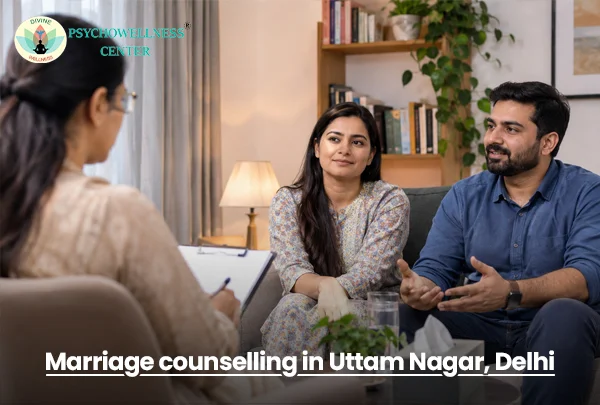
Every marriage goes through rough patches, but it’s hard to tell when a bad week turns into a pattern you can’t talk your way out of. If arguments keep circling back to the same unresolved issue, or if you and your partner have started feeling like roommates instead of a couple, you’re not alone — and you don’t have to figure it out by yourselves. Marriage counselling in Uttam Nagar gives couples in West Delhi a practical, nearby way to work through conflict before it hardens into resentment.
What Kind of Relationship Problems Does Counselling Actually Help With?
Couples usually don’t walk into counselling because of one big fight. They walk in because small frictions have piled up for months, sometimes years, until neither partner knows how to have a calm conversation anymore.
Some of the most common concerns that bring couples to therapy include:
- Communication problems in marriage — conversations that turn into arguments, or important topics that get avoided altogether
- Trust issues in marriage — after infidelity, financial secrecy, or repeated broken promises
- Emotional disconnection in marriage — feeling like strangers under the same roof, with little physical or emotional intimacy left
- Frequent, repetitive arguments over the same two or three topics (money, in-laws, parenting, household responsibilities)
- Difficulty setting healthy relationship boundaries with extended family or work
- One or both partners considering separation but wanting to try everything first
If any of these sound familiar, that’s usually a sign the relationship would benefit from a structured, neutral space to talk — which is exactly what counselling provides.
Is It Normal to Need Marriage Counselling?
Yes. Needing support doesn’t mean a marriage is failing — it usually means both partners still care enough to want it to work. Research on couple therapy consistently finds meaningful improvement for most couples who attend sessions consistently, particularly when they start before resentment has fully set in. Multiple studies suggest that roughly two-thirds to three-quarters of couples see real improvement from structured marriage counselling. The earlier a couple seeks help, the more options they typically have.
How Does Marriage Counselling Actually Work?
A lot of people hesitate to book a session with a trusted marriage counsellor simply because they don’t know what to expect. In practice, marriage counselling is far less intimidating than most couples imagine — it’s a conversation, guided by someone trained to keep it productive.
What Happens in the First Session?
The first session is mostly about understanding the relationship’s history and current pain points. A counsellor will typically:
- Ask each partner, separately and together, what brought them in
- Map out recurring conflict patterns rather than judging who’s “right”
- Explain how sessions will be structured going forward
- Set a few short-term goals both partners can agree on
There’s no pressure to “fix” everything in one sitting. The goal of the first session is simply to get an accurate picture of where the relationship stands.
What Therapy Approaches Do Marriage Counsellors Use?
Two approaches tend to come up most often in couple counselling, and a good counsellor will often blend the two depending on what the relationship needs:
Emotionally focused therapy (EFT) works on the idea that most recurring fights aren’t really about the stated topic — they’re about unmet emotional needs underneath it. EFT helps partners recognise the attachment fears driving their reactions (feeling unseen, unwanted, or unsafe) so they can respond to each other with more empathy instead of defensiveness. It’s one of the more well-studied approaches in couple therapy; a 2019 meta-analysis of randomized controlled trials published in the Journal of Marital and Family Therapy found medium effect sizes for relationship satisfaction immediately after treatment, with EFT performing slightly better than other established methods at the post-treatment stage.
Cognitive behavioural approaches focus more on the specific thought patterns and behaviours that keep a conflict cycle going — for instance, the assumption that a partner’s silence means they don’t care, which then triggers a sharper reaction, which then triggers more silence. CBT-based couple work helps partners catch these patterns in real time and replace them with more constructive responses.
Neither approach is “better” across the board — an experienced counsellor will usually choose, or combine, the method based on whether the core issue is emotional disconnection, communication breakdown, or specific behavioural habits.
How Many Sessions Does Marriage Counselling Usually Take?
This varies a lot depending on the issue. Couples working through a specific, recent conflict might see progress in 6–8 sessions. Couples rebuilding trust after infidelity, or untangling years of built-up resentment, often need several months of consistent sessions. A good counsellor should be able to give you a rough sense of this after the first one or two meetings, once they understand the full picture.
How Do You Choose a Marriage Counsellor in Uttam Nagar?
West Delhi has no shortage of counselling options, so it helps to know what actually matters when picking one, rather than just going with the first search result.
What Should You Look for in a Counsellor?
- Relevant qualifications — a background in clinical or counselling psychology, ideally with specific training in couple or marital therapy, not just individual counselling
- Comfort with both approaches — someone who can draw on emotionally focused therapy and cognitive behavioural approaches as needed, rather than applying one method to every couple
- A track record with similar issues — ask directly whether they’ve worked with couples facing trust issues, communication breakdown, or whatever your specific concern is
- Neutral, non-judgmental presence — in the first session itself, you should get a sense of whether the counsellor listens to both partners fairly
- Confidentiality and a clear process — how sessions are structured, how often they’re held, and what’s expected between sessions
Is Individual Counselling an Option Too?
Yes — and it’s worth considering even if your partner isn’t ready for joint sessions yet. Individual support for relationship concerns can help you process your own feelings, set clearer boundaries, and sometimes become the first step that eventually brings both partners into the room together. A good counsellor can usually work with just one partner initially and adjust the approach as the relationship evolves.
Online or In-Person – Does It Matter?
Both formats work, and the research backing couple therapy doesn’t show a meaningful difference in outcomes between the two when sessions are held consistently. What matters more is finding an experienced marriage counsellor in West Delhi you both feel comfortable being honest with — in person if you’d rather read body language and sit together in a room, or online if scheduling and privacy make that easier.
Psychowellness Center offers face-to-face counselling at its Janakpuri and Dwarka clinics in Delhi, both within easy reach of Uttam Nagar, for couples who’d rather meet their counsellor in person.
Who Are the 10 Counsellors Worth Following for Expert Advice?
The following professionals are associated with psychological and counselling services. Their listed backgrounds vary, so couples should confirm current availability and suitability for marriage counselling before scheduling an appointment.
- Dr. R.K. Suri – Founder and Clinical Psychologist with over 40 years of experience, working with emotional, developmental, and family-related concerns.
- Mrs. Kala Sengupta – Clinical Psychologist with over 35 years of experience in medical and social psychology, supporting families with emotional and behavioural challenges.
- Ms. Sakshi Dhankhar – Counselling Psychologist with training in rehabilitation psychology who provides families and kids with organised coping mechanisms.
- Mr. Utkarsh Yadav – Counselling Psychologist with psychology training and an MBA background, focused on practical, goal-oriented guidance.
- Ms. Tanu Sangwan – A compassionate psychologist specialising in stress, anxiety, and emotional well-being through evidence-based approaches like CBT and mindfulness.
- Ms. Sudipta Das – Counselling Psychologist with 15 years of experience supporting emotional well-being in children and adults.
- Ms. Nicole Fernandes – Counselling Psychologist specialising in workplace stress, relationships, depression, self-esteem, and life transitions, using evidence-based therapies such as CBT, ACT, DBT, and mindfulness.
- Mr. Harpreet Singh – Helps individuals manage stress, emotional triggers, and interpersonal challenges by strengthening emotional regulation and developing practical life skills tailored to their needs.
- Dr. Karuna Singh – Psychotherapist with 25 years of experience helping families navigate emotional and behavioural concerns through structured therapy.
- Mrs. Molly George – Psychologist with 35 years of experience, known for a warm, practical approach to parenting and child-related concerns.
Frequently Asked Questions
Does marriage counselling really work, or is it just talking?
It’s structured, goal-oriented work – not just venting. Counsellors use specific techniques, like EFT or CBT-based methods, to interrupt unhelpful patterns and teach new ways of communicating, which is why most couples who attend consistently report real improvement.
What if my partner refuses to go to counselling?
Start with individual sessions. Working through your own patterns often changes how you show up in the relationship, which can shift the dynamic enough for your partner to reconsider joint sessions later.
Is marriage counselling only for couples on the verge of divorce?
No. Many couples attend simply to strengthen communication or work through a specific recurring conflict long before things reach a crisis point — that’s actually when counselling tends to be most effective.
Ready to Take the Next Step?
If arguments have started to feel exhausting instead of occasional, or if you and your partner have quietly stopped talking about what’s really bothering you, that’s worth addressing now rather than later. Book marriage counselling in Uttam Nagar with a counsellor who takes the time to understand both sides of the story, and start working toward conversations that actually go somewhere. A single first session is often enough to know whether the fit feels right.