
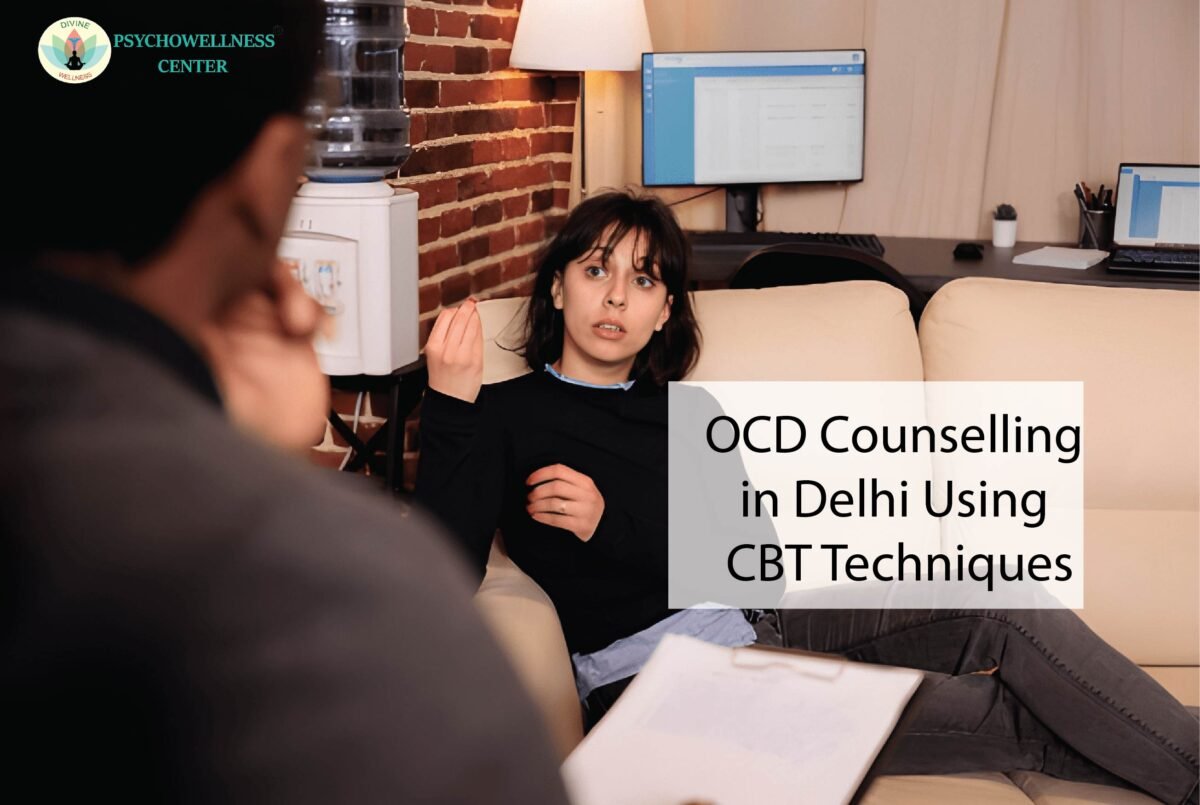
Obsessive-Compulsive Disorder (OCD) is a mental health condition that can profoundly impact an individual’s life. It is characterised by persistent, intrusive thoughts—commonly referred to as obsessions—and repetitive behaviours or mental rituals, known as compulsions. These thoughts and behaviours are often distressing, time-consuming, and difficult to control, leading to significant disruption in daily functioning. While OCD is frequently misunderstood in popular culture as being “excessively tidy” or “perfectionistic,” it is a clinically recognised disorder that requires evidence-based psychological intervention.
In Delhi, a growing number of mental health professionals are adopting structured, research-backed approaches to OCD management. Among these, Cognitive Behavioural Therapy (CBT) stands out as the most effective and widely recommended therapeutic method. For individuals experiencing OCD, understanding the nature of the disorder and accessing specialised counselling is the first step towards meaningful recovery.
Understanding OCD: More Than Just Compulsions
OCD manifests in diverse ways, and no two experiences are exactly alike. Common presentations include:
- Contamination and cleanliness fears: Individuals may engage in excessive handwashing, showering, or cleaning to reduce anxiety about germs, dirt, or illness.
- Checking behaviours: Repeatedly checking locks, appliances, or switches, often driven by a fear of causing harm or making a mistake.
- Intrusive thoughts: Persistent unwanted thoughts about safety, morality, or taboo topics, which can cause shame and heightened anxiety.
- Counting, ordering, or symmetry rituals: Feeling compelled to arrange items “just right” or perform specific sequences to alleviate internal tension.
These obsessions and compulsions are not simply habits or personality traits—they are symptoms of a disorder that can consume hours daily, affect personal and professional relationships, and increase emotional distress. Left untreated, OCD can significantly impair quality of life, lead to secondary depression or anxiety disorders, and reduce occupational and social functioning.
Why Professional Counselling Matters
Many individuals with OCD attempt to manage their symptoms independently, often using avoidance or distraction strategies. Professional counselling provides a structured, safe, and confidential environment where clients can explore intrusive thoughts, understand triggers, and gradually reduce compulsive behaviours.
Psychological interventions are particularly important because OCD is not a matter of willpower. The brain’s anxiety and reward circuits are often dysregulated, making it extremely difficult for individuals to resist compulsive actions without support. Evidence-based therapy, particularly CBT, is designed to directly target these mechanisms.
Cognitive Behavioural Therapy (CBT) for OCD
Cognitive Behavioural Therapy (CBT) is widely regarded as the gold standard treatment for OCD. The approach is highly structured, collaborative, and goal-oriented. It focuses on identifying and challenging unhelpful thought patterns while modifying behaviours that maintain compulsive cycles.
Two primary components of CBT for OCD include:
- Cognitive Restructuring: This involves helping individuals identify irrational or distorted thoughts that fuel obsessive fears. For instance, someone with contamination fears may overestimate the likelihood of illness from touching everyday objects. Through guided cognitive work, clients learn to challenge these thoughts, evaluate evidence realistically, and develop more balanced thinking.
- Exposure and Response Prevention (ERP): ERP, or exposure and response prevention, is a key component of cognitive behavioural therapy for OCD. It involves gradual, controlled exposure to anxiety-provoking stimuli while resisting the urge to perform compulsive behaviours. For example, a person with hand-washing compulsions may begin by touching a “contaminated” object and delaying washing. Over time, repeated practice reduces anxiety and strengthens tolerance for uncertainty, leading to long-term symptom reduction.
CBT sessions are typically personalised based on the severity of symptoms, specific triggers, and individual coping capacity. The therapy emphasises incremental progress, continuous assessment, and skill-building for long-term management.
Benefits of CBT-Based OCD Counselling
CBT for OCD offers a wide range of benefits:
- Reduction in obsessional thoughts and compulsive behaviours: Clients learn to manage intrusive thoughts without resorting to rituals.
- Enhanced coping strategies: Practical tools are provided to deal with anxiety, uncertainty, and stress.
- Improved daily functioning: Individuals regain control over work, relationships, and personal routines.
- Long-term relapse prevention: Skills learned in therapy support continued management beyond formal sessions.
- Reduced co-occurring mental health issues: CBT often alleviates symptoms of depression and generalised anxiety commonly seen in OCD.
Unlike medication, CBT addresses the cognitive and behavioural patterns underlying OCD, providing lasting skills and fostering resilience. In many cases, a combination of therapy and pharmacological intervention may be recommended, particularly for severe symptoms.
Accessing OCD Counselling in Delhi
Delhi has a growing network of mental health facilities offering specialised OCD counselling. For individuals seeking professional guidance, it is important to select centres with trained psychologists experienced in CBT and ERP techniques.
One such trusted facility is the Psychowellness Center, with branches in Janakpuri and Dwarka. The centre offers comprehensive OCD counselling with a focus on personalised CBT interventions. Experienced therapists provide a safe and confidential environment, guiding clients through structured exposure exercises, cognitive restructuring, and effective coping strategies. The centre also integrates supportive counselling, psychoeducation, and family guidance when appropriate, ensuring a holistic approach to recovery.
Why Choose Professional OCD Counselling
OCD is a complex disorder, and attempting self-management without guidance can prolong distress and functional impairment. Professional OCD counselling helps individuals:
- Break the cycle of obsession and compulsion
- Reduce anxiety and emotional distress
- Improve relationships and social functioning
- Regain confidence and control in daily life
- Develop strategies to manage future stressors and prevent relapse
Early intervention is associated with better outcomes. Seeking help from the best psychologists in Delhi ensures that treatment is evidence-based, structured, and tailored to individual needs.
Conclusion
Obsessive-Compulsive Disorder can feel overwhelming, but with the right therapeutic support, it is highly manageable. Cognitive Behavioural Therapy, particularly structured CBT and Exposure and Response Prevention, remains the most effective approach for helping individuals reduce intrusive thoughts, manage compulsive behaviours, and regain control over daily life. Early intervention and consistent therapy significantly improve long-term outcomes and emotional well-being.
For individuals seeking OCD counselling, access to experienced professionals is crucial. Those looking for a trusted counselling psychologist in Delhi or reliable counselling in Delhi often benefit from centres that offer evidence-based and personalised care. Psychowellness Center, with its clinics in Janakpuri and Dwarka Sector-17, provides specialised mental health services delivered by trained professionals using structured CBT approaches.
The centre is recognised for its personalised therapeutic interventions that support emotional balance, behavioural regulation, and everyday functioning, and can be contacted at 011-47039812 or 7827208707 for comprehensive psychological support. For many individuals searching for the best psychologist near me, such integrated and client-centred care becomes a crucial step toward recovery. Additionally, Talktoangel online counselling offers accessible mental health support, allowing individuals to continue therapy conveniently while maintaining continuity of care alongside in-person sessions.
Explore More: https://youtu.be/cBrKbp6yMnM?si=qaVlK5qRO_VK-sKt
https://youtube.com/shorts/xBoFMPygquY?si=KpaRnFS5pxEcMJ53
Contribution: Dr. R.K. Suri, Clinical Psychologist, and Ms. Riya Rathi, Counselling Psychologist
References
- National Institute for Health and Care Excellence. (2005). Obsessive‑compulsive disorder: Core interventions in the treatment of obsessive‑compulsive disorder and body dysmorphic disorder. https://www.nice.org.uk/guidance/cg31
- Olatunji, B. O., Davis, M. L., Powers, M. B., & Smits, J. A. J. (2013). Cognitive‑behavioral therapy for obsessive‑compulsive disorder: A meta‑analysis of treatment outcome and moderators. Journal of Psychiatric Research, 47(1), 33–41. https://doi.org/10.1016/j.jpsychires.2012.09.002
- Rachman, S. (2002). A cognitive theory of compulsive checking. Behaviour Research and Therapy, 40(6), 625–639. https://doi.org/10.1016/S0005-7967(01)00029-6
- Stein, D. J., Costa, D. L. C., Lochner, C., Miguel, E. C., Reddy, Y. C. J., Shavitt, R. G., Van Ameringen, M., & Nestadt, G. (2019). Obsessive‑compulsive disorder. Nature Reviews Disease Primers, 5(1), 52. https://doi.org/10.1038/s41572-019-0102-3