
Mental health care has become an essential part of holistic well-being, and more people in Delhi are exploring counselling options to manage anxiety, stress, depression, relationship challenges, and other emotional concerns. Fast-paced lifestyles, academic pressure, demanding careers, and urban isolation can significantly affect emotional balance. In some cases, prolonged stress may even contribute to physical conditions such as hypertension, showing how closely mental and physical health are connected.
As awareness grows, individuals are also seeking support for concerns like eating disorders, bipolar disorder, emotional dysregulation, and difficulties in maintaining healthy boundaries in relationships. With the increasing demand for accessible and flexible care, two primary modes of counselling have emerged in Delhi: online counselling and offline (in-person) counselling. Each format offers unique strengths and limitations, and choosing the right one can significantly influence the therapeutic experience and outcomes.
In this blog, we’ll compare online and offline counselling in Delhi—exploring what they offer, their limitations, and how individuals can decide which approach best suits their needs.
What Is Online Counselling?
Online counselling involves psychological support and therapy delivered through digital platforms such as video calls, voice calls, chat messaging, or dedicated mental health apps. This mode allows clients and therapists to interact remotely without meeting physically.
In recent years, online counselling has rapidly expanded in Delhi due to better internet access, smartphone usage, and growing acceptance of mental health support. It has become especially helpful for individuals dealing with anxiety, mild to moderate depression, work-related stress, or lifestyle concerns who prefer flexibility and privacy.
Online therapy can also include structured approaches such as DBT (Dialectical Behaviour Therapy), which is particularly effective for individuals struggling with emotional instability, mood swings, or traits associated with bipolar disorder. With proper guidance, online sessions can be structured, goal-oriented, and consistent.
What Is Offline Counselling?
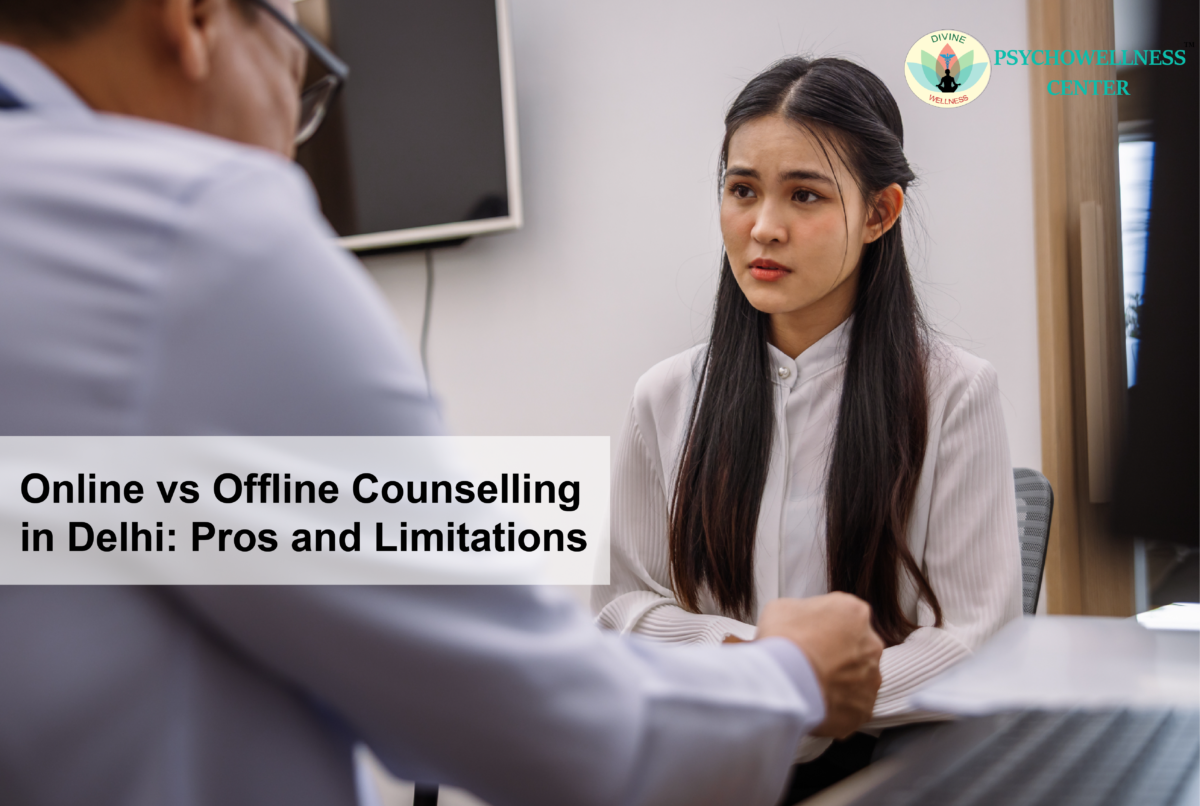
Offline counselling refers to traditional, face-to-face sessions between a client and therapist in a physical setting such as a counselling centre, private clinic, or hospital. Many individuals in Delhi continue to prefer in-person therapy because it offers direct human interaction and a dedicated therapeutic space.
Offline therapy is often recommended for individuals experiencing severe depression, active crises, complex trauma, eating disorders requiring close monitoring, or conditions like bipolar disorder where careful observation of behavioural patterns is important. The physical presence of a therapist allows for deeper assessment of non-verbal communication, posture, emotional expression, and behavioural cues.
In-person sessions also provide a structured environment where individuals can work on setting boundaries, processing emotional pain, and developing coping mechanisms without everyday distractions.
Pros of Online Counselling
- Convenience and Accessibility:- Online counselling removes geographical barriers. Individuals can attend sessions from anywhere in Delhi without worrying about traffic or travel time. This is especially helpful for working professionals, students, parents, or those managing hypertension and other stress-related health concerns.
- Comfort and Privacy:- Many individuals feel more relaxed discussing anxiety, depression, or relationship conflicts from the comfort of their home. For those hesitant about visiting a clinic due to stigma, online therapy offers discretion.
- Flexible Scheduling:- Online sessions can often be scheduled outside traditional working hours, making it easier to maintain consistency in therapy.
- Cost-Effective Option:- Without travel expenses and commute time, online counselling can sometimes be more economical, particularly for long-term therapy plans.
Limitations of Online Counselling
- Dependence on Technology:- Stable internet and digital familiarity are necessary. Technical disruptions may interrupt the flow of emotional processing.
- Limited Observation:- Although video calls capture facial expressions, therapists may miss subtle non-verbal cues that are easier to observe in person.
- Suitability for Severe Conditions:- Individuals experiencing high-risk symptoms, severe eating disorders, active self-harm behaviours, or acute bipolar episodes may require in-person assessment and possibly psychiatric collaboration.
- Environmental Distractions:- Therapy requires privacy. Shared living environments may create interruptions that affect emotional safety and openness.
Pros of Offline Counselling
- Strong Therapeutic Presence:- Face-to-face interaction enhances trust and therapeutic alliance. Emotional shifts, body language, and behavioural responses are easier to observe directly.
- Dedicated Emotional Space:- A counselling office provides a neutral, confidential setting free from home distractions. This structured space can deepen emotional exploration and encourage honest self-reflection.
- Broader Clinical Techniques:- Certain therapeutic interventions—such as experiential exercises or behavioural work—are more effective in person. Therapists can also closely guide DBT-based exercises for emotional regulation.
- Immediate Crisis Support: For individuals experiencing severe depression, panic attacks, or unstable mood episodes related to bipolar disorder, in-person support allows quicker risk assessment and intervention.
Limitations of Offline Counselling
- Time and Travel Demands:- Delhi’s traffic congestion can make commuting stressful and time-consuming.
- Accessibility Issues:- Not all areas have easy access to specialised mental health professionals.
- Social Stigma:- Despite progress, some individuals still feel hesitant about being seen entering a counselling clinic.
Choosing What’s Right for You
Selecting between online and offline counselling depends on several factors:
- Nature of Concern: Mild anxiety or work stress may be effectively managed online, while severe depression or complex conditions might benefit from in-person care.
- Comfort Level: Some individuals open up more easily online, while others prefer face-to-face interaction.
- Consistency: Consider whether travel time will affect your ability to attend sessions regularly.
- Clinical Needs: Conditions such as eating disorders, bipolar disorder, or chronic hypertension linked to stress may require a more structured or blended approach.
Regardless of format, therapy aims to help individuals build coping skills, regulate emotions, improve relationships, and establish healthy boundaries. Learning to say no, managing emotional triggers, and developing resilience are core parts of psychological growth.
Hybrid Approach: A Balanced Option
Many individuals now choose a hybrid model, combining online and offline sessions. This approach provides flexibility while maintaining depth in the therapeutic relationship. For example, clients may attend in-person sessions during intense phases of therapy and switch to online sessions when schedules become tight
Conclusion
Both online and offline counselling have a vital role to play in Delhi’s mental health landscape. Online counselling brings accessibility, flexibility, and comfort to those who may otherwise struggle to seek support, allowing individuals to manage stress, anxiety, depression, or emotional challenges from the comfort of their home. Offline counselling offers immersive, structured environments ideal for deeper emotional work, helping clients address complex issues such as bipolar disorder, eating disorders, or difficulties in maintaining healthy boundaries.
Rather than viewing one format as superior to the other, it is more helpful to see them as complementary tools—each supporting different needs, preferences, and life situations. Choosing the right mode of counselling begins with understanding your goals, constraints, and emotional needs. Whether through the convenience of a screen or the presence of a shared physical space, the essence of therapy remains the same: creating a safe, supportive environment where healing, growth, and understanding can unfold.
For those in Delhi seeking professional in-person support, Psychowellness Center offers a dedicated space where experienced psychologist Delhi and counselling psychologist Delhi provide evidence-based therapy tailored to individual needs. Individuals searching for a counsellor near me can also access flexible online counselling through TalktoAngel, offering therapy from the comfort and privacy of home. With a warm, confidential environment and a range of therapeutic approaches, Psychowellness Centre helps clients work through emotional challenges, build resilience, and foster long-term well-being.
Check out to know more about counselling –
https://youtube.com/shorts/qd2JBA7NIZQ?si=FP2XidexMQtgwIIC
https://youtu.be/3lurBTWt9l4?si=6zr7YoIbMr0kae3n
Contribution: Dr. R.K. Suri, Clinical Psychologist, and Ms. Riya, Counselling Psychologist
References
- American Psychological Association. (2017). Ethical principles of psychologists and code of conduct. American Psychological Association. https://www.apa.org/ethics/code
- Barak, A., Hen, L., Boniel-Nissim, M., & Shapira, N. (2008). A comprehensive review and a meta-analysis of the effectiveness of internet‐based psychotherapeutic interventions. Journal of Technology in Human Services, 26(2–4), 109–160. https://doi.org/10.1080/15228830802094429
- Geller, S., & Greenberg, L. S. (2012). Therapeutic presence: A mindful approach to effective therapy. American Psychological Association. https://doi.org/10.1037/13747-000