
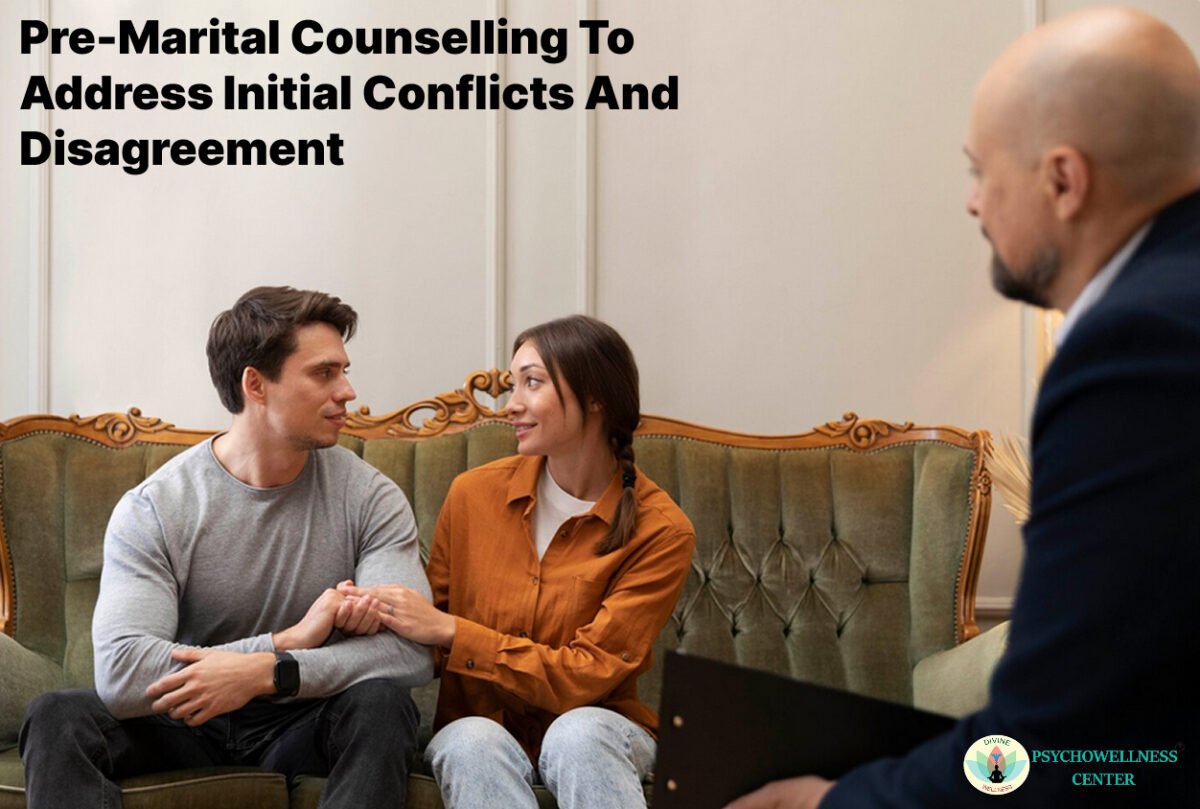
Marriage is one of the most significant relationships in an individual’s life, involving emotional intimacy, shared responsibilities, and long-term commitment. While many couples enter marriage with excitement and hope, it is natural for conflicts and disagreements to arise even in the initial phase. Differences in values, expectations, communication styles, and family influences often create tension between partners. Pre-marital counselling has emerged as a proactive strategy to prepare couples for marriage, helping them recognize potential areas of conflict and develop effective strategies to manage disagreements before they escalate.
Pre-marital counselling is not merely for couples in crisis; it is an educational and preventive tool designed to build awareness, understanding, and resilience in relationships. By addressing initial conflicts early, couples can develop realistic expectations, learn constructive communication techniques, and establish a strong foundation for long-term marital satisfaction.
- Understanding the Purpose of Pre-Marital Counselling
The primary goal of pre-marital counselling is to help couples understand each other deeply, identify potential sources of conflict, and learn strategies for healthy problem-solving. Many couples enter marriage with idealized notions of their partner, assuming alignment in values, beliefs, and life goals. However, differences inevitably exist, and without guidance, these differences may lead to misunderstanding, resentment, or emotional distance. Counselling provides a structured environment for partners to explore expectations regarding finances, family roles, intimacy, career ambitions, and cultural or religious practices.
- Addressing Differences in Communication Styles
One of the earliest sources of disagreement in marriages is differing communication styles. Some individuals are expressive and direct, while others are reserved or avoidant. Misinterpretation of verbal or non-verbal cues can escalate minor misunderstandings into significant arguments. Pre-marital counselling teaches couples to identify their communication patterns, recognize triggers, and practice active listening. Techniques such as “I” statements, reflective listening, and time-outs during conflict help partners express themselves without blame. Learning constructive communication early reduces defensive behaviors and fosters mutual understanding, thereby preventing recurring conflicts.
- Exploring Financial Expectations
Money-related issues are consistently reported as a leading cause of marital conflict. Couples may have different attitudes toward spending, saving, investing, or handling debts. Pre-marital counselling provides a platform to discuss financial expectations openly and realistically. This includes creating joint budgets, setting financial goals, and establishing boundaries regarding personal spending. Addressing financial expectations before marriage reduces the risk of arguments over money management and builds trust between partners. Financial harmony is not merely about having similar income levels but aligning values and establishing transparent communication regarding finances.
- Clarifying Roles and Responsibilities
Early disagreements often stem from unclear expectations regarding household roles, childcare, and extended family responsibilities. Traditional beliefs, cultural norms, and individual upbringing influence each partner’s perspective on these roles. Counselling sessions provide an opportunity to negotiate responsibilities, clarify priorities, and set mutually acceptable expectations. Discussing roles early prevents assumptions that can lead to frustration and resentment. Couples learn to view responsibilities collaboratively rather than competitively, fostering teamwork and partnership.
- Managing Conflict and Disagreement Effectively
Conflict is inevitable in any relationship, but the approach to conflict determines its impact on marital satisfaction. Pre-marital counselling emphasizes healthy conflict resolution strategies, including compromise, problem-solving, and emotional control. Couples learn to recognize early warning signs of escalation, manage anger constructively, reduce anxiety, and avoid harmful patterns such as stonewalling or passive-aggressiveness. Understanding that disagreement does not equate to failure allows partners to approach challenges with curiosity and empathy.
- Enhancing Emotional Intimacy
Initial conflicts can strain emotional connection if partners lack understanding or empathy. Pre-marital counselling encourages couples to explore emotional needs, attachment styles, and vulnerabilities. By understanding each other’s emotional triggers and comfort zones, partners can respond supportively rather than reactively. Strengthening emotional intimacy early creates a safe space for honest dialogue, mutual validation, and empathy. Couples who cultivate emotional closeness are better equipped to navigate disagreements without damaging trust or connection.
- Addressing Family and Social Influences
Extended family, friends, and cultural expectations can also be sources of initial disagreement. Differences in family traditions, parenting styles, or expectations regarding social interactions may create tension. Pre-marital counselling helps couples identify potential external stress and develop strategies to negotiate boundaries, maintain autonomy, and support each other. Learning to manage external influences collectively strengthens the marital unit and prevents conflicts from being amplified by external pressures.
- Building Problem-Solving and Decision-Making Skills
Decision-making is an essential skill in marriage, as couples frequently encounter choices that impact both partners. Pre-marital counselling introduces structured problem-solving approaches, including evaluating options, discussing pros and cons, and reaching agreements collaboratively. Couples also learn to differentiate between negotiable and non-negotiable issues, prioritize shared goals, and adapt flexibly to change. Effective decision-making reduces recurring arguments and creates a sense of shared responsibility in the relationship.
- Encouraging Realistic Expectations
Unrealistic expectations about marriage, intimacy, or partner behavior often lead to initial conflict. Counselling encourages partners to explore beliefs about marriage, debunk myths, and develop realistic expectations. Understanding that conflict is normal, that compromise is necessary, and that personal growth continues after marriage allows couples to approach disagreements with patience and flexibility. Realistic expectations prevent disillusionment and foster long-term satisfaction.
- Benefits Beyond Conflict Resolution
Pre-marital counselling benefits couples in ways beyond managing conflicts. It enhances self-awareness, self-confidence, empathy, communication, and emotional intelligence. Couples who participate in counselling are more likely to report satisfaction in their relationships, better stress management, and improved coping with challenges such as career changes, parenthood, or relocation. By proactively addressing potential issues, pre-marital counselling lays a foundation for a resilient and harmonious marriage.
Conclusion
Initial conflicts and disagreements are natural in any marriage, but they do not have to undermine the relationship. Pre-marital counselling provides couples with the tools, insights, and strategies necessary to navigate these early challenges effectively. By addressing communication differences, financial expectations, household roles, emotional needs, external influences, and decision-making styles, couples develop a foundation of understanding, empathy, and mutual respect. Investing in pre-marital counselling is an investment in long-term marital satisfaction, allowing partners to enter marriage with clarity, preparedness, and resilience.
Pre-marital counselling can be a transformative step for couples who want to begin their marital journey with clarity, mutual understanding, and emotional preparedness. Professional support helps couples navigate early conflicts, strengthen communication, and build healthy problem-solving skills before misunderstandings deepen. Psychowellness Center, with experienced relationship psychologists, offers structured pre-marital counselling using approaches such as Cognitive Behaviour Therapy (CBT), Emotion-Focused Therapy (EFT), Relationship Counseling, communication skills training, conflict resolution strategies, and stress management techniques, tailored to each couple’s needs. Couples can seek support by contacting 011-47039812 or 7827208707 for guidance and appointments. For those who prefer flexible and accessible options, TalktoAngel also provides online counselling services, enabling couples to engage in meaningful therapeutic conversations from the comfort of their homes. With the right guidance and proactive support, pre-marital counselling empowers couples to enter marriage with confidence, empathy, and a strong foundation for a healthy and lasting relationship.
Contribution: Dr. R.K. Suri, Clinical Psychologist, and Ms. Sakshi Dhankhar, Counselling Psychologist
References
Gottman, J., & Silver, N. (2015). The seven principles for making marriage work: A practical guide from the country’s foremost relationship expert. Harmony Books.
Markman, H. J., Stanley, S. M., & Blumberg, S. L. (2010). Fighting for your marriage: Positive steps for preventing divorce and preserving a lasting love (3rd ed.). Jossey-Bass.
Worthington, E. L., & Scherer, M. (2004). Forgiveness is an emotion-focused coping strategy that can reduce health risks and promote health resilience: Theory, review, and hypotheses. Psychology & Health, 19(3), 385–405. https://doi.org/10.1080/0887044042000196674
Halford, W. K., & Bodenmann, G. (2013). Effects of relationship education on couple relationships. Family Process, 52(2), 199–215. https://doi.org/10.1111/j.1545-5300.2012.01415.x
https://www.psychowellnesscenter.com/Blog/role-of-pre-marital-counselling-for-young-couples/
https://www.psychowellnesscenter.com/Blog/benefits-of-premarital-counseling/
https://www.psychowellnesscenter.com/Blog/best-relationship-counsellor-in-southeast-delhi/
https://www.psychowellnesscenter.com/Blog/10-benefits-of-seeking-pre-marriage-counselling/
https://www.psychowellnesscenter.com/Blog/best-marriage-counsellor-in-dwarka-sector-19-dwarka-delhi/
https://www.psychowellnesscenter.com/Blog/importance-of-pre-marital-mental-health-assessment/
https://www.psychowellnesscenter.com/Blog/how-to-get-mentally-prepared-for-marriage/
https://www.psychowellnesscenter.com/Blog/best-marriage-counselor-in-jorbagh-delhi/
https://thepsychowellness.com/pre-marital-counseling-build-a-strong-bond-before-marriage/
https://www.psychowellnesscenter.com/Blog/best-relationship-counsellor-in-southeast-delhi/
https://www.psychowellnesscenter.com/Blog/best-relationship-counsellor-in-mehrauli-delhi/