
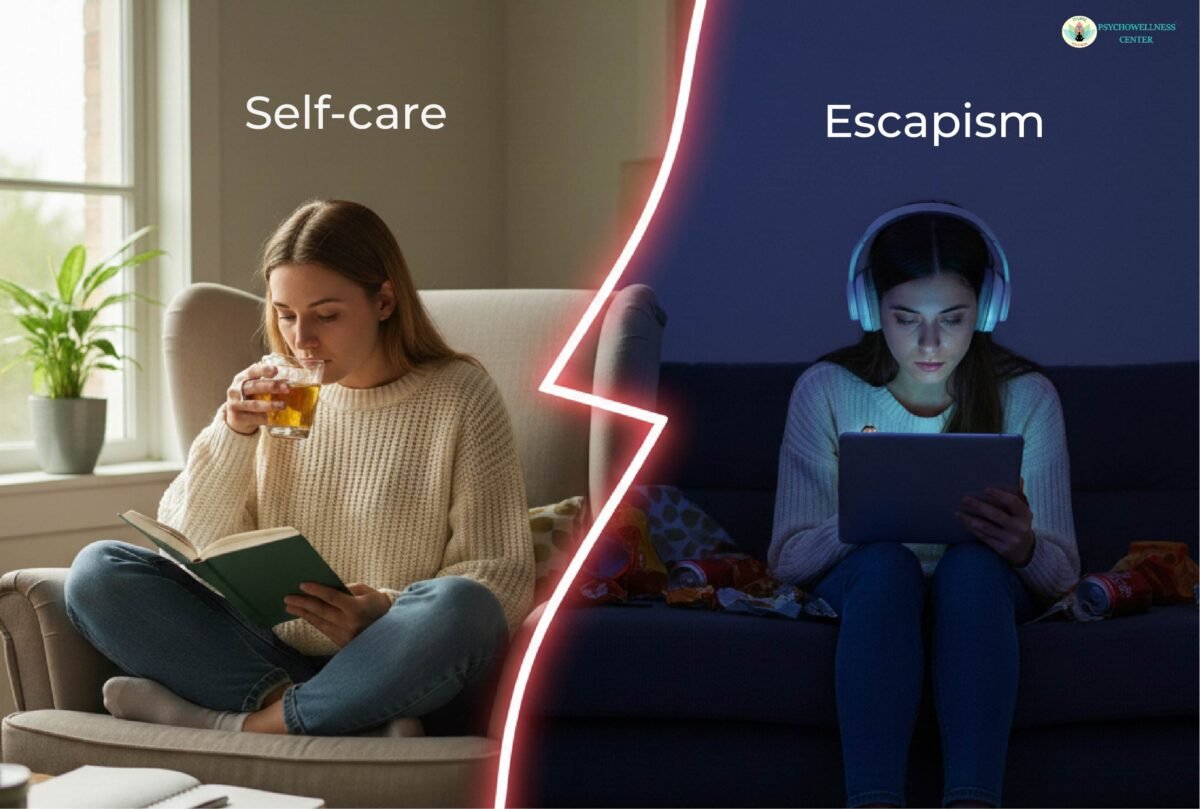
In recent years, self-care has become a widely used concept, often promoted as essential for mental health and well-being. However, alongside its growing popularity, the meaning of self-care has become increasingly blurred. Activities labelled as “self-care” sometimes function less as restorative practices and more as methods of avoidance or emotional numbing. From a psychological standpoint, understanding the difference between self-care and escapism is crucial for long-term emotional health.
While both self-care and escapism may provide temporary relief from stress, their intentions, outcomes, and psychological impact differ significantly.
Understanding Self-Care Through Psychology
Self-care, in psychological terms, refers to intentional behaviours that support emotional regulation, physical health, and psychological resilience. These behaviours help individuals meet their basic emotional needs, manage stress effectively, and restore internal balance. Genuine self-care is proactive rather than reactive; it aims to strengthen one’s capacity to cope rather than simply distract from discomfort.
Examples of self-care include maintaining healthy sleep routines, engaging in physical activity, setting boundaries, practising mindfulness, seeking therapy, or having honest conversations. These actions may not always feel pleasurable in the moment, but they contribute to long-term well-being. Psychology emphasises that self-care often involves discomfort, effort, and self-reflection.
What Escapism Looks Like Psychologically
Escapism, by contrast, is motivated by the desire to avoid emotional distress rather than address it. It involves disengaging from reality to suppress or distract from difficult thoughts and feelings. Common forms of escapism include excessive screen time, binge-watching, substance use, compulsive shopping, emotional eating, or constant busyness.
While escapist behaviours can offer short-term relief, they do not resolve underlying stressors. In fact, psychology links chronic escapism to increased anxiety, emotional suppression, and reduced distress tolerance. Over time, avoidance can reinforce fear-based coping and prevent emotional growth.
Intent: The Key Differentiator
One of the most important psychological distinctions between self-care and escapism lies in intention. Self-care is driven by self-responsibility and awareness: “What do I need to function better?” Escapism is driven by avoidance: “How can I stop feeling this right now?”
Intent shapes outcome. A walk in nature, for instance, can be self-care if it is used to regulate emotions and gain clarity. The same walk becomes escapism if it is used repeatedly to avoid addressing conflict, responsibilities, or emotional pain. Psychology emphasises that behaviour alone does not define self-care; motivation and awareness do.
Emotional Outcomes Over Time
Another key difference lies in how individuals feel after the activity. Self-care generally leads to increased clarity, emotional stability, and a sense of agency. Even when difficult, it leaves individuals feeling more grounded and capable of facing challenges.
Escapism, on the other hand, often results in emotional rebound effects. Temporary relief is followed by guilt, anxiety, or intensified stress once reality re-emerges. This cycle mirrors the psychological pattern seen in avoidance-based coping strategies, which provide short-term comfort at the cost of long-term distress.
The Role of Avoidance in Mental Health
Avoidance is a central concept in psychology, particularly in anxiety and trauma-related disorders. Avoiding uncomfortable emotions can reinforce fear pathways in the brain, making distress feel more threatening over time. Escapism strengthens this avoidance loop by teaching the nervous system that discomfort must be escaped rather than processed.
Self-care, in contrast, supports emotional processing. Practices such as journaling, therapy, or mindfulness help individuals tolerate distress and develop emotional resilience. Psychological research consistently shows that increased distress tolerance is associated with improved mental health outcomes.
Social Media and the Self-Care Illusion
Modern culture, especially social media, often presents self-care as indulgence or constant pleasure. This framing can make escapism appear productive or even therapeutic. Phrases like “you deserve this” may encourage avoidance rather than growth, especially when used to justify chronic disengagement from responsibility or emotional work.
Psychologically healthy self-care is not about constant comfort; it is about sustainability. It supports functioning across multiple areas of life, including relationships, work, and self-esteem. Escapism may feel nurturing in the moment, but it often undermines long-term stability.
Reflective Questions to Differentiate the Two
Psychology encourages self-reflection as a tool for insight. Asking the following questions can help clarify whether a behaviour is self-care or escapism:
- Does this help me cope better in the long run?
- Am I avoiding something important or emotionally difficult?
- Do I feel more capable after this, or more disconnected?
- Is this a choice, or does it feel compulsive?
Self-care feels intentional and empowering, while escapism often feels urgent and numbing.
When Escapism Signals an Unmet Need
It is important to note that escapism is not a moral failure. From a psychological perspective, it often signals unmet emotional needs, burnout, or unresolved stress. Occasional escapism is a human response to overwhelm. The concern arises when avoidance becomes the primary coping mechanism.
Recognising escapist patterns with compassion allows individuals to explore healthier alternatives rather than engaging in self-criticism. Therapy and self-awareness can help transform avoidance into intentional self-care.
Conclusion
The difference between self-care and escapism lies not in the activity itself, but in the intention behind it, the level of awareness involved, and its long-term impact on emotional well-being. True self-care supports growth, resilience, and self-responsibility, even when it feels uncomfortable or requires effort. In contrast, escapism seeks to avoid emotional discomfort, offering temporary relief while often reinforcing avoidance patterns that can hinder long-term mental health.
From a psychological perspective, genuine self-care encourages mindfulness, emotional presence, and self-reflection rather than distraction or numbing. Learning to recognize this distinction empowers individuals to make conscious choices that nurture sustainable emotional balance instead of short-lived comfort. Over time, these mindful decisions contribute to stronger coping skills, healthier relationships, and improved self-understanding.
If you find yourself feeling overwhelmed, emotionally disconnected, or unsure whether your coping strategies are helping or hindering your well-being, professional guidance can offer clarity and support. TalktoAngel is a trusted platform for online therapy and mental health services, providing personalized care tailored to individual needs. With access to some of the best psychologists in India, TalktoAngel helps individuals explore healthier ways to cope and reconnect with themselves. If you’re searching for the best psychologist near me to better understand your emotional patterns and develop authentic self-care practices, TalktoAngel offers expert, compassionate support. For confidential assistance, you may also contact the Psychowellness Center at (+91 78272 08707) or (+91 11 4707 9079) and take a meaningful step toward lasting mental well-being.
Contribution: Dr. R.K. Suri, Clinical Psychologist, and Ms. Mansi, Counselling Psychologist
References
Hayes, S. C., Strosahl, K. D., & Wilson, K. G. (2012). Acceptance and commitment therapy: The process and practice of mindful change (2nd ed.). Guilford Press.
Kashdan, T. B., & Rottenberg, J. (2010). Psychological flexibility as a fundamental aspect of health. Clinical Psychology Review, 30(7), 865–878. https://doi.org/10.1016/j.cpr.2010.03.001
Sirois, F. M., & Hirsch, J. K. (2019). Self-compassion and adherence in health behavior. Journal of Health Psychology, 24(10), 1–12. https://doi.org/10.1177/1359105317729843
https://www.psychowellnesscenter.com/Blog/lifestyle-self-care-strategies-to-manage-anxiety/
https://www.psychowellnesscenter.com/Blog/integrating-self-care-practices-in-work-environment/
https://www.psychowellnesscenter.com/Blog/best-child-psychologist-in-dwarka-sector-13-dwarka-delhi/
https://www.psychowellnesscenter.com/Blog/fear-less-live-more-overcoming-phobias/
https://www.psychowellnesscenter.com/Blog/how-therapy-can-help-manage-teen-impulsivity/
https://www.psychowellnesscenter.com/Blog/how-to-manage-psychosomatic-disorders/
https://www.psychowellnesscenter.com/Blog/symptoms-and-treatment-for-complex-ptsd/
https://www.talktoangel.com/blog/self-doubt-and-self-criticism-counselling
https://www.psychowellnesscenter.com/service-self-confidence-counselling-delhi/
https://www.psychowellnesscenter.com/Blog/battling-self-limiting-beliefs-and-thoughts/
https://www.psychowellnesscenter.com/Blog/best-counselling-psychologist-in-south-ex-delhi/