
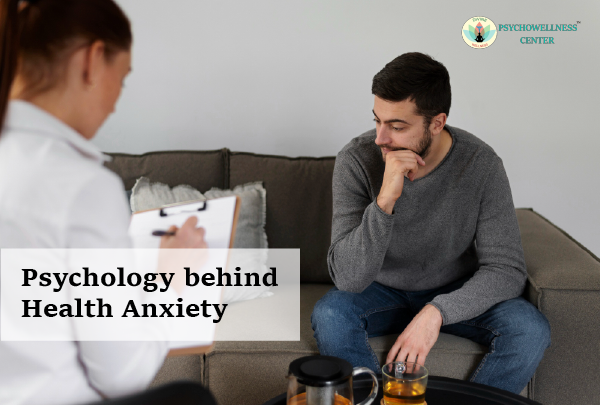
In today’s fast-paced, information-driven world, concerns about health have become increasingly common. While it is normal to worry about one’s well-being occasionally, for some individuals, these worries become persistent, overwhelming, and distressing. This condition is known as health anxiety, also referred to as illness anxiety disorder.
Health anxiety is not simply “overthinking”, it is a complex psychological experience shaped by thoughts, emotions, behaviors, and past experiences. Understanding the psychology behind it can help individuals manage it effectively and seek appropriate support.
What is Health Anxiety?
Health anxiety is characterized by a constant fear of having or developing a serious illness, even when medical evaluations show no cause for concern. Individuals often misinterpret normal bodily sensations, such as a headache or fatigue, as signs of severe diseases.
This condition exists on a spectrum. Mild forms may involve occasional worry, while severe forms can interfere with daily life, relationships, self-confidence, self-esteem, self-worth, creating emotional trauma and work performance.
The Cognitive Roots of Health Anxiety
At the core of health anxiety lies the way a person thinks about their body and health. Cognitive psychology explains that individuals with health anxiety often engage in distorted thinking patterns.
For example:
- Catastrophic thinking: Interpreting minor symptoms as life-threatening illnesses
- All-or-nothing thinking: Believing one is either completely healthy or seriously ill
- Selective attention: Focusing only on bodily sensations that confirm fears
These thinking errors create a cycle where the mind constantly scans for danger. Even harmless sensations become “evidence” of illness, increasing anxiety.
The Role of Body Hypervigilance
People with health anxiety tend to be highly aware of their bodies. This is known as body vigilance or hyper-awareness of physical sensations.
For instance, a slight change in heartbeat, a muscle twitch, or a mild headache, sensations most people would ignore, become amplified. The brain treats these sensations as threats, triggering anxiety.
Ironically, the more attention one gives to the body, the more sensations they notice, which reinforces the fear. This creates a self-perpetuating loop of anxiety and symptom monitoring.
The Vicious Cycle of Health Anxiety
Health anxiety is maintained by a powerful cycle:
- A bodily sensation occurs (e.g., chest discomfort)
- The sensation is incorrectly perceived as a sign of a major health problem.
- Anxiety increases
- The individual engages in safety behaviors (Googling symptoms, repeated doctor visits)
- Temporary relief is felt
- Anxiety returns stronger than before
Reassurance, whether from doctors, family, or the internet, provides only short-term relief and often strengthens the cycle in the long run.
Behavioral Factors: Safety and Avoidance
Behavior plays a crucial role in maintaining health anxiety. Two common patterns are:
1. Reassurance-Seeking
Constantly checking symptoms online, visiting doctors repeatedly, or asking others for reassurance.
2. Avoidance
Avoiding hospitals, medical tests, or even health-related discussions due to fear.
Both behaviors prevent individuals from learning that their fears are often unfounded, keeping the anxiety alive.
Emotional and Psychological Triggers
Several emotional factors contribute to health anxiety:
- Fear of uncertainty: Not knowing what a symptom means can feel overwhelming
- Fear of illness or death: Deep concerns about health and safety often underlie anxiety
- Past experiences: Personal or family illness can increase vulnerability
- Stress and anxiety sensitivity: Generally anxious Individuals are more likely to develop health anxiety
Excessive exposure to health-related information, especially online, can also intensify symptoms and increase worry.
Why Health Anxiety Feels So Real
The fact that the physical symptoms of health anxiety are real is one of its most difficult features. The body’s fight-or-flight reaction is triggered by anxiety, resulting in symptoms like:
- Rapid heartbeat
- Sweating
- Muscle tension
- Dizziness
These sensations can closely mimic actual medical conditions, making it even harder for individuals to differentiate between anxiety and illness.
Treatment and Management
Health anxiety is highly manageable with the right support, and one of the most effective methods involves structured psychological interventions like Cognitive Behavioral Therapy (CBT).
CBT helps individuals:
- Identify and challenge distorted thoughts
- Reduce excessive checking and reassurance-seeking
- Learn to tolerate uncertainty
- Develop healthier coping strategies
In some cases, medication may also be recommended, especially when anxiety is severe.
Additionally, self-help strategies can support recovery:
- Limiting online symptom searches
- Practicing mindfulness and relaxation techniques
- Maintaining a balanced lifestyle
- Seeking professional guidance when needed
When to Seek Professional Help
If health anxiety begins to interfere with daily functioning, relationships, or emotional well-being, it is important to seek professional support from the best psychologists in Delhi NCR and the best psychologists in India. Early intervention can prevent the condition from becoming more severe and improve overall quality of life. For individuals struggling with health anxiety, professional guidance can make a significant difference. The comprehensive mental health services offered by Psychowellness Center are customized to meet each person’s needs. The center has branches in Janakpuri and Dwarka Sector 17, offering access to experienced clinical psychologists who specialize in anxiety disorders, including other anxiety disorders like social anxiety and phobias. Through evidence-based approaches such as CBT, individuals can better understand their thought patterns, manage anxiety symptoms, and regain control over their lives. With a safe, supportive, and confidential environment, clients are encouraged to openly explore their concerns and work toward emotional well-being.
You can call 011-47039812 or 7827208707 for appointments or questions. Additionally, TalktoAngel is an online counseling platform that connects individuals with qualified best counselors near me, making mental health support accessible from the comfort of home.
Conclusion
Health anxiety is more than just excessive worry, it is a deeply rooted psychological pattern involving thoughts, emotions, and behaviors. While it can feel overwhelming, understanding its underlying mechanisms is the first step toward recovery.
By addressing distorted thinking, breaking the cycle of reassurance-seeking, and seeking professional support when needed, individuals can learn to manage their fears and lead a more balanced, fulfilling life.
Contribution: Dr. R.K. Suri, Clinical Psychologist, and Ms. Sakshi Dhankhar, Counselling Psychologist
References
- American Psychiatric Association. Diagnostic and Statistical Manual of Mental Disorders (DSM-5-TR).
- Abramowitz, J. S., & Braddock, A. E. (2011). Psychological Treatment of Health Anxiety and Hypochondriasis: A Biopsychosocial Approach.
- Taylor, S., & Asmundson, G. J. G. (2004). Treating Health Anxiety: A Cognitive-Behavioral Approach.
- Warwick, H. M. C., & Salkovskis, P. M. (1990). Hypochondriasis. Behaviour Research and Therapy.
- https://www.psychowellnesscenter.com/service-anxiety-counselling-delhi/
- https://www.psychowellnesscenter.com/Blog/top-depression-and-anxiety-treatment-clinic-in-delhi/
- https://www.psychowellnesscenter.com/Blog/anxiety-counselling-in-delhi-for-high-pressure-careers/
- https://www.psychowellnesscenter.com/Blog/lifestyle-self-care-strategies-to-manage-anxiety/
- https://www.psychowellnesscenter.com/Blog/anxiety-counselling-near-me-for-students/