
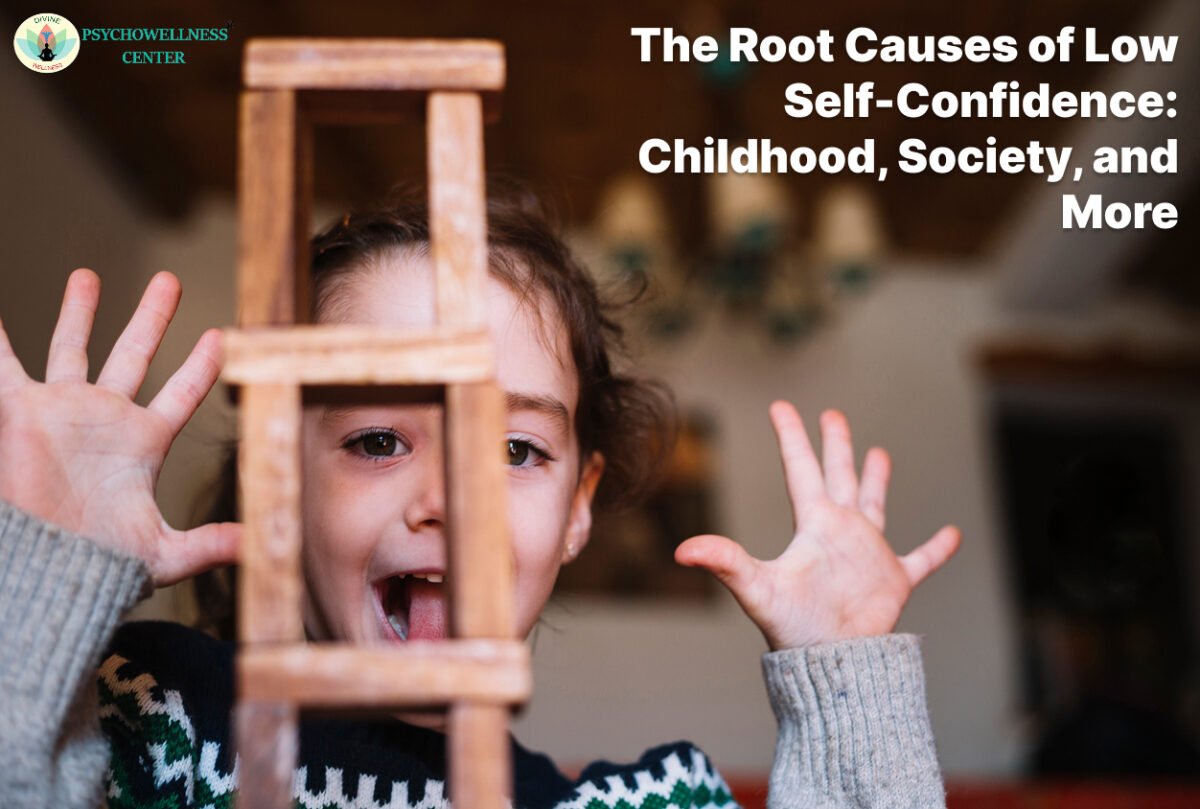
Low self-confidence doesn’t emerge overnight. It is shaped gradually through experiences, environments, relationships, and the stories we tell ourselves. While many people try to treat low confidence as an isolated problem, its roots often reach deep into emotional, psychological, and social history. In this blog, we’ll explore the major contributors to low self-worth, including childhood patterns, societal pressures, and the impact of modern life. Along the way, we’ll highlight key factors such as stress, anxiety, depression, trauma, anger, career issues, social isolation, social anxiety, chronic pain, emotional abuse, family problem, low motivation, panic disorder, sleep, workplace, adjustment disorder, body image, burnout, communication disorder, dependence, fear of missing out, friendship, hypertension, mindfullness, peer pressure, self esteem, and healthy boundary all of which often play a role in shaping confidence.
1. Childhood: Where Beliefs Begin
For many people, low self-confidence begins in childhood. Our early years set the foundation for how we perceive ourselves and interact with the world. When a child grows up in an environment filled with criticism, comparison, or neglect, their sense of worth may become fragile. The presence of emotional abuse, whether overt or subtle, can deeply damage a child’s developing identity.
Similarly, navigating a persistent family problem such as conflict, instability, or favoritism often teaches children that they are not important, capable, or valued. These internalized lessons can follow them well into adulthood, resurfacing whenever they face challenges or criticism.
However, even supportive homes can unintentionally create low confidence. For instance, overprotection can lead to dependence, preventing children from developing resilience or decision-making skills. Without opportunities to fail, learn, and grow, they may develop doubts about their abilities later in life.
2. The Emotional Burden: Mental Health and Inner Struggles
Mental health plays a profound role in shaping confidence. Conditions such as anxiety, depression, or panic disorder can distort thoughts, amplify self-doubt, and make everyday tasks feel overwhelming. When the mind is constantly preoccupied with worry or fear, it becomes difficult to trust oneself or believe in personal strengths.
Similarly, unresolved trauma whether from childhood events, accidents, loss, or violence alters emotional regulation and self-perception. Trauma survivors often struggle with negative thought patterns, difficulty expressing needs, and a persistent feeling of being “not enough.”
Physical health also influences confidence. For instance, living with chronic pain or conditions like hypertension can limit mobility, energy, or concentration, making individuals feel less capable than before. These challenges can feed into low self-worth, especially when everyday tasks become harder than they once were.
Even essential biological functions such as sleep can influence confidence. Poor sleep disrupts memory, focus, emotional balance, and motivation making it harder to show up as the best version of oneself.
3. Social Experiences: The Invisible Pressure
Humans are social beings, and a significant portion of our confidence is shaped by how we relate to others. Experiences of social anxiety, rejection, bullying, or exclusion can leave lasting emotional scars. When someone repeatedly feels misunderstood or judged, they may start avoiding opportunities altogether.
Modern lifestyles contribute to social isolation, as people become more digitally connected but emotionally distant. Without consistent friendship or meaningful support, individuals may feel unseen or unworthy, which gradually lowers self-confidence.
Societal forces also impose standards that influence how we view ourselves. Unrealistic beauty expectations can erode confidence around body image. Similarly, cultural expectations related to success encourage people to compare their lives constantly, amplifying the fear of missing out.
For young people especially, peer pressure shapes identity formation. Trying to fit into social groups often pushes individuals to suppress their authentic selves, leading to a fractured sense of identity.
4. Work, Career, and the Modern Struggle
A large portion of adult life is shaped by the workplace, making it a significant factor in confidence. People facing career issues, such as stagnation, unmet goals, or lack of recognition, may begin to question their abilities.
Work environments can also contribute to burnout, leaving individuals emotionally drained and mentally exhausted. When someone no longer feels effective or appreciated at work, their internal belief system often suffers.
Navigating professional settings can become even more challenging for those with a communication disorder, who may struggle to express ideas or participate in discussions. Over time, this can lead to avoidance, insecurity, and withdrawal.
Life changes such as moving to a new city, changing jobs, or navigating breakups can also trigger emotional turmoil. For some, these disruptions may escalate into an adjustment disorder, making them feel overwhelmed and inadequate during transitions.
5. Emotional Patterns and Behavioral Traps
Not all causes of low confidence originate externally. Sometimes, internal emotional patterns take on a life of their own. Frequent anger, for instance, often hides deeper feelings of vulnerability or inadequacy. People may lash out not because they feel powerful, but because they feel powerless.
Similarly, low motivation can create a self-perpetuating cycle. When someone doesn’t feel confident, they avoid tasks; when they avoid tasks, they achieve less; when they achieve less, their confidence drops further.
Many people also tie their self-worth to others’ opinions, making them vulnerable to judgment or criticism. Without a healthy boundary, it becomes difficult to protect one’s emotional space or assert personal needs, leading to resentment and insecurity.
6. Healing: Rebuilding Confidence from the Inside Out
Understanding the root causes of low confidence is the first step toward healing. While it may seem daunting, rebuilding self-worth is absolutely possible.
Practices like mindfulness can help individuals reconnect with their thoughts, feelings, and values in a calm, nonjudgmental way. Therapy, support groups, and self-reflection can also assist in identifying harmful patterns and replacing them with healthier coping strategies.
True confidence comes not from perfection but from acceptance from believing that one is capable, resilient, and deserving of joy and fulfillment.
Conclusion
Low self-confidence doesn’t arise from a single moment it is shaped by layered childhood experiences, emotional patterns, societal expectations, and personal struggles that accumulate over time. From early family dynamics and emotional neglect to social pressure, mental health challenges, and workplace stress, these influences gradually shape how individuals perceive their own worth. By understanding these root causes, we gain the clarity needed to break free from harmful cycles and begin rebuilding a healthier, more resilient sense of self.
Healing often begins with awareness, but it becomes far more effective with the support of professional mental health care. Centers such as The Psychowellness Center, located in Dwarka Sector-17 and Janakpuri, New Delhi (Contact: 011-47039812 / 7827208707), offer therapeutic support for individuals, adolescents, and families, helping address emotional difficulties, self-esteem concerns, and confidence-related challenges through personalized counselling approaches. For those searching for the best psychologist near me or preferring flexible access to care, TalktoAngel, a leading online counseling platform, connects individuals with experienced psychologists and therapists who provide guidance in emotional regulation, stress management, self-worth building, and personal growth.
With patience, professional support, and self-compassion, individuals can strengthen their inner foundation, reclaim their confidence, and step into a life shaped not by fear or self-doubt, but by resilience, self-acceptance, and authentic self-respect.
Contribution: Dr. R.K. Suri, Clinical Psychologist, and Ms. Drishti Rajore, Counselling Psychologist
References
Bandura, A. (1997). Self-efficacy: The exercise of control. W. H. Freeman and Company.
Bowlby, J. (1988). A secure base: Parent–child attachment and healthy human development. Basic Books.
Neff, K. D. (2011). Self-compassion: The proven power of being kind to yourself. William Morrow.
https://www.psychowellnesscenter.com/service-self-confidence-counselling-delhi/
https://www.psychowellnesscenter.com/Blog/battling-self-limiting-beliefs-and-thoughts/
https://www.psychowellnesscenter.com/Blog/boosting-self-esteem-and-confidence-in-adolescents/
https://www.psychowellnesscenter.com/Blog/what-triggers-anxiousness-in-children/
https://www.psychowellnesscenter.com/Blog/arrival-falacy-and-tips-to-overcome-it/
https://www.psychowellnesscenter.com/Blog/emotional-milestones-in-identity-formation/
https://www.psychowellnesscenter.com/Blog/signs-of-deep-loneliness-and-ways-to-overcome-it/
https://www.psychowellnesscenter.com/Blog/boosting-self-esteem-and-confidence-in-adolescents/