
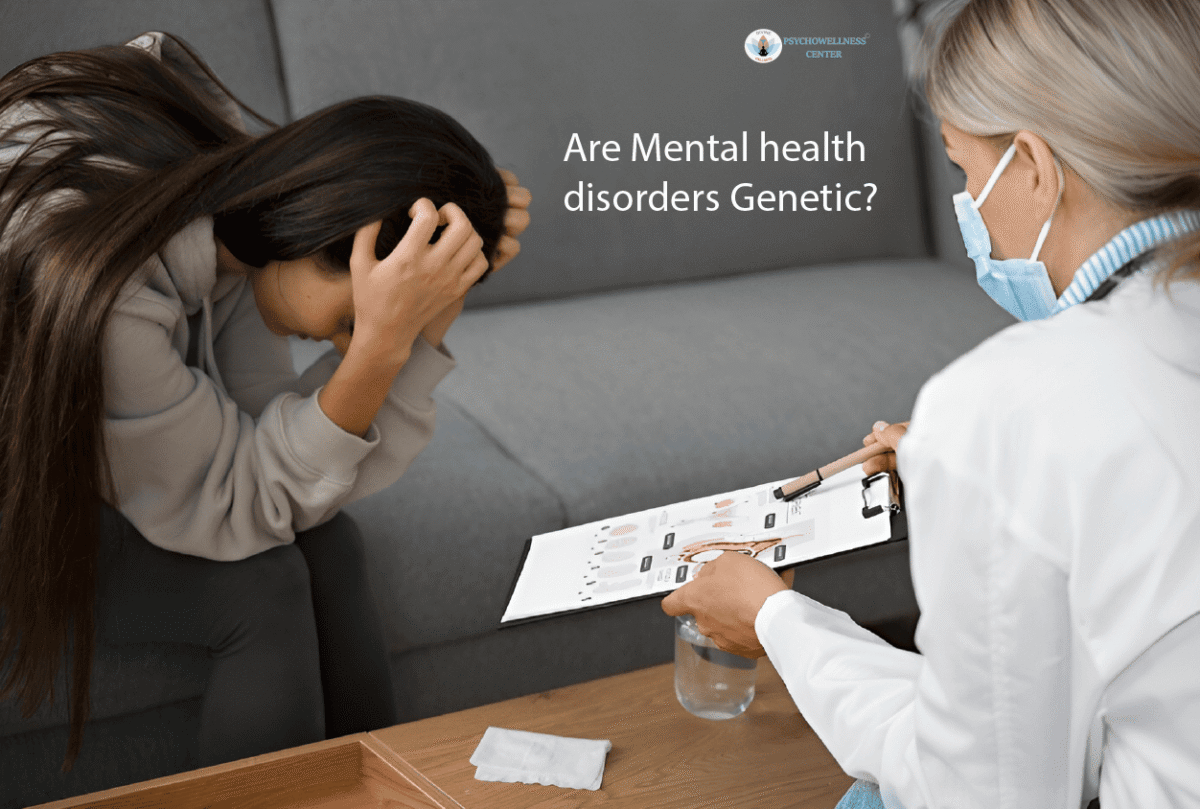
Mental health disorders are often surrounded by questions, misconceptions, and self-blame. One of the most common questions people ask is whether mental health conditions are inherited. If a parent has depression, anxiety, or another psychological condition, does that mean their child will inevitably develop it too? The answer, grounded in psychological and biological research, is more nuanced. Mental health disorders can have a genetic component, but genetics alone do not determine mental health outcomes.
Understanding the interaction between genes, environment, and life experiences helps reduce stigma and empowers individuals to seek appropriate support rather than feeling defined by family history.
What genetics actually influence
Genetics influence vulnerability, not destiny. Research shows that certain mental health conditions tend to run in families, suggesting a hereditary component. Conditions such as bipolar disorder, persistent depressive disorder, generalized anxiety disorder, obsessive-compulsive disorder, and attention-deficit hyperactivity disorder have all been linked to genetic predispositions.
However, inheriting genetic risk does not guarantee the development of a disorder. Genes may influence how the brain regulates mood, stress, and emotional responses, but whether these vulnerabilities become clinical conditions depends on multiple factors.
The role of brain chemistry
Genetics can influence neurotransmitter systems, including serotonin and dopamine, which play a role in mood regulation, motivation, and emotional stability. Variations in how these chemicals function can increase sensitivity to stress or emotional dysregulation.
This biological sensitivity may explain why some individuals develop symptoms more quickly or intensely than others when exposed to similar stressors. However, brain chemistry is not fixed. Psychological interventions, lifestyle changes, and supportive environments can all influence how these systems function over time.
Environment and life experiences matter
While genetics lay the groundwork, environment shapes outcomes. Childhood experiences, family dynamics, trauma, and chronic stress play a significant role in whether genetic vulnerabilities manifest as mental health disorders.
Adverse experiences such as emotional neglect, ongoing conflict, or early exposure to stress can increase the likelihood of developing symptoms. Conversely, supportive relationships, emotional safety, and healthy coping skills can protect individuals even when genetic risk is present. This interaction explains why siblings raised in the same family can have very different mental health outcomes despite sharing genetic material.
Trauma, stress, and gene expression
Emerging research in psychology and neuroscience shows that stress and trauma can influence how genes are expressed. This means that life experiences can activate or deactivate certain genetic vulnerabilities.
Unresolved trauma can heighten emotional reactivity and contribute to conditions such as post-traumatic stress disorder or anxiety-related disorders. This does not mean trauma creates genetic disorders, but it can influence how genetic predispositions are expressed in behaviour and emotional regulation.
Common myths about genetic mental health conditions
One common myth is that having a family history of mental illness means someone is destined to struggle. This belief can increase fear, stigma, and avoidance of help. Another misconception is that mental health disorders are purely biological and cannot be changed.
In reality, mental health conditions are highly treatable. Genetics may influence risk, but recovery and management depend on access to care, coping strategies, and emotional support. Psychological flexibility and resilience play powerful roles in shaping outcomes.
Why family history awareness is helpful
Knowing one’s family mental health history can be empowering rather than limiting. It allows individuals to recognise early signs of distress and seek support proactively. Awareness encourages preventive care, self-monitoring, and open conversations about emotional well-being.
Families who talk openly about mental health reduce shame and normalise seeking help. This openness can prevent symptoms from escalating and support healthier coping patterns across generations.
Psychological support and treatment
Regardless of genetic risk, psychological care is central to managing mental health conditions. Working with clinical psychologists helps individuals understand how biology, thoughts, emotions, and behaviours interact. Therapy supports emotional regulation, self-awareness, and adaptive coping strategies.
Approaches such as CBT (cognitive-behavioural therapy) are effective in addressing a wide range of conditions, including anxiety, depression, and obsessive-compulsive disorder. Therapy helps individuals challenge unhelpful thinking patterns and build resilience, regardless of genetic background.
Genetics and children’s mental health
Parents with mental health conditions often worry about their children. While genetic vulnerability may exist, a nurturing environment can significantly reduce risk. Emotional attunement, consistent support, and healthy boundaries protect children’s mental health. In some cases, early support from mental health professionals can help children develop coping skills before symptoms become entrenched. Preventive intervention is one of the most effective tools in reducing long-term impact.
Reducing stigma through understanding
Viewing mental health disorders as a combination of genetic and environmental factors helps reduce blame. It moves the conversation away from personal weakness and toward compassionate, evidence-based understanding. This perspective encourages people to seek help early and engage in self-care without shame. Mental health is not a moral failing or a predetermined fate. It is a dynamic aspect of human health that responds to care and support.
Conclusion
Mental health disorders can have a genetic component, but they are never caused by genetics alone. Genes may influence vulnerability, but environment, life experiences, and psychological support play equally powerful roles in shaping mental health outcomes. Understanding this interaction allows individuals to move beyond fear and stigma toward informed, proactive care. With awareness, early intervention, and evidence-based support, people can manage mental health challenges effectively and build meaningful, resilient lives regardless of family history.
Understanding the genetic aspects of mental health can be empowering, but navigating personal risk, symptoms, or family concerns often benefits from professional guidance. Psychowellness Center offers comprehensive psychological support to help individuals understand how genetics, environment, and life experiences interact in shaping mental well-being. With experienced clinical psychologists, the centre provides evidence-based therapies such as CBT, trauma-informed counselling, and preventive mental health care for concerns like anxiety, depression, OCD, and mood disorders. Individuals and families can seek early guidance, assessment, and ongoing support by contacting Psychowellness Center, Dwarka Sector-17 and Janakpuri, at 011-47039812 / 7827208707. Additionally, TalktoAngel offers accessible online counselling services, making it easier to connect with qualified mental health professionals from the comfort of home. Seeking support helps transform genetic awareness into proactive care, resilience, and healthier emotional outcomes across generations.
Contribution: Dr. R.K. Suri, Clinical Psychologist, and Mr. Umesh Bhusal, Counselling Psychologist
References:
American Psychiatric Association. (2022). Diagnostic and statistical manual of mental disorders (5th ed., text rev.; DSM-5-TR). Author.
Caspi, A., Sugden, K., Moffitt, T. E., Taylor, A., Craig, I. W., Harrington, H., McClay, J., Mill, J., Martin, J., Braithwaite, A., & Poulton, R. (2003). Influence of life stress on depression: Moderation by a polymorphism in the 5-HTT gene. Science, 301(5631), 386–389. https://doi.org/10.1126/science.1083968
Kendler, K. S., & Gardner, C. O. (2010). Interpretation of interactions: Guide for the perplexed. British Journal of Psychiatry, 197(3), 170–171. https://doi.org/10.1192/bjp.bp.110.081331
Plomin, R., DeFries, J. C., Knopik, V. S., & Neiderhiser, J. M. (2016). Top 10 replicated findings from behavioral genetics. Perspectives on Psychological Science, 11(1), 3–23. https://doi.org/10.1177/1745691615617439
Sullivan, P. F., Daly, M. J., & O’Donovan, M. (2012). Genetic architectures of psychiatric disorders: The emerging picture and its implications. Nature Reviews Genetics, 13(8), 537–551. https://doi.org/10.1038/nrg3240
https://www.psychowellnesscenter.com/Blog/mental-health-and-common-mental-heath-disorders/
https://www.psychowellnesscenter.com/Blog/some-important-warning-symptoms-of-mental-illness/
https://www.psychowellnesscenter.com/Blog/6-ways-to-know-your-child-suffer-from-mental-disorders/
https://www.psychowellnesscenter.com/Blog/molecular-biomarkers-for-pediatric-depressive-disorder
https://www.psychowellnesscenter.com/Blog/link-between-cannabis-and-psychosis/
https://www.psychowellnesscenter.com/Blog/understanding-7-different-types-of-depression/