
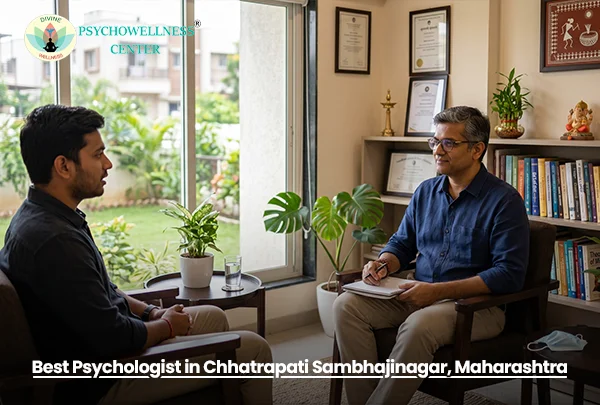
If your child has been having meltdowns bigger than the moment calls for, struggling to sit still in class, or pulling away from friends and family, you’ve probably already searched for help more than once. The good news: a qualified child psychologist in Chhatrapati Sambhajinagar can help you understand what’s really going on and give you a clear, practical plan — not just reassurance. Here’s what these specialists do, what they treat, and how to choose the right one.
What Does a Child Psychologist Actually Do?
A child development psychologist works with the emotional, behavioral, social, and cognitive growth of children, from toddlers to teens. The job isn’t to “fix” a child — it’s to figure out what’s driving a behavior and teach both child and parents how to manage it.
A typical process includes an intake conversation with parents, direct observation or structured play with the child, standardized questionnaires (often completed separately by parents and teachers), and a feedback session with plain-language findings and a treatment plan.
Most concerns need several weeks or months of consistent sessions, not a one-off visit, before real change shows up. Along the way, support helps kids build emotional regulation skills, social confidence, and coping strategies for change, exams, or new environments.
What Conditions Do Child Psychologists Treat?
The range is broader than most parents expect:
- Attention and development: ADHD, autism spectrum presentations, delayed developmental milestones, and sensory processing issues (over- or under-reaction to sound, touch, or light)
- Emotional concerns: separation anxiety in children, generalized anxiety, low mood, and exam stress
- Behavioral and habit concerns: screen addiction in children, defiance, sleep and eating disruptions
- Trauma and adjustment: childhood trauma treatment after accidents, loss, abuse, or family conflict, and adjustment struggles after major life changes
It’s common for more than one of these to overlap — anxiety and screen habits, for instance, often show up together.
How Is a Child Psychologist Different From a Child Psychiatrist?
This distinction shapes which appointment to book first.
A child psychologist holds a psychology degree with clinical specialization in child development. Their main tools are talk therapy, behavioral therapy, and developmental assessments — they don’t prescribe medication. They’re the right starting point for behavioral, emotional, or developmental concerns: tantrums, social difficulties, mild anxiety, or learning struggles.
A child psychiatrist holds a medical degree with a specialization in psychiatry. Since they’re medical doctors, they can prescribe and manage medication alongside therapy. They’re typically brought in for more severe symptoms — significant ADHD, anxiety, or clinical depression — where medication may genuinely help alongside behavioral support.
Many families see both: a psychologist for ongoing therapy, a psychiatrist for a medical opinion when needed. A good psychologist will tell you honestly when a psychiatric referral makes sense, rather than holding onto a case that needs medical input.
How Does an ADHD and Autism Assessment Actually Work?
Parents often expect one quick test, but a genuine ADHD and Autism Assessment is a layered process: structured interviews with parents and often teachers, standardized rating scales (like Conners’ scales for ADHD) compared across settings, direct observation during structured and unstructured tasks, and cognitive or behavioral tests to rule out other explanations, like a learning difficulty masking as inattention.
For autism, clinicians look at social communication, eye contact, repetitive behaviors, and reactions to routine change — not any single behavior alone. There’s no blood test or scan for either condition; the diagnosis comes from this combined clinical picture, followed by a written report and next steps.
How Does an IQ Test Work for Children?
IQ assessment for children measures specific abilities — verbal reasoning, working memory, processing speed, problem-solving — not just “how smart” a child is. It’s done one-on-one over one or two sessions using standardized, age-normed tools.
Parents usually request one to understand a possible learning difficulty, apply for school accommodations, or add a cognitive profile alongside an ADHD or autism evaluation. The result is a profile of strengths and weaknesses, not a single number to obsess over.
What Signs of Anxiety, ADHD, or Autism Should You Watch For?
Trust your instinct if something feels persistently off. These patterns are worth flagging if they’ve lasted weeks and show up in more than one setting:
- Frequent stomach aches or headaches with no medical cause, especially before school
- Trouble making or keeping friends
- Meltdowns disproportionate to the trigger
- Constant fidgeting or difficulty finishing tasks
- Avoiding eye contact or strong resistance to routine changes
- Big reactions to sounds, textures, or certain foods
A single bad week rarely means much; a consistent pattern across months is what prompts an evaluation.
Why Does Early Intervention Matter for Child Mental Health?
The earlier a concern is caught, the less entrenched it becomes. A child who builds regulation skills at age 6 has a very different path than one who first gets help at 14, after years of frustration with school and friendships. Early intervention typically means shorter treatment courses, a better response to cognitive behavioral therapy for children, and less risk of secondary issues like low self-esteem stacking on top of the original concern.
Can Child Therapy Be Done Online in Sambhajinagar?
Online sessions are a genuinely practical option, not just a stopgap — they solve real problems like limited local child-specialist availability, commute time, and school-hour conflicts. They work especially well for ongoing counseling, parent guidance, and teens, who often open up more easily on screen than face-to-face.
They’re less ideal for the observational parts of an initial autism or ADHD assessment, so many practitioners recommend one in-person assessment followed by online therapy for ongoing sessions. If that fits your family, you can connect with experienced child psychologists through online therapy sessions for consistent, convenient support.
Where Can You Find the Best Child Psychologist Near CIDCO Aurangabad?
Look past proximity alone: specific experience with children and adolescents, a clear assessment process, an age-appropriate space with play materials, willingness to involve parents and teachers, and honest referrals when medication may help. Ask directly about their experience with your concern on the first call — a good practitioner answers plainly, not with a vague pitch.
If you’re searching near CIDCO, Aurangabad, Psychowellness Center is a good option to check out — they offer both online and in-person child psychology services, so you can start with a video consultation or go in person, whichever fits your family better.
Who Are the Psychological Professionals Supporting Children and Families?
A strong outcome usually comes from a team with complementary skills:
- Dr. R. K. Suri — Senior clinical psychologist, 40+ years in behavioral issues, emotional disturbances, and child/adolescent psychotherapy
- Mrs. Kala Sengupta — Works with children, adolescents, and families on emotional, behavioral, and attention-related concerns, plus caregiver guidance
- Dr. Kamal Agarwal — Specializes in child development and occupational therapy for developmental, sensory, and autism-related needs
- Mr. Utkarsh Yadav — Supports teenagers with emotional issues, decision-making, and academic pressure through practical coping strategies
- Ms. Sakshi Dhankhar — Counselling psychologist supporting adolescents and adults with anxiety, stress, and relationship challenges
This range — clinical assessment, occupational therapy, teen counseling — is what to look for when a family’s needs don’t fit one category.
Final Thoughts
Seeking a child psychologist in Chhatrapati Sambhajinagar isn’t an admission that something is “wrong” — it’s getting a clearer picture so you can support your child well. The earlier you start, the more options you’ll have. If any of the signs above sound familiar, book a consultation, ask direct questions about experience and process, and take the first step toward a clearer path forward.
Frequently Asked Questions
How do I know if my child needs a psychologist or just needs time?
If the difficulty has lasted weeks, shows up in more than one setting, and affects friendships, learning, or family life, it’s worth a consultation.
Does a child psychologist diagnose autism or ADHD, or only a psychiatrist?
Both can be involved — a psychologist often conducts the behavioral and cognitive assessment while a psychiatrist confirms diagnosis and discusses medication if needed.
How many sessions does child therapy usually take?
Most behavioral and emotional concerns need 8–16 regular sessions to see meaningful change, with periodic reviews after.
Can screen addiction in children be treated like a clinical issue?
Yes—when device use is compulsive or disrupts sleep, treat it with structured behavioral strategies, not just stricter house rules.
Is online child therapy as effective as in-person sessions?
For ongoing counseling and parent guidance, it’s comparably effective; initial autism or ADHD assessments generally benefit from at least one in-person session.
Contributions: Dr. R.K. Suri, Clinical Psychologist, and Mr. Harshit Vaid, Counselling Psychologist
Frequently Asked Questions
When should parents consult a child psychologist?
Parents may consider professional support when a child shows persistent changes in behaviour, emotions, learning, communication, social interaction, sleep, or daily functioning. An assessment can help understand the underlying concerns and identify appropriate support.
2. What does a child psychologist do?
A child psychologist evaluates emotional, behavioural, developmental, and learning-related concerns using age-appropriate psychological methods. They may also guide parents and caregivers on strategies that support the child’s overall development.
3. How can parents support a child experiencing emotional difficulties?
Parents can create a supportive environment by listening without immediate judgment, maintaining consistent routines, encouraging healthy communication, and acknowledging the child’s feelings. Professional guidance may be helpful when difficulties continue or interfere with daily life.
Can psychological assessment help identify developmental concerns?
Yes. A comprehensive assessment can provide information about a child’s cognitive, emotional, behavioural, social, and developmental functioning. It can help parents and professionals understand the child’s individual strengths and areas requiring additional support.
References
- American Academy of Child and Adolescent Psychiatry. (2013). Children who can’t pay attention/ADHD (Facts for Families No. 6). https://www.aacap.org/
- American Psychological Association. (2019). Anxiety in children. https://www.apa.org/
- American Psychological Association. (n.d.). Parenting. https://www.apa.org/topics/parenting
- Centers for Disease Control and Prevention. (2024). Developmental milestones. U.S. Department of Health and Human Services. https://www.cdc.gov/
- National Institute of Mental Health. (n.d.). Child and adolescent mental health. U.S. Department of Health and Human Services. https://www.nimh.nih.gov/