
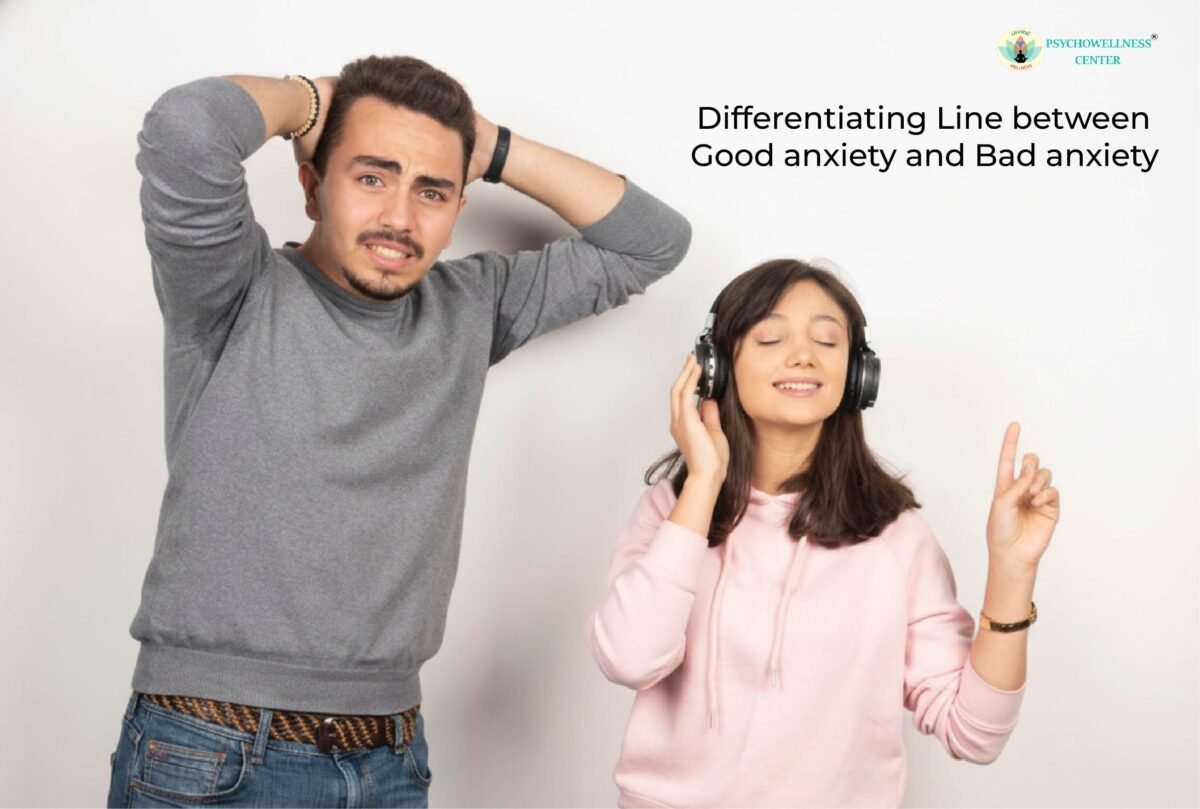
Anxiety is often perceived as a negative and unwanted emotional experience. Many individuals seek to eliminate anxiety, believing it to be a sign of weakness or poor mental health. However, psychology presents a more nuanced understanding of anxiety. Not all anxiety is harmful. In fact, a certain level of anxiety is essential for survival, motivation, and performance. The challenge lies in differentiating between good anxiety, which is adaptive and functional, and bad anxiety, which is excessive, persistent, and impairing. Understanding this distinction is crucial for emotional regulation, mental well-being, and effective coping.
Understanding Anxiety from a Psychological Perspective
Anxiety is a natural and essential psychological response to perceived threats, challenges, or uncertainty. It encompasses emotional, cognitive, and physiological components, including feelings of worry or fear, heightened alertness, increased heart rate, rapid breathing, muscle tension, and difficulty concentrating. These responses are part of the body’s built-in survival system. From an evolutionary perspective, anxiety plays a protective role by activating the fight-or-flight response, enabling individuals to react quickly to potential danger and increasing the chances of survival.
From a psychological standpoint, anxiety is best understood as existing on a continuum rather than as a strictly positive or negative experience. It can enhance motivation, sharpen focus, improve problem-solving abilities, and support performance in situations such as exams, work deadlines, or public speaking. This form of anxiety acts as a signal, prompting preparation and caution.
However, anxiety becomes problematic when it is excessive, persistent, or disproportionate to the actual situation. When the brain continues to perceive threat even in safe environments, anxiety may interfere with daily functioning, decision-making, relationships, and overall well-being. Chronic anxiety can lead to avoidance behaviours, emotional exhaustion, sleep disturbances, and physical health concerns. According to the American Psychiatric Association (2022), anxiety disorders are characterised by ongoing fear or worry that is difficult to control and significantly disrupts normal life activities.
Good Anxiety: When Anxiety Becomes Helpful
Good anxiety, also referred to as adaptive or functional anxiety, serves a protective and motivational purpose. It alerts individuals to potential risks, encourages preparation, and enhances performance. For example, feeling anxious before an exam, presentation, or important decision can motivate individuals to prepare, practice, and stay focused.
The Yerkes–Dodson law explains this relationship between anxiety and performance, suggesting that moderate levels of arousal improve efficiency and productivity, whereas too little or too much arousal impairs performance (Yerkes & Dodson, 1908). In this sense, good anxiety helps individuals remain alert, goal-oriented, and responsive to challenges.
Good anxiety is typically short-lived, situation-specific, and manageable. Once the situation passes or the task is completed, anxiety naturally subsides without lingering distress.
Bad Anxiety: When Anxiety Becomes Harmful
Bad anxiety, or maladaptive anxiety, occurs when anxious responses become excessive, chronic, or irrational. Unlike good anxiety, bad anxiety is not proportional to the actual threat and often persists even in safe or neutral situations. This form of anxiety interferes with daily functioning, relationships, and emotional well-being.
Psychological conditions such as generalised anxiety disorder, panic disorder, social anxiety disorder, and phobias fall under this category. Individuals experiencing bad anxiety may struggle with constant worry, intrusive thoughts, avoidance behaviours, restlessness, sleep disturbances, and physical symptoms such as headaches, gastrointestinal issues, and fatigue.
Chronic anxiety also increases the risk of depression, substance use, burnout, and emotional exhaustion. Over time, individuals may develop avoidance patterns that limit personal growth, reinforce fear, and reduce quality of life (Barlow, 2002).
Cognitive Differences Between Good and Bad Anxiety
One of the key psychological differences between good and bad anxiety lies in thought patterns. Good anxiety is associated with realistic concerns and problem-solving thoughts. Individuals experiencing good anxiety can evaluate situations rationally and take constructive action.
Bad anxiety, on the other hand, is maintained by cognitive distortions such as catastrophizing, overgeneralization, and intolerance of uncertainty. Thoughts such as “Something terrible will happen,” or “I won’t be able to cope,” amplify emotional distress and perpetuate anxiety. Cognitive-behavioural psychology highlights that these maladaptive thought patterns play a central role in maintaining anxiety disorders (Beck & Clark, 1997).
Behavioural Patterns and Avoidance
Behavioral responses further differentiate good anxiety from bad anxiety. In adaptive anxiety, individuals approach challenges despite feeling nervous. Anxiety acts as a motivator rather than a barrier. For instance, someone may feel anxious about a job interview but still attend and perform to the best of their ability.
In maladaptive anxiety, avoidance becomes a dominant coping strategy. Individuals may avoid situations, people, or responsibilities to escape anxious feelings. While avoidance provides short-term relief, it reinforces fear and strengthens anxiety in the long term. Psychological research consistently shows that avoidance is a key maintaining factor in anxiety disorders (Barlow, 2002).
Physiological Regulation and Recovery
Another distinguishing factor is how quickly the body returns to baseline after anxiety is triggered. In good anxiety, physiological arousal decreases once the stressor is resolved. The nervous system is able to regulate itself effectively.
In bad anxiety, the body remains in a heightened state of arousal for extended periods. Chronic activation of the stress response leads to exhaustion, sleep problems, weakened immunity, and increased risk of physical health conditions. Prolonged cortisol exposure associated with chronic anxiety negatively affects cognitive functioning and emotional regulation (McEwen, 2017).
Impact on Daily Functioning and Well-Being
The ultimate line between good and bad anxiety lies in its impact on daily life. Good anxiety supports growth, learning, and adaptation. It enhances awareness without limiting functioning. Bad anxiety restricts behavior, reduces confidence, and interferes with personal, academic, or professional goals.
When anxiety begins to dictate decisions, limit opportunities, or cause significant distress, it signals the need for intervention. Ignoring persistent anxiety can lead to worsening symptoms and long-term psychological difficulties.
Managing Anxiety in a Healthy Way
Psychological interventions focus on transforming maladaptive anxiety into manageable and adaptive responses. Cognitive Behavioural Therapy (CBT) helps individuals identify distorted thoughts, reduce avoidance, and build coping skills. Mindfulness-based approaches support present-moment awareness and reduce excessive worry about the future.
Learning emotional regulation strategies, practising relaxation techniques, and developing tolerance for uncertainty help individuals respond to anxiety more effectively. Seeking professional support is essential when anxiety becomes overwhelming or persistent.
Conclusion
Anxiety is not inherently harmful; it becomes problematic only when it loses its adaptive purpose. Differentiating between good anxiety and bad anxiety allows individuals to respond with awareness rather than fear. While good anxiety can motivate, protect, and enhance performance, bad anxiety interferes with daily functioning and undermines emotional well-being. Recognising this difference empowers individuals to develop healthier coping strategies and seek timely support before anxiety becomes overwhelming. The goal is not to eliminate anxiety, but to manage it in a way that promotes balance, resilience, and personal growth.
If persistent worry, stress, or emotional overwhelm is affecting your peace of mind or daily life, remember that professional help is always within reach. TalktoAngel is a trusted platform for online therapy and mental health support, offering personalised care tailored to your unique needs. With access to some of the best psychologists in India, TalktoAngel helps individuals navigate anxiety with clarity and confidence. If you’re searching for the best psychologist near me to better understand and manage your anxiety, TalktoAngel provides expert guidance in a safe and confidential space. For compassionate support, you may also contact the Psychowellness Center at (+91 78272 08707) or (+91 11 4707 9079) and take the first step toward emotional well-being today.
Contribution: Dr. R.K. Suri, Clinical Psychologist, and Ms. Sakshi Dhankhar, Counselling Psychologist
References
American Psychiatric Association. (2022). DSM-5-TR: Diagnostic and statistical manual of mental disorders (5th ed., text rev.).
Barlow, D. H. (2002). Anxiety and its disorders: The nature and treatment of anxiety and panic (2nd ed.). Guilford Press.
Beck, A. T., & Clark, D. A. (1997). An information processing model of anxiety. Behaviour Research and Therapy, 35(1), 49–58. https://doi.org/10.1016/S0005-7967(96)00069-1
https://www.psychowellnesscenter.com/service-anxiety-treatment-in-delhi/
https://www.psychowellnesscenter.com/Blog/understanding-different-theories-of-anxiety/
https://www.psychowellnesscenter.com/Blog/exiting-from-the-loop-of-anxiety-and-overthinking/
https://www.psychowellnesscenter.com/Blog/best-special-educator-in-vikaspuri-delhi/
https://www.psychowellnesscenter.com/Blog/menopausal-depression-symptoms-and-treatment/
https://www.talktoangel.com/blog/the-impact-of-silent-treatment-and-how-to-deal-with-it
https://www.psychowellnesscenter.com/Blog/malingering-symptoms-and-tests-to-caught-malinger/