
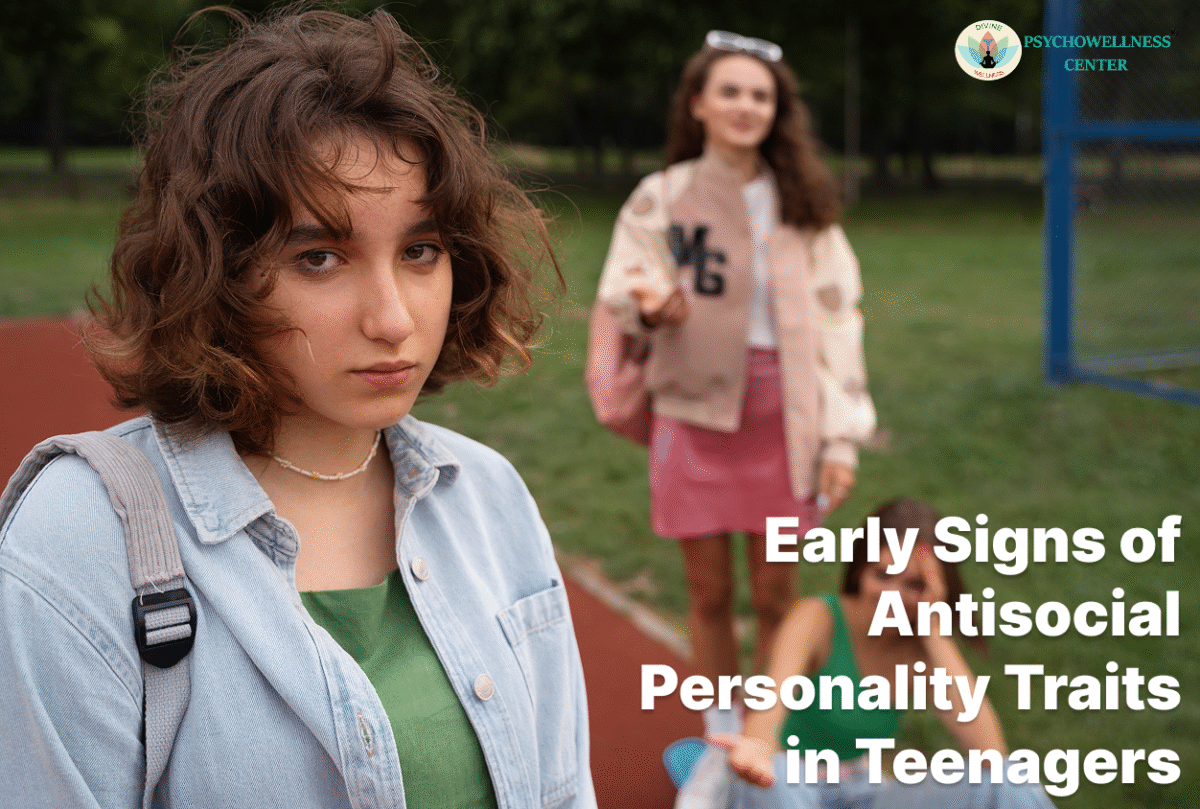
Teenage years are often filled with changes, confusion, and curiosity. It is a time when young people push boundaries and test independence. Most of this behaviour is normal and helps them figure out who they are. However, sometimes, the behaviour goes beyond what we expect from a typical teenager. When lying, aggression, and lack of empathy become consistent patterns rather than isolated mistakes, they can point toward something deeper, leading to early antisocial personality traits.
Understanding these signs early on is not about judging or labelling a teenager. It is about recognising the warning lights that can help families, teachers, and professionals step in before the traits become fixed. Antisocial personality patterns often have roots that can be traced back to late childhood or early adolescence, usually between the ages of 13 and 15, although subtle signs may begin even earlier.
What Does Antisocial Behaviour Mean?
In psychology, “antisocial” refers to behaviour that goes against social rules or the rights of others. People with antisocial traits tend to disregard consequences, show little guilt, and often manipulate or harm others for personal gain.
When these patterns appear in younger years, professionals usually classify them under Conduct Disorder or Oppositional Defiant Disorder (ODD). If these difficulties continue into adulthood, they can evolve into Antisocial Personality Disorder (ASPD). Not every defiant or rule-breaking teenager will grow up to develop a disorder, but persistent and emotionally cold behaviour should never be ignored.
Early Signs Seen in Teenagers
Recognising early warning signs can be tricky because teenagers are naturally emotional and unpredictable. The key difference lies in how intense and long-lasting the behaviours are, and whether the young person shows any guilt or empathy afterwards.
- Habitual Lying and Manipulation
A teenager may lie not only to avoid punishment but to gain advantage, control, or attention. They might invent stories, cheat, or deceive friends without concern for the harm caused. Over time, dishonesty becomes their default way of handling problems or relationships.
- Lack of Empathy or Guilt
One of the clearest signs of antisocial traits is emotional coldness. A teenager may hurt animals, bully others, or destroy property without remorse. When confronted, they might shrug, laugh, or say the victim “deserved it.” This absence of empathy often reflects deeper emotional neglect or exposure to violence at home.
- Aggressive and Risky Behaviour
Frequent fights, cruelty, or disregard for authority can appear early. Some adolescents find excitement in breaking rules, stealing, or damaging property. For example, a teen who repeatedly starts fights and feels proud rather than sorry afterwards may be showing developing antisocial tendencies.
- Impulsivity and Thrill Seeking
Acting without thinking is common in adolescence, but those with antisocial traits take it to extremes. They may drive recklessly, experiment heavily with substances, or engage in unsafe sexual activity simply for excitement. Their attitude often sounds like, “I don’t care what happens.”
- Superficial Charm
Some teenagers learn how to appear charming and confident to get what they want. They can be persuasive and witty, yet their emotions often feel shallow. They may apologise easily but repeat the same behaviour soon after, showing the apology was only a tool, not a genuine expression of regret.
- Blaming Others
These adolescents rarely take responsibility for their actions. They often say, “It wasn’t my fault” or “They started it.” This pattern of blaming others helps them avoid guilt but also prevents personal growth and reflection.
How and Why These Traits Develop
There is no single cause for antisocial traits. Most psychologists see them as the result of a mix of genetic vulnerability, environment, and early life experiences.
- Early trauma or neglect: Children who grow up in violent, neglectful, or emotionally distant homes often learn to protect themselves by becoming detached or aggressive.
- Modelled behaviour: When a child observes dishonesty or cruelty at home, they begin to see these behaviours as normal.
- Neurological factors: Studies suggest that differences in the brain areas controlling empathy and impulse regulation may make some young people more prone to antisocial actions.
- Peer influence: During adolescence, acceptance and identity matter deeply. Teens surrounded by delinquent peers may adopt similar attitudes to feel included.
These influences blend over time. Without intervention, what begins as defiance in early adolescence can slowly harden into a consistent pattern of manipulation and disregard for others.
How It May Look in Adulthood
If these traits continue unchecked, adulthood can bring serious difficulties. Many individuals struggle to hold jobs, maintain relationships, or follow laws. They might continue to manipulate others, engage in illegal activity, or display emotional detachment in close relationships. In some cases, these patterns can overlap with or lead to substance use disorders, borderline traits, or mood instability.
Early Intervention and What Can Be Done
The teenage brain is still developing, which means there is hope for change. Early identification and consistent support can make a remarkable difference.
- Therapy: Cognitive Behavioural Therapy (CBT) and family-based approaches help teenagers learn empathy, impulse control, and responsibility.
- Stable relationships: A steady, caring adult presence of a parent, teacher, or mentor can provide emotional safety and model healthy attachment.
- Positive reinforcement: Rewarding honesty and empathy helps reinforce constructive behaviour more effectively than punishment alone.
- Structured environments: Schools and community programs that emphasise teamwork, boundaries, and communication give adolescents a sense of belonging and purpose.
- Addressing co-occurring issues: Many teens with antisocial traits also struggle with depression, anxiety, or trauma. Treating these problems alongside behavioural issues increases the chances of recovery.
Conclusion
Early antisocial traits are warning signs, not life sentences. They often reflect a young person’s attempt to cope with emotional pain, unstable environments, or unaddressed behavioural and emotional challenges. Recognising these signs between ages 13 and 18 allows parents, caregivers, and professionals to intervene before these patterns become deeply ingrained.
Early understanding is not about punishment but prevention helping teens develop empathy, emotional regulation, respect for boundaries, and healthier ways to express distress or anger.
For teens who struggle with aggression, impulsivity, manipulation, defiance, lack of empathy, or difficulty following rules, seeking professional guidance can make a significant difference. The Psychowellness Center in Dwarka Sector-17 and Janakpuri, New Delhi (011-47039812 / 7827208707) offers support through adolescent counselling, behavioural therapy, emotional regulation training, stress and anger management, and skill-building interventions that help redirect antisocial tendencies. For those who prefer flexible or online support, TalktoAngel provides access to experienced best psychologists near me, who work with teens on improving impulse control, managing peer pressure, strengthening empathy, reducing oppositional behaviours, and developing healthier social relationships.
Contribution: Dr. R.K. Suri, Clinical Psychologist, and Ms. Arushi Srivastava, Counselling Psychologist
References
American Psychiatric Association. (2013). Diagnostic and statistical manual of mental disorders (5th ed.). Washington, DC: Author.
Frick, P. J., & Viding, E. (2009). Antisocial behavior from a developmental psychopathology perspective. Development and Psychopathology, 21(4), 1111–1131.
Burke, J. D., Loeber, R., & Birmaher, B. (2002). Oppositional defiant disorder and conduct disorder: A review of the past 10 years, part II. Journal of the American Academy of Child & Adolescent Psychiatry, 41(11), 1275–1293.
https://www.psychowellnesscenter.com/Blog/antisocial-personality-disorder/
https://www.psychowellnesscenter.com/service-personality-disorder-counselling-delhi/
https://www.talktoangel.com/blog/causes-of-antisocial-behavior-among-teenagers
https://www.psychowellnesscenter.com/Blog/causes-of-aggression-in-children/
https://www.psychowellnesscenter.com/Blog/how-rad-differs-from-other-childhood-behavioral-disorders/
https://www.psychowellnesscenter.com/Blog/recognizing-early-signs-of-teen-depression/
https://www.psychowellnesscenter.com/service-child-adolescent/
https://www.psychowellnesscenter.com/Blog/best-child-psychologist-in-rudrapur-uttarakhand/
https://www.talktoangel.com/blog/dissociative-identity-disorder
https://www.psychowellnesscenter.com/Blog/teenage-stress/
https://www.talktoangel.com/blog/the-magic-of-the-10-3-2-1-0-rule-for-a-good-nights-sleep
https://www.psychowellnesscenter.com/Blog/how-punishment-impacts-psychology/