
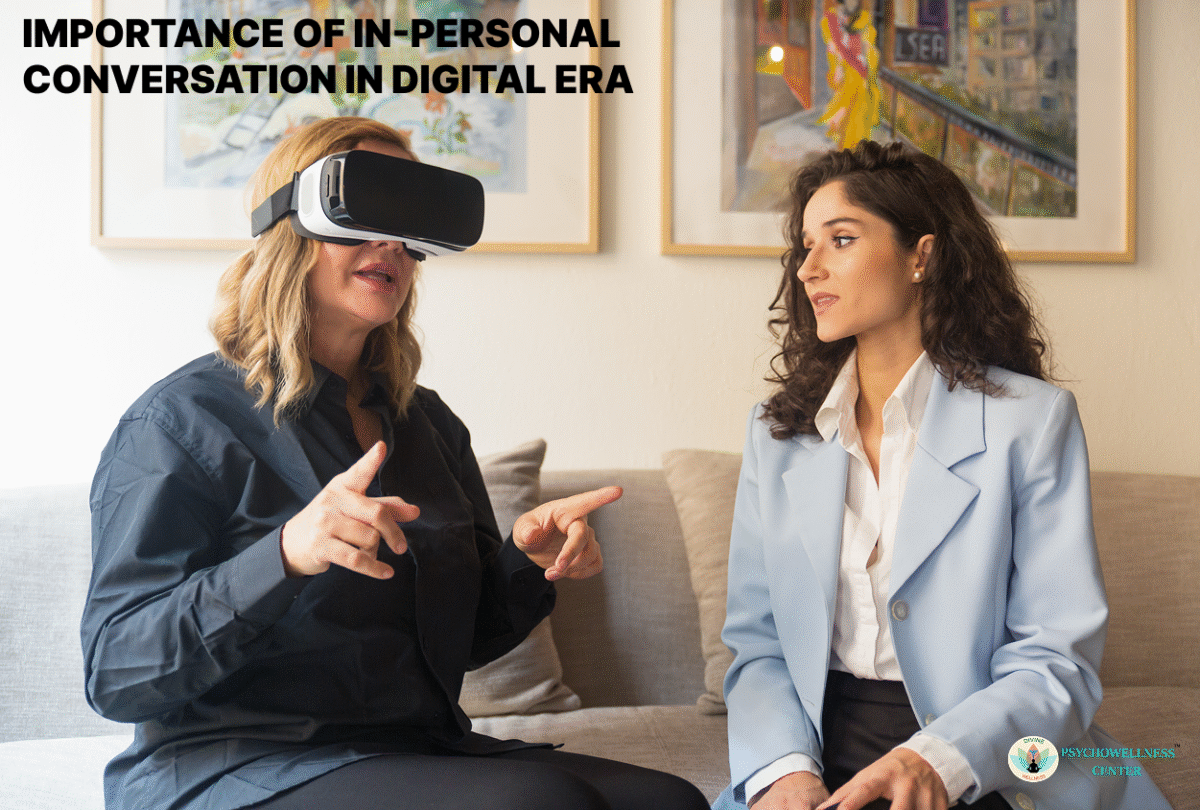
In a world dominated by instant messages, video calls, emojis, and social media updates, the art of genuine, face-to-face conversation is quietly fading. The digital era has brought us closer in many ways, but paradoxically, it’s also made our interactions more fragmented, filtered, and emotionally distant. As we text more and talk less, it’s worth asking: What are we losing when we replace in-person conversations with digital exchanges?
Let’s explore why real-life, face-to-face communication remains irreplaceable, even in our hyper-connected, tech-savvy world.
Digital Convenience vs. Human Connection
There’s no denying the convenience of digital communication. We can message a friend across the globe in seconds, hop on a video call for work, or react to someone’s story to show support—all without leaving the couch. Technology has made it easier to stay in touch—but not necessarily to stay connected.
Unlike digital interactions, in-person conversations involve all senses. You can hear the tone of voice, observe body language, make eye contact, and sense emotional energy. These non-verbal cues are an important aspect of communication because they affect how people understand messages and how connections are built.
A thumbs-up emoji or a heart reaction can’t replicate the warmth of a smile, the comfort of a hug, or the depth of a meaningful conversation shared over coffee.
The Psychology Behind Face-to-Face Communication
Humans are social beings, hardwired for real-life connections. When we engage in face-to-face conversations, our brains respond differently than during digital interactions.
- Oxytocin, the bonding hormone, is released through physical presence and touch.
- Mirror neurons in our brain help us empathise by mimicking the emotions of the person we’re speaking with, something that’s almost impossible through a screen.
- Eye contact fosters trust and intimacy, essential components of healthy relationships.
In contrast, digital communication often lacks these vital emotional signals. Without tone and context, messages can be misinterpreted, leading to confusion or conflict.
The Decline of Conversation Skills
The digital era has reshaped how we communicate, and not always for the better. Many people, especially younger generations, report increased social anxiety, difficulty maintaining eye contact, and a preference for texting over talking.
These shifts point to a larger issue: We’re losing the skill, and even the confidence, to engage in real conversation.
In-person communication teaches us how to:
- Read subtle emotional cues
- Navigate difficult or awkward moments
- Build empathy through active listening
- Respond in real time, with no delete button or filter
These are not just social skills, they’re life skills, essential for personal growth, career success, and healthy relationships.
Relationships Need More Than Wi-Fi
Whether romantic, familial, or platonic, deep relationships are built through shared moments, not shared memes. While technology helps us maintain contact, real intimacy often develops during long conversations, shared silence, spontaneous laughter, or even arguments, none of which are fully replicable online.
Think about it: How often do your most meaningful conversations happen through a screen?
Digital communication can sustain relationships, but it rarely strengthens them. Face-to-face interactions offer opportunities for vulnerability, authenticity, and emotional nuance, key ingredients for real connection.
Workplace Communication: Beyond Slack and Zoom
In professional settings, digital tools have streamlined collaboration and allowed remote work to flourish. But they’ve also made some aspects of communication more sterile and transactional.
Face-to-face meetings, even brief ones, can:
- Build team trust and morale
- Foster creativity through spontaneous brainstorming
- Resolve misunderstandings more quickly
- Strengthen leadership through presence and empathy
While hybrid work is here to stay, intentional in-person interactions are still crucial for building a cohesive and collaborative workplace culture.
The Mental Health Factor
Excessive reliance on digital communication can also affect mental well-being. Studies have linked heavy screen use with:
- Increased feelings of loneliness
- Reduced attention spans
- Poorer sleep quality
- Heightened anxiety and depression
Conversely, real-life social interaction has been shown to improve mental health by reducing stress, enhancing mood, and fostering a sense of belonging.
Something is grounding about sitting across from someone, sharing space, and feeling seen. It reminds us that we are not just usernames or avatars, we are human beings, with real emotions and needs.
Creating Space for Real Conversations
So, how do we reclaim the lost art of in-person conversation in a world that’s constantly buzzing with notifications?
Here are a few intentional steps:
- Schedule tech-free time – Have device-free dinners or coffee dates.
- Practice presence – Put your phone away when talking to someone in person.
- Relearn the basics – Make eye contact, ask open-ended questions, and listen without interrupting.
- Be patient with silence – Not every moment needs to be filled. Silence can be powerful.
Put real life ahead of virtual life, when you can, choose to meet in person instead of messaging or sending DMs.
Conclusion:
In a time when it’s easier to swipe than speak, we must remind ourselves of the irreplaceable power of in-person connection. Digital tools are valuable, but they can’t substitute the depth, emotion, and authenticity that face-to-face conversations provide.
From strengthening personal relationships to improving workplace dynamics, real-life interactions help us build trust, empathy, and emotional resilience, qualities that screens alone cannot teach.
And when life feels overwhelming, sometimes what we need most isn’t another notification, but a real conversation, with someone trained to listen and guide. If you’re searching for support, whether it’s for therapy, counselling, or mental health guidance, don’t hesitate to reach out. If you’re looking for the best psychologist near me, consider platforms like TalktoAngel, which offers secure online counselling, or visit the Psychowellness Centre in Delhi. Located in Janakpuri and Dwarka Sector-17, the centre provides in-person therapy with qualified psychologists specialising in trauma, emotional regulation, and anxiety management (011-47039812 / 7827208707).
This conversation on mental health is strengthened by the professional perspectives of Dr. R.K. Suri, Clinical Psychologist, and Ms. Riya Rathi, Counselling Psychologist
This blog was posted on 13 September 2025
References
Bailenson, J. N. (2021). Nonverbal overload: A theoretical argument for the causes of Zoom fatigue. Technology, Mind, and Behavior, 2(1). https://doi.org/10.1037/tmb0000030
Dunbar, R. I. M. (2016). Do online social media cut through the constraints that limit the size of offline social networks? Royal Society Open Science, 3(1), 150292. https://doi.org/10.1098/rsos.150292
Nowland, R., Necka, E. A., & Cacioppo, J. T. (2018). Loneliness and social internet use: Pathways to reconnection in a digital world? Perspectives on Psychological Science, 13(1), 70–87. https://doi.org/10.1177/1745691617713052
Przybylski, A. K., & Weinstein, N. (2013). Can you connect with me now? How the presence of mobile communication technology influences face-to-face conversation quality. Journal of Social and Personal Relationships, 30(3), 291–310. https://doi.org/10.1177/0265407512453827
Benefits of maintaining good social connections – Psychowellness Center
Why Ghosting is not the Easy Way Out | Psychowellness center
How Social Media takes a toll on Influencers Mental Health | Psychowellness center