
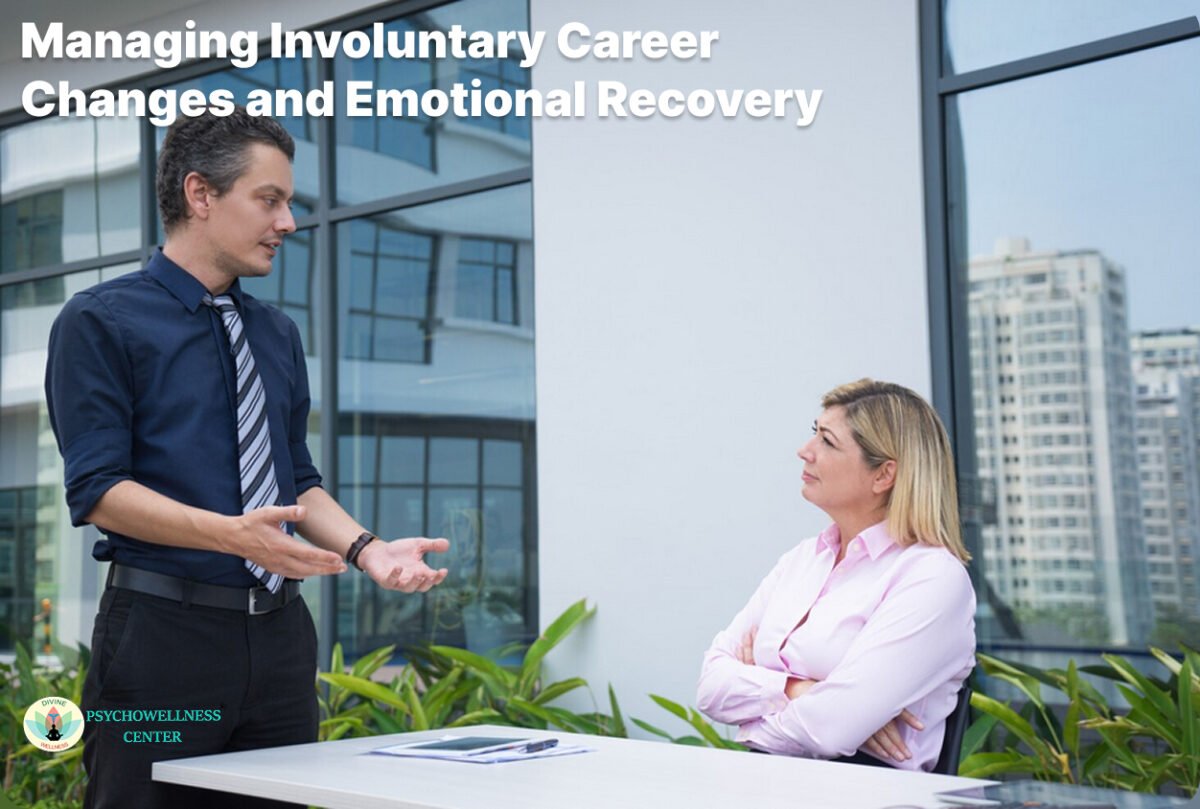
Involuntary career changes, such as sudden layoffs, company restructuring, forced relocation, workplace conflicts, or unexpected role transitions, can shake the very foundation of a person’s identity and emotional well-being. For many, their career is tied to their sense of purpose, stability, and self-worth. When this career path is unexpectedly disrupted, it can trigger intense stress, self-doubt, anxiety, and even grief. However, with the right support and coping strategies, individuals can navigate this turbulent period and gradually rebuild confidence, direction, and emotional balance.
Understanding the Emotional Impact of Involuntary Career Change
A sudden change in employment is more than a professional setback, it can be a deeply personal crisis. Common emotional reactions include:
- Shock and Denial:- People often experience disbelief after losing a job or being forced into a new role. This phase is the mind’s temporary shield, helping individuals absorb the truth at a manageable pace.
- Loss of Identity:- Work provides structure, routine, and status. When this is taken away unexpectedly, individuals may question their value and purpose.
- Anxiety and Uncertainty:- Questions like “What now?”, “How will I support myself?” or “Am I good enough?” can fuel overwhelming anxiety. The sudden gap in routine and stability can heighten stress levels significantly.
- Grief and Sadness:- Career loss is a form of grieving. People grieve not only the role they lost but also the loss of dreams, relationships, and daily structure.
- Anger or Betrayal:- Being forced out without warning or due to unfair circumstances may trigger resentment and a sense of injustice.
- Low Motivation and Self-Esteem:- Repeated rejections during the job search process or uncertainty about the next step can lead to reduced motivation and self-worth.
These emotional experiences are normal and valid. Understanding them is the first step toward emotional recovery.
The Path to Emotional Recovery
- Allow Yourself to Feel:-
Denying or suppressing emotions only prolongs distress. Acknowledge your feelings, whether sadness, confusion, frustration, or fear. Journaling, reflective conversations, or simply sitting with the emotion can help in processing it.
2. Rebuild Your Self-Worth:-
Job loss does not define your skills, intelligence, or value. Reconnect with your strengths by listing your achievements, skills, experiences, and personal qualities. Reminding yourself of what you bring to the table restores inner confidence. Therapists and counsellors often help clients rebuild self-worth through cognitive reframing, strength-based exercises, and guided self-reflection.
3. Establish a Temporary Routine:-
A sudden loss of structure can make days feel empty and directionless. Create a simple routine that includes job search activities, learning time, self-care, exercise, and leisure. This introduces predictability and supports emotional stability.
4. Engage in Self-Care:-
In times of transition, self-care isn’t a luxury, it is essential. Simple practices like morning walks, mindfulness, nutritious meals, and adequate sleep help regulate emotions and reduce stress hormones.
5. Seek Professional Support
A therapist or counsellor plays a vital role during involuntary career changes. Their support can help you:
- Understand and process emotional reactions
- Challenge negative beliefs and catastrophic thoughts
- Manage anxiety, low motivation, or depression
- Rebuid confidence and emotional control
- Explore future career directions aligned with your values
- Develop coping tools for uncertainty
Therapists use evidence-based psychological approaches to help individuals navigate high-stress life transitions like sudden job loss. Counsellors assist in clarifying goals, understanding emotions, and creating structured action plans.
6. Reconnect with Supportive Relationships:-
Isolation amplifies stress. Open conversations with trusted friends, family members, or mentors can provide reassurance, emotional comfort, and new perspectives.
7. Reframe the Narrative:-
Instead of seeing the career change as an “end,” start rewriting it as a transition. A therapist or counsellor can help you reframe the situation from a failure to an opportunity for growth, redirection, and renewal.
Ask yourself:
- What did I learn from my previous job?
- What do I seek in my next opportunity?
- How can this transition align with my long-term goals?
8. Upskill and Explore New Possibilities
Involuntary career changes can open unexpected doors. Consider taking short courses, certifications, or workshops to expand your skillset. Learning new things boosts self-confidence and increases career options.
9. Be Patient with Yourself
Healing and rebuilding take time. Do not compare your journey to others or put unrealistic pressure on yourself. Even if progress is sluggish, it is still progress.
Rebuilding Your Career Path Mindfully
- Assess Your Abilities and Interests:– Reflect on what energises you, what aligns with your values, and what career direction feels meaningful. Career counselors can help you map out strengths, personality traits, and preferences through structured assessments.
- Set Realistic and Achievable Goals:- Breaking your career transition into small steps reduces anxiety. Whether it’s updating your resume, searching for opportunities, building a portfolio, or connecting with professionals, take one step at a time.
- Prepare Emotionally for the Job Search Process:- Rejections are part of the journey. Emotional resilience is key. A therapist can help you manage self-critical thoughts, regulate stress, and stay motivated.
- Network with Purpose:– Building connections opens doors to opportunities. Join professional groups, attend workshops, engage with online communities, or reach out to former colleagues.
- Stay Open to Change:- Involuntary transitions often redirect people to better opportunities. Staying open to new industries, roles, or work styles (like remote or freelance) can expand potential paths.
The Role of Therapists and Counsellors in Career-Related Emotional Recovery
Career challenges are deeply emotional, not just practical. Therapists and counsellors provide a safe space to explore fears, identity conflicts, and emotional barriers. Their guidance helps individuals:
- Manage stress, anxiety, or burnout
- Rebuild lost confidence
- Understand the emotional roots of career decisions
- Develop clarity and direction
- Build resilience during job search struggles
- Recover from workplace trauma or toxic work environments
Even a few sessions can significantly improve emotional regulation and decision-making during uncertain times.
Conclusion
Involuntary career changes can feel overwhelming, unsettling, and emotionally draining. Yet, with emotional awareness, supportive relationships, structured planning, and professional guidance from therapists and counsellors, individuals can emerge stronger, more self-aware, and better aligned with their true aspirations. This transition, though difficult, can become a period of growth and reinvention, helping you build a career path that reflects your values, strengths, and evolving life goals. If you’re navigating such a shift, remember: You don’t have to go through it alone. Emotional healing and career rebuilding are possible, step by step, with the right support. For individuals navigating the emotional aftermath of involuntary career changes, timely psychological support can play a crucial role in restoring stability and self-belief. The Psychowellness Centre in Dwarka Sector-17 and Janakpuri (011-47039812 / 7827208707) offers specialised support through career counselling, Cognitive Behaviour Therapy (CBT), stress and anxiety management, emotional regulation therapy, and confidence-building interventions designed to help individuals process job loss, workplace trauma, and identity-related distress. For those seeking flexible and accessible care, TalktoAngel provides confidential online counselling with experienced therapists who support emotional recovery, resilience building, and mindful career redirection, empowering individuals to move forward with clarity and renewed confidence.
Contribution: Dr. R.K. Suri, Clinical Psychologist, and Ms. Sheetal Chauhan, Counselling Psychologist
References:
- Bluvshtein, M., Morin, A. J. S., Saltychev, M., & Östlund, G. (2022). The psychological effects of job loss: A systematic review and meta-analysis. Journal of Vocational Behavior, 136, 103754. https://doi.org/10.1016/j.jvb.2022.103754
- Brand, J. E. (2015). The far-reaching impact of job loss and unemployment. Annual Review of Sociology, 41(1), 359–375. https://doi.org/10.1146/annurev-soc-071913-043237
- Cooke, F. L., Dickmann, M., & Parry, E. (2020). Work, employment and COVID-19: Changing patterns and the future of work. Human Resource Management Journal, 30(4), 1–14. https://doi.org/10.1111/1748-8583.12295