
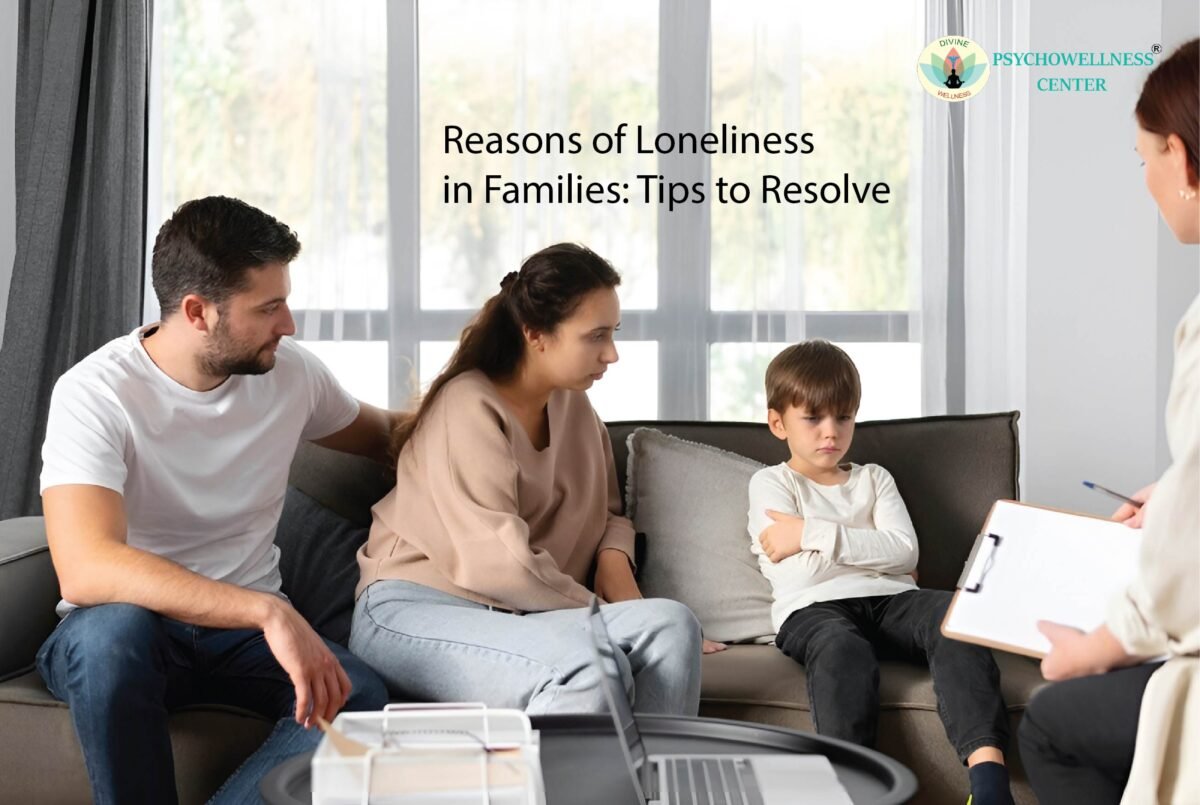
Loneliness is often imagined as something that happens when a person is physically alone. Yet, some of the deepest loneliness can exist within families, surrounded by people, conversations, routines, and shared history. Feeling lonely in a family setting can be confusing and painful, especially because families are expected to be sources of comfort, belonging, and emotional safety.
Family loneliness does not necessarily mean a lack of love. Rather, it reflects emotional disconnection, unexpressed needs, unresolved conflicts, or changing family dynamics. From a psychological perspective, understanding why loneliness develops within families is the first step toward repairing connection and rebuilding emotional closeness through psychological counselling and family therapy.
This article explores the common reasons for loneliness in families and offers practical, compassionate tips to address it, drawing from the work of family mental health research.
Understanding Loneliness Within Families
Loneliness in families refers to the experience of feeling emotionally unseen, unheard, or disconnected from family members, even while living together or staying in regular contact. It may show up as emotional distance, lack of meaningful conversations, or a sense that “no one really understands me.”
Psychologically, humans are wired for connection. Families are our earliest emotional systems, shaping how we form attachments, express needs, and experience belonging. When these emotional bonds weaken or feel unsafe, loneliness can emerge, even in close-knit households. This emotional disconnection can contribute to stress, anxiety, and symptoms associated with depression over time.
Common Reasons for Loneliness in Families
1. Lack of Emotional Communication
One of the most common causes of family loneliness is limited emotional communication. Many families focus heavily on practical matters- work, school, finances, responsibilities while emotional check-ins are overlooked.
When feelings are not discussed openly, family members may assume their emotions are irrelevant, inconvenient, or misunderstood. Over time, this creates emotional isolation, where people coexist without truly connecting. This pattern is often addressed in family systems therapy and relationship counselling.
In some families, emotions like sadness, anger, or vulnerability may be discouraged, leading individuals to suppress their inner experiences to maintain harmony, contributing to low self-esteem and emotional withdrawal.
2. Unresolved Conflicts and Emotional Distance
Unaddressed conflicts can quietly erode emotional closeness. Arguments that are ignored, minimized, or “swept under the rug” do not disappear; they often transform into resentment, avoidance, or emotional withdrawal.
Family members may begin limiting interactions to avoid tension, leading to superficial conversations and growing emotional distance. This pattern can increase loneliness, emotional fatigue, and burnout, particularly in caregiving or high-responsibility family roles.
From a psychological lens, unresolved conflict disrupts trust and emotional safety, both essential for healthy relationships.
3. Role-Based Relationships Instead of Emotional Bonds
In many families, relationships become rigidly role-based, parent, child, provider, caretaker, rather than emotionally reciprocal. Conversations may revolve around expectations, duties, or performance rather than personal experiences.
When individuals are valued primarily for what they do rather than who they are, they may feel invisible or emotionally neglected. This is especially common in families where achievement, discipline, or job performance are prioritised over emotional expression.
Over time, family members may stop sharing their inner world, increasing emotional isolation and vulnerability to anxiety and mood swings.
4. Generational Gaps and Value Differences
Differences in values, beliefs, communication styles, and worldviews across generations can contribute significantly to loneliness in families. Younger members may feel misunderstood or judged, while older members may feel disrespected or emotionally sidelined.
Rapid social changes, technology use, shifting gender roles, and evolving cultural expectations can widen these gaps. When curiosity and mutual understanding are replaced by criticism or dismissal, emotional connection weakens.
Without open dialogue, family members may emotionally retreat, increasing social isolation within the family unit.
5. Emotional Neglect (Even Without Intent)
Not all emotional neglect is intentional. Parents or caregivers may be overwhelmed by workplace stress, financial pressure, poor sleep, or their own mental health challenges such as Generalized Anxiety Disorder, Persistent Depressive Disorder, or unresolved trauma.
Children growing up in such environments may learn to self-soothe, suppress needs, or believe that emotional support is unavailable. As adults, this can manifest as chronic loneliness, difficulty forming healthy relationships, and low emotional resilience.
Emotional neglect often stems from absence rather than harm, but its psychological impact can be long-lasting.
6. Overdependence on Digital Communication
While technology connects families across distances, it can also create emotional disconnection within homes. Excessive screen time, limited face-to-face conversations, and distracted interactions reduce emotional presence.
Family members may share space without sharing attention, leading to a sense of emotional absence. This can particularly affect adolescents, contributing to school-related stressors, bullying, or emotional withdrawal, and older family members, increasing feelings of invisibility.
7. Life Transitions and Changing Family Dynamics
Loneliness often intensifies during major life transitions like marriage, parenthood, divorce, separation, relocation, illness, or grief. These changes alter family roles, expectations, and emotional availability.
For example, parents may feel lonely after children leave home, while new parents may feel emotionally unsupported despite family presence. When families struggle to adapt emotionally to change, individuals may feel disconnected during vulnerable phases.
Psychological Impact of Loneliness in Families
Chronic loneliness within families can have significant psychological effects. It may contribute to emotional distress, lowered self-worth, and difficulties forming secure relationships outside the family.
Research links prolonged loneliness to increased stress, emotional exhaustion, and symptoms associated with anxiety and depression. Individuals may also experience difficulty trusting others, fear of vulnerability, or patterns of emotional withdrawal that affect workplace relationships and personal well-being.
Tips to Resolve Loneliness in Families
1. Create Space for Emotional Conversations
Connection begins with conversation, not just about logistics, but about emotions. Families benefit from intentionally creating spaces where feelings can be shared without judgment or immediate problem-solving.
Simple questions such as “How have you been feeling lately?” can open meaningful dialogue and support emotional well-being.
2. Practice Active Listening
Listening to understand, rather than to respond, is a powerful antidote to loneliness. Active listening strengthens emotional safety and is a core skill taught in family therapy and relationship counselling.
3. Address Conflicts Gently and Directly
Avoidance may feel safer, but unresolved conflict deepens disconnection. Addressing issues calmly helps repair trust and emotional closeness.
4. Shift from Roles to Relationships
Families thrive when members are seen beyond their roles. Making space to know each other as individuals, hopes, fears, struggles- strengthens emotional bonds and reduces loneliness.
5. Acknowledge Emotional Needs Without Comparison
Loneliness often persists when emotional needs are dismissed. Emotional validation supports self-esteem, emotional security, and healthier family relationships.
6. Build Small Rituals of Connection
Small, consistent rituals like shared meals, weekly check-ins, and device-free time help rebuild emotional closeness and stability within families.
7. Seek Professional Support When Needed
Professional counselling can play a vital role in addressing deep-rooted loneliness within families, especially when patterns of emotional disconnection, unresolved conflict, or communication breakdowns feel difficult to change independently. Mental health professionals help families understand underlying emotional needs, attachment styles, and interaction patterns that contribute to isolation. Centres such as Psychowellness Center and platforms like TalktoAngel offer access to qualified “best psychologists near me”, family therapists, and counsellors who provide evidence-based interventions through in-person and online sessions. With guided support, families can rebuild emotional safety, improve communication, and develop healthier ways of relating, fostering long-term emotional closeness and resilience.
Moving Toward Connection
Loneliness in families is not a failure; it is a signal. It points toward unmet emotional needs and opportunities for healing. Families are dynamic systems capable of growth, repair, and deeper connection.
Conclusion
Feeling lonely within a family can be deeply painful, but it is also profoundly human. Emotional disconnection often arises not from lack of care, but from unspoken emotions, unresolved conflicts, and changing life circumstances.
By fostering emotional communication, validating experiences, addressing conflict with compassion, and seeking psychological counselling or family therapy when needed, families can move from isolation toward meaningful connection and emotional safety.
Explore More: https://www.instagram.com/reel/DSNE8H2DaQo/
https://www.instagram.com/reel/DROk3ueDSV8/
https://www.youtube.com/watch?v=OlRC2OOnhik
Contribution: Dr. R.K. Suri, Clinical Psychologist, and Ms. Arushi Srivastava, Counselling Psychologist
References
Bowlby, J. (1988). A secure base: Parent-child attachment and healthy human development. Basic Books.
Cacioppo, J. T., & Cacioppo, S. (2018). The growing problem of loneliness. The Lancet, 391(10119), 426.
Minuchin, S. (1974). Families and family therapy. Harvard University Press.
Porges, S. W. (2011). The polyvagal theory: Neurophysiological foundations of emotions, attachment, communication, and self-regulation. W. W. Norton & Company.
Siegel, D. J. (2012). The developing mind: How relationships and the brain interact to shape who we are (2nd ed.). Guilford Press.
https://www.psychowellnesscenter.com/Blog/signs-of-deep-loneliness-and-ways-to-overcome-it/
https://www.psychowellnesscenter.com/Blog/rise-of-loneliness-in-adolescence/
https://www.psychowellnesscenter.com/Blog/are-you-dealing-with-breakdown-alone/
https://www.psychowellnesscenter.com/Blog/psychological-risks-associated-with-social-isolation/
https://www.psychowellnesscenter.com/Blog/single-parenting/
https://www.psychowellnesscenter.com/Blog/supporting-children-through-social-withdrawal/
https://www.talktoangel.com/blog/top-10-ways-to-beat-loneliness
https://www.psychowellnesscenter.com/Blog/how-to-deal-with-family-stress/
https://www.psychowellnesscenter.com/Blog/understand-separation-anxiety-disorder-in-adults/