
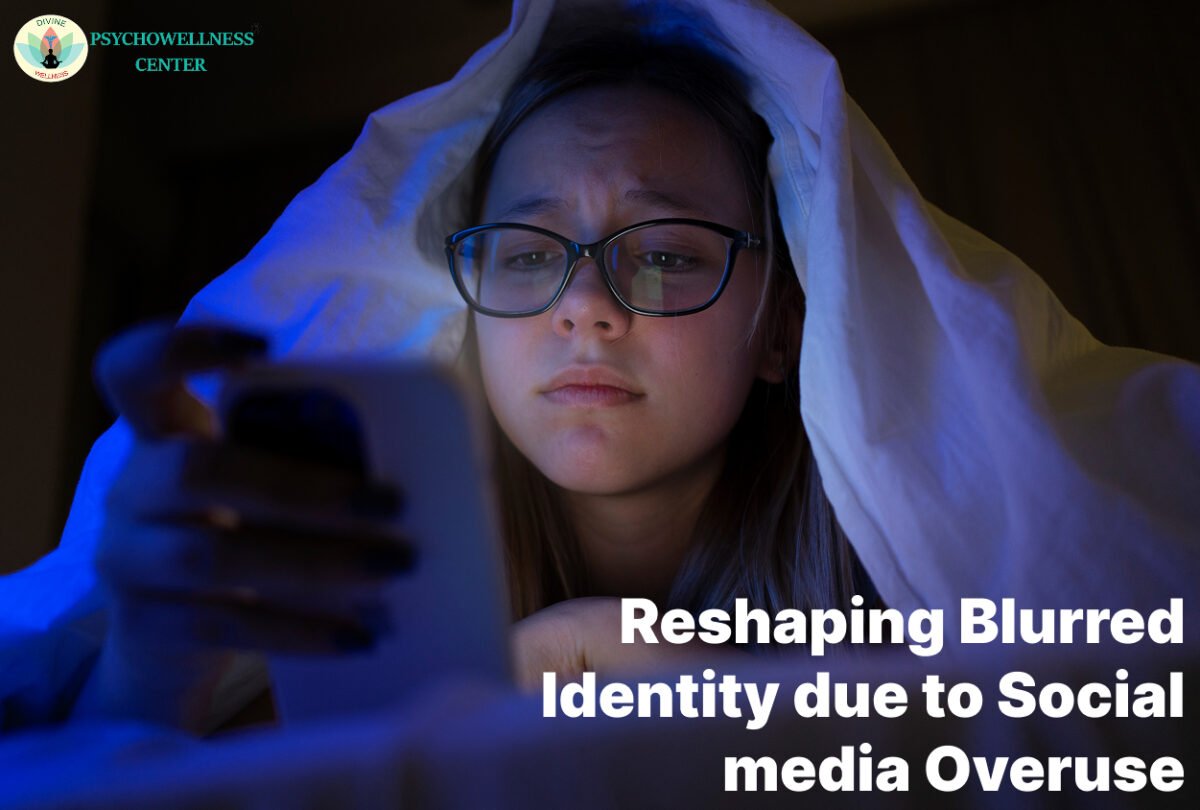
In today’s hyperconnected world, it’s hard to imagine life without scrolling through selfies, hot takes, aesthetics, and endless highlight reels. Social media has become more than a tool for communication; it’s a stage where we perform, compare, curate, and sometimes even lose sight of who we really are. While these platforms can be sources of connection and inspiration, excessive use can subtly, yet profoundly, blur personal identity.
If you’ve ever wondered why you sometimes feel less sure of who you are after a long scrolling session, you’re not alone. The digital world reshapes us in ways we don’t always notice until the emotional side effects show up. Let’s dive into why this happens, what psychology says about it, and how we can reclaim clarity in a world that runs on likes, trends, and constant comparison.
How Social Media Blurs Identity
1. The Split Between the Real Self and the Online Self
We live in an era where having an “online presence” is almost a social requirement. However, the pressure to present a polished, likeable image often prompts people to create idealised personas – versions that highlight only the brightest moments: the exotic vacations, the great skin days, the perfect relationships.
This curated self can be quite different from who we truly are.
Higgins’ Self-Discrepancy Theory sheds light on this phenomenon. According to the theory, distress arises when there’s a gap between:
- The real self (who we believe we are),
- The ideal self (who we want to be), and
- The ought self is the person we believe we ought to be.
Social media widens this gap. When the online self becomes a glossy version of the ideal or “ought” self, the real self begins to feel inadequate by comparison. This creates internal tension: anxiety, self-criticism, or a subtle sense of not being enough.
Many people describe feeling like they’re “performing” online. They carefully choose what to post, delete anything with low engagement, or alter reality to make it seem more impressive. Over time, this performance can overshadow authenticity. The persona becomes a mask that is easy to maintain but emotionally exhausting.
2. Dopamine, Likes, and the Cycle of Validation
Have you ever posted something and felt a buzz when the likes started rolling in? That small hit of pleasure isn’t accidental; it’s dopamine at work.
Social media platforms are designed to keep us coming back by rewarding engagement. Each notification reinforces behaviours that seek external approval. Over time, this feedback loop can shift your sense of identity from internal (“I know who I am”) to external (“I am who others say I am”).
This is especially impactful for adolescents and young adults, who are still in the critical stages of identity formation. When validation becomes tied to digital approval, personal identity becomes fragile and dependent on something notoriously inconsistent public perception.
3. The Comparison Trap and Distorted Reality
Scrolling through filtered photos and curated milestones can distort our sense of reality. Even if we intellectually understand that others are only posting their best moments, emotionally we compare our everyday life to their highlight reel.
This can lead to:
- Jealousy: “Why don’t I look like that?”
- Inadequacy: “Everyone else seems more successful.”
- Dissatisfaction: “My life feels boring in comparison.”
Even when life is objectively good, digital comparison can make it feel lacking.
This constant exposure correlates with increased depression, anxiety, poor body image, and FoMO (fear of missing out). FoMO can interrupt sleep, reduce productivity, and keep people in a perpetual state of emotional tension. Worse, social media algorithms amplify emotionally charged, aspirational, or controversial content, pushing us deeper into comparison and self-doubt.
4. Adolescent Identity Formation at Risk
Identity formation, especially in adolescence, thrives on experimentation. Teens need room to try new interests, explore values, and make mistakes without feeling permanently judged. However, social media’s permanence screenshot, posts that never fully disappear, and the public nature of digital life can stifle that exploration.
Many young people today worry that a single wrong move online will follow them forever. This fear encourages conformity and reduces the freedom to grow, change, and redefine oneself. The result is a generation struggling with low self-concept clarity; that uneasy feeling of not being entirely sure who you are or what you stand for.
The Emotional Cost: More Than Just Screen Time
The consequences of blurred identity extend beyond self-esteem. The psychological load can include:
- Chronic stress from maintaining an online image
- Fear of negative evaluation
- Overthinking others’ opinions
- Social exhaustion and social isolation
- Reduced creativity and originality
- Difficulty forming meaningful offline relationships
Some research suggests that when people feel unsure of who they are, they become more susceptible to trends, group opinions, and digital culture pressures. In other words, losing your sense of self can make you a social chameleon easily influenced, easily overwhelmed, and rarely fulfilled.
How to Reshape a Blurred Identity
The good news? Identity is not fixed. Even if social media has clouded your sense of self, it’s absolutely possible to rebuild clarity, authenticity, and confidence.
Here are research-backed, psychologically grounded strategies:
1. Reduce Social Media Use (Even Slightly)
You don’t have to go off-grid; small reductions can have big effects.
Studies show that cutting social media use to 30 minutes per day significantly improves:
- Self-esteem
- Body image
- Life satisfaction
- Emotional stability
Try:
- A 30-minute cap
- “No scroll zones” (mornings, meals, before bed)
- Removing apps from your home screen
- Using apps like Freedom or ScreenTime for accountability
You’ll likely notice a clearer head and a calmer emotional baseline within a week.
2. Practice Mindful Scrolling
Not all scrolling is harmful. The key is to cultivate awareness:
- Ask yourself: How does this content make me feel?
- Unfollow accounts that trigger envy, insecurity, or self-doubt.
- Follow people who post unfiltered, educational, humorous, or uplifting content.
Your feed should nourish you, not drain you.
3. Reconnect With Your Offline Self
Identity thrives in the real world.
Consider:
- Reinvesting in hobbies
- Spending time in nature
- Journaling
- Meeting friends offline
- Volunteering
- Practicing mindfulness or meditation
These activities help strengthen your internal identity, including your personal values, preferences, and sense of self, independent of online validation.
4. Reflect and Reevaluate Your Digital Persona
What story are you telling online?
Does it feel true to who you are, or does it reflect who you feel pressured to be?
Try journaling prompts such as:
- “What parts of my online identity don’t feel authentic?”
- “If I stopped curating my image, what do I fear would happen?”
- “If I didn’t worry about being judged, how would I present myself online?”
This kind of reflection helps bridge the gap between the real and ideal self.
5. Strengthen Digital Literacy
Understanding the psychology and mechanics behind social media makes it easier to detach emotionally.
Learn about:
- Algorithms and how they manipulate attention
- Advertising strategies
- The psychological effects of comparison
- The use of filters and editing tools
When you view content as curated rather than authentic, it loses some of its impact.
6. Embrace Your Unique Identity
Authenticity is a process, not a destination. Identity evolves with experience, reflection, failure, and growth. The goal is not to create a perfect version of yourself online or offline but to live in alignment with your values and genuinely connect with others.
Permit yourself to:
- Change your mind
- Explore new interests
- Set boundaries
- Make mistakes
- Be imperfect
- Be real
That’s where true identity lives.
Conclusion
Social media isn’t going anywhere, and it doesn’t have to. When used with awareness, it can remain a space for creativity, connection, and self-expression. However, reshaping a blurred identity caused by social media overuse requires conscious boundaries stepping away from constant comparison, validation-seeking, and performance-based self-worth to reconnect with your authentic self.
Approaches such as MBCT, CBT, ACT, and EFT are widely used in therapy to help individuals navigate emotional challenges, rebuild self-awareness, and strengthen identity clarity. You may opt for online counselling at TalktoAngel, where licensed psychologists offer evidence-based support for emotional regulation and stress management from the comfort of your home. For offline counselling, the Psychowellness Center in Dwarka Sector 17 and Janakpuri (011-47039812 / 7827208707) offers personalised sessions with some of the best psychologists near me, helping individuals regain balance and self-understanding.
When you reduce the noise of external validation, you create space for something far more meaningful: a grounded, confident, and authentic sense of self. Whether through intentional digital habits or professional psychological support, prioritising your mental health is a powerful step toward reclaiming your identity offline, unfiltered, and entirely yours.
Contribution: Dr. R.K. Suri, Clinical Psychologist, and Ms. Charavi Shah, Counselling Psychologist
References:
Erikson, E. H. (1968). Identity: Youth and crisis. W. W. Norton & Company.
Festinger, L. (1954). A theory of social comparison processes. Human Relations, 7(2), 117–140. https://doi.org/10.1177/001872675400700202
Kross, E., Verduyn, P., Demiralp, E., Park, J., Lee, D. S., Lin, N., Shablack, H., Jonides, J., & Ybarra, O. (2013). Facebook use predicts declines in subjective well-being in young adults. PLoS ONE, 8(8), e69841. https://doi.org/10.1371/journal.pone.0069841
Nesi, J., & Prinstein, M. J. (2015). Using social media for social comparison and feedback-seeking: Associations with depressive symptoms. Journal of Abnormal Child Psychology, 43(8), 1427–1438. https://doi.org/10.1007/s10802-015-0020-0
Przybylski, A. K., Murayama, K., DeHaan, C. R., & Gladwell, V. (2013). Motivational, emotional, and behavioral correlates of fear of missing out. Computers in Human Behavior, 29(4), 1841–1848. https://doi.org/10.1016/j.chb.2013.02.014
Verduyn, P., Ybarra, O., Résibois, M., Jonides, J., & Kross, E. (2017). Do social network sites enhance or undermine subjective well-being? A critical review. Social Issues and Policy Review, 11(1), 274–302. https://doi.org/10.1111/sipr.12033
https://www.psychowellnesscenter.com/Blog/social-media-manipulation-and-self-image/
https://www.psychowellnesscenter.com/Blog/youth-social-media-and-the-anxiety-of-self-image/
https://www.psychowellnesscenter.com/Blog/why-influencers-experience-identity-dissociation/
https://www.psychowellnesscenter.com/Blog/fine-line-between-oversharing-and-intimacy/
https://www.psychowellnesscenter.com/Blog/social-media-use-and-depression/
https://www.psychowellnesscenter.com/Blog/ways-to-manage-tech-addiction/
https://www.psychowellnesscenter.com/Blog/are-your-social-media-habits-affecting-your-mood/
https://www.talktoangel.com/blog/self-doubt-and-self-criticism-counselling
https://www.talktoangel.com/blog/preventing-the-stressors-of-workplace-incivility