
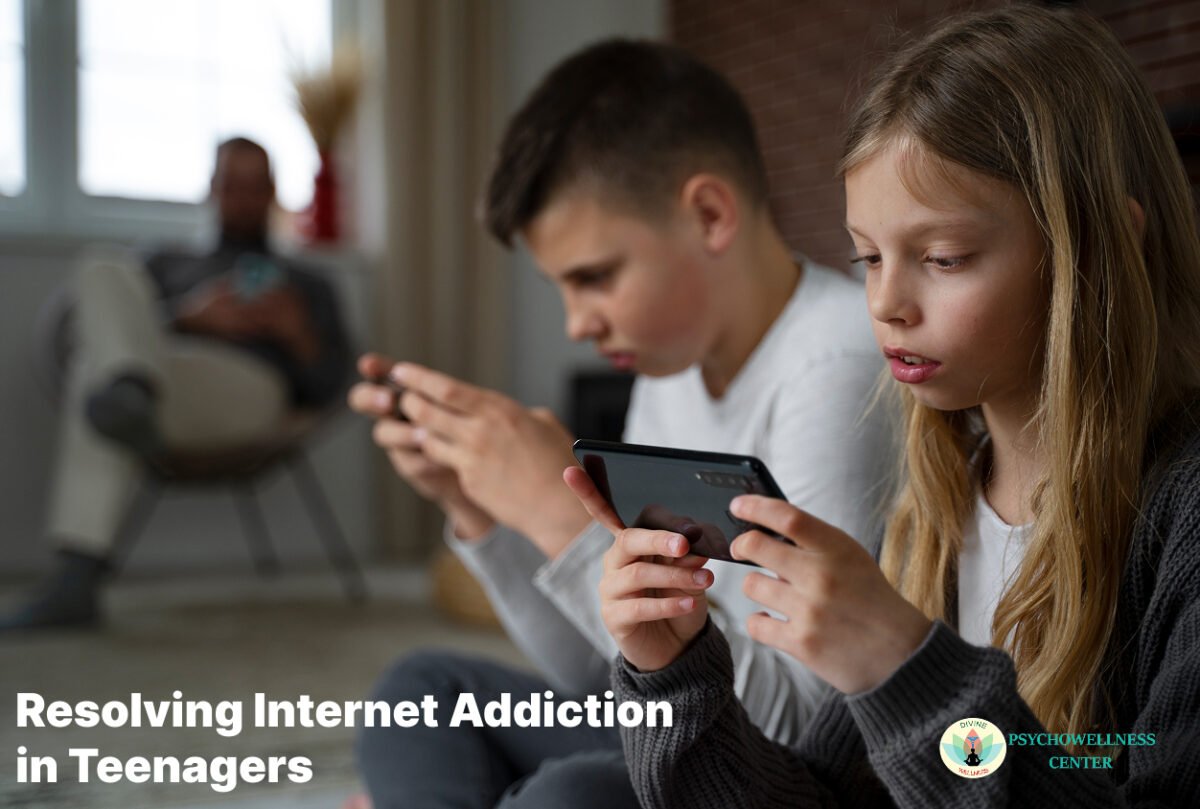
If you’re a parent, educator, or even a teen, the sight of a young person glued to a screen is all too familiar. The digital world offers so much: connection, learning, and endless entertainment. But when the glow of the screen begins to overshadow real-life responsibilities, relationships, and well-being, we step into the territory of Internet Addiction. While it may not yet be an official diagnosis in major psychiatric manuals (except for the inclusion of Internet Gaming Disorder), mental health professionals are increasingly recognising its significant impact on the developing adolescent mind.
Rather than villainising technology, we need to focus on understanding the psychological drivers behind this compulsive behaviour so we can chart a constructive path back to balance. The good news is that with awareness, empathy, and evidence-based strategies, it is absolutely possible to help teens navigate their digital lives healthily.
Recognising the Signs of Problematic Use
It’s important to distinguish between heavy use and problematic use. Heavy use might involve long hours, but the individual can still meet their real-life responsibilities. Problematic use, however, involves a persistent, maladaptive pattern of behaviour that leads to significant impairment or distress in daily life, relationships, and well-being. Look for these classic signs, which mirror diagnostic criteria for behavioural addictions:
- Preoccupation:—Internet activity becomes the most important thing in a teen’s life, dominating their thoughts and emotions.
- Tolerance/Escalation:--Needing increasing amounts of time online to achieve the same level of satisfaction or “high.” The previous amount of screen time no longer feels sufficient.
- Withdrawal Symptoms:—Experiencing physical or emotional distress when internet access is suddenly limited or taken away. These symptoms are key indicators of physical and psychological dependence.
- Loss of Control:–-Repeated, unsuccessful attempts to cut down or stop internet use. The teen sincerely wants to control their time but feels incapable of doing so.
- Negative Impact:–-Jeopardising or risking important real-life responsibilities, relationships, school performance, or personal hygiene due to the excessive time spent online.
- Deception:—Lying to family, teachers, or friends about the actual amount of time spent online or the nature of their activities to conceal the extent of their problem.
- Escape/Mood Modification:—Using the internet as a primary way to escape from or numb uncomfortable feelings like guilt, anxiety, or depression. It becomes their go-to self-medication.
The Psychological Pull: Why Teens Get Hooked
To resolve the issue, we first need to understand the ‘why.’ Teenagers are in a critical stage of identity formation, social development, and emotional regulation. The internet, particularly social media and online gaming, is uniquely designed to tap into these developmental needs, creating a highly reinforcing cycle.
Escape and Emotional Regulation
For many teens, excessive internet use is a form of maladaptive coping. It acts as a quick, accessible escape from uncomfortable feelings or real-world difficulties. Research consistently links problematic internet use with underlying psychological issues such as anxiety and depression.
- Anxiety: A teen with social anxiety might find online interactions less threatening, allowing them to form relationships or express themselves without the pressure of face-to-face interaction.
- Depression: The instant gratification and novelty of online content (like scrolling social media or levelling up in a game) can provide a temporary dopamine hit that distracts from persistent feelings of sadness or hopelessness, making the online world feel safer and more rewarding than reality.
The Search for Self-Esteem and Identity
Adolescence is a time of intense refinement of self-concept. The online world offers a curated space where teens can receive immediate validation, which directly impacts their self-esteem.
- Social Media: Likes, comments, and followers provide tangible, immediate social feedback. For a teen struggling with low self-worth offline, this external validation can become a powerful, addictive necessity.
- Gaming: In games, teens can assume powerful roles, achieve mastery, and gain status among peers, offering a sense of competence and achievement that they might feel is lacking in their school or family lives.
Fear of Missing Out (FOMO)
Teens are hardwired for social connection. Social media specifically leverages this need, creating a constant pressure to be online. FOMO isn’t just about missing a party; it’s the profound fear of being disconnected from their social group, which can feel like an existential threat at this age. The internet becomes an inescapable requirement for maintaining social bonds.
A Resolution Roadmap: Psychological Interventions
Resolving problematic internet use requires a holistic approach that addresses the behaviour, the underlying emotional factors, and the family environment. This is often not something a teen can tackle alone, and professional help is key.
Cognitive behavioural Therapy for Internet Addiction (CBT-IA)
Cognitive behavioural Therapy (CBT) is considered the gold standard for treating behavioural addictions, and CBT-IA is its tailored application. This therapy focuses on identifying and changing the thoughts and behaviours that maintain the cycle of addiction.
- Behaviour Modification: This phase focuses on regaining control. Strategies include establishing digital detox periods, setting concrete time limits (e.g., a “digital sunset” before bed), and creating a replacement schedule of real-world activities to fill the space left by reduced screen time. This involves helping the teen build a more satisfying and positive sense of self offline.
- Cognitive Restructuring: This is where the core psychological work happens. A therapist helps the teen identify and challenge maladaptive cognitions, the unhelpful thoughts and beliefs that drive the compulsive use.
- Harm Reduction and Relapse Prevention: Teens learn to identify high-risk situations (e.g., feeling bored, stressed, or lonely) and develop healthy, alternative coping mechanisms to manage these triggers without resorting to the internet.
Family Therapy and Psychoeducation
Adolescent behaviour is heavily influenced by the microsystem – the immediate environment, including the family. Family therapy is often essential:
- Work with your teen to set reasonable, mutually agreed-upon limits. Authoritative parenting (clear expectations with warmth and support) is more effective than punitive, unilateral actions.
- Parents must also examine their own screen habits. Teens are far more likely to adopt a balanced approach if they see it modelled by the adults in their lives.
- Open, non-judgmental dialogue about why the teen is drawn to the internet (is it loneliness, academic stress, or lack of self-efficacy?) is more effective than simply criticising the behaviour.
Reintegrating Offline Activities: Practical Steps for Parents
Nurture Intrinsic Rewards & Self-Efficacy
The online world provides immediate, high-frequency rewards (likes, level-ups). Offline activities must compete by providing a deeper, more lasting sense of self-efficacy (the belief in one’s ability to succeed).
- Skill-Building: Help your teen explore activities that involve clear steps toward mastery. When they finish a project or acquire a new skill, their confidence comes from within, not from external validation.
- The “Analogue” Challenge: Encourage activities with tangible, observable outcomes. This provides a sense of accomplishment that digital metrics often mask.
- Actionable Step: Start small. Commit to a 30-day challenge: “We are going to bake a new bread recipe every weekend,” or “We will learn five constellations.” The consistency and the final product build pride.
- Volunteering and Contribution: Getting involved in activities where the teen contributes to the community shifts focus away from self-perception and builds empathy and purpose. This is powerful for battling feelings of loneliness by making them feel needed.
Promote Face-to-Face Socialising and Social Competence
For teens who rely on the screen to manage social anxiety, face-to-face interaction can be daunting. The goal is to make in-person meetups feel safe, predictable, and rewarding.
- Facilitate Structured Socialising: Teenagers often find unstructured hangouts awkward. Initiate social interactions around a specific activity. This reduces performance pressure and gives them something external to focus on.
- “De-risk” the Social Environment: If your teen has high social anxiety, look for group settings where the social pressure is low and the focus is on a shared interest.
- Model Social Engagement: Actively demonstrate healthy social interactions. Invite your friends over, make phone calls (instead of texting) in front of them, and talk openly (but briefly) about the enjoyment you get from your own offline interactions.
Creating a Supportive Family Environment
Don’t just take away the internet; replace the time with intentional, device-free family time. This combats loneliness and strengthens family bonds.
- Involve your teen in choosing the offline activities. Forcing them into an activity they hate will lead to resentment and eventual failure. Ask, “What’s one thing you always wished you had time for?” or “What activity do you think would be fun to try once?”
- Focus on celebrating the shift in behaviour, not just criticising the past overuse. Acknowledge and praise their efforts to engage offline, no matter how small. “I noticed you spent an hour reading your book today instead of playing, that’s great focus!” This reinforces their positive self-identity as someone capable of balance.
Conclusion
Resolving Internet Addiction in teenagers is a journey that requires understanding, patience, and evidence-based psychological support. When we reframe excessive screen use not as defiance but as a coping mechanism rooted in emotional regulation challenges, impulse control issues, and unmet psychological needs, we are better equipped to help teens with empathy rather than criticism. The digital world is here to stay, but with the right therapeutic strategies, adolescents can develop mindful digital habits, strengthen their self-regulation skills, and rebuild a healthy balance between online stimulation and offline life. If you are concerned about a teen’s internet use, reaching out to a qualified mental health professional is the most effective and compassionate first step—you don’t have to navigate this challenge alone.
The Psychowellness Center, located in Dwarka Sector-17 and Janakpuri, New Delhi (011-47039812 / 7827208707), offers specialised emotional wellness programs and adolescent-focused counselling designed to support teenagers struggling with internet addiction, screen dependency, and digital overwhelm. Using evidence-based interventions such as CBT, REBT, Behavioural Therapy, and Mindfulness-Based Therapy, their expert team—including some of the best psychologists near me – helps teens strengthen impulse control, improve emotional resilience, and develop healthier online–offline boundaries. Additionally, TalktoAngel provides accessible virtual counselling and strength-based online therapy to promote digital well-being, emotional stability, and long-term psychological resilience for both teenagers and their families.
Contribution: Dr. R.K. Suri, Clinical Psychologist, and Ms. Tanu Sangwan, Counselling Psychologist
References
Young, K. S. (2017). Internet addiction in adolescents: A review of empirical research. Journal of Behavioural Addictions, 6(1), 1–20. https://doi.org/10.1556/2006.6.2017.023
- Young, K. S. (2011). CBT-IA: The first treatment model for Internet addiction. Journal of Cognitive Psychotherapy, 25(4), 304–312. https://doi.org/10.1891/0889-8391.25.4.304
Kuss, D. J., & Griffiths, M. D. (2014). Internet addiction in adolescents: Prevalence and risk factors. Addictive Behaviors, 39(3), 674–680. https://doi.org/10.1016/j.addbeh.2013.12.003