
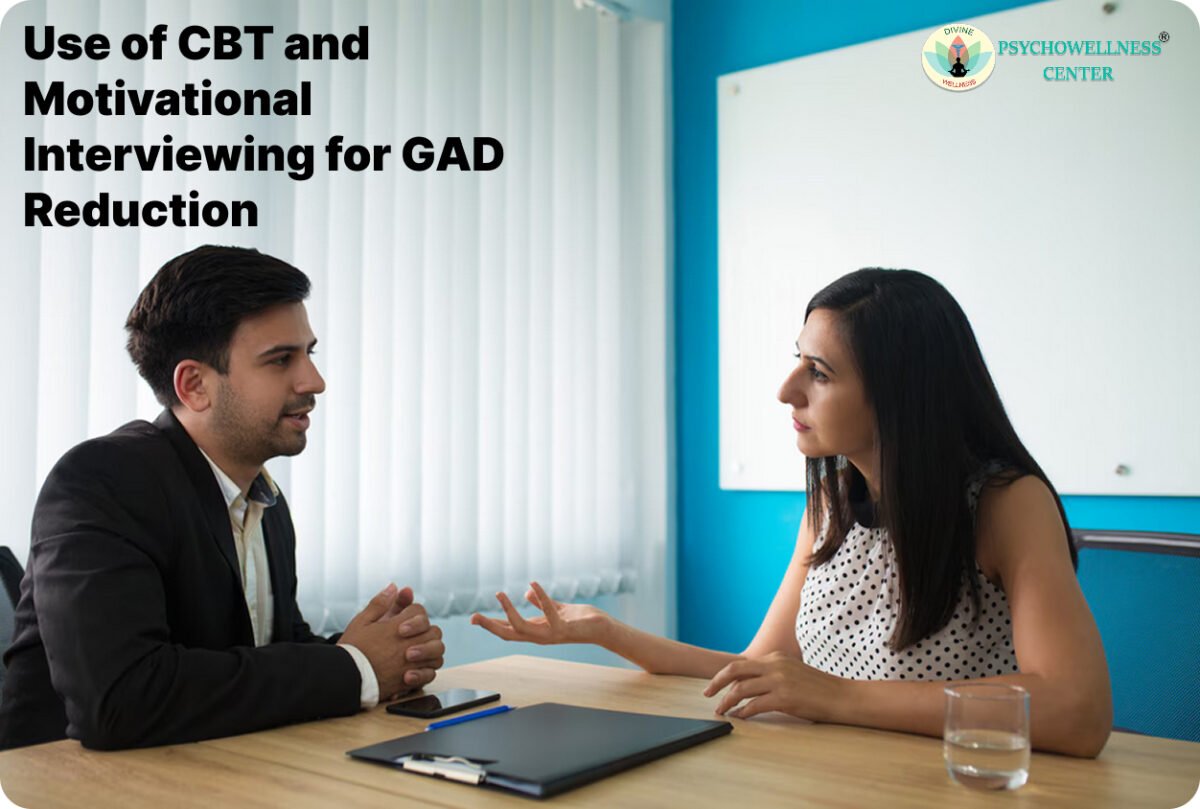
Generalised Anxiety Disorder (GAD) is a common mental health condition characterised by excessive, persistent, and often uncontrollable worry about multiple aspects of daily life. People with GAD frequently experience physical symptoms such as muscle tension, restlessness, irritability, fatigue, and sleep disturbances. This constant state of heightened alertness can interfere with daily functioning, relationships, and overall quality of life. While medications can help manage symptoms, psychological interventions remain the cornerstone of effective treatment. Two approaches that have shown significant promise in reducing GAD symptoms are Cognitive Behavioural Therapy (CBT) and Motivational Interviewing (MI).
This article explores how these interventions work, their mechanisms, practical applications, and how they can be integrated to provide a holistic treatment approach for individuals struggling with GAD.
Understanding Generalised Anxiety Disorder (GAD)
GAD is more than just feeling anxious occasionally. Individuals with GAD experience a pervasive sense of worry that is difficult to control, often regarding work, health, family, finances, or everyday life events. Unlike situational anxiety, GAD is chronic and persistent, lasting at least six months in most cases.
Key features of GAD include:
- Excessive, uncontrollable worry
- Difficulty concentrating
- Sleep disturbances
- Muscle tension
- Irritability
- Fatigue and restlessness
The condition can significantly impair a person’s social, occupational, and personal functioning. Psychological interventions aim to target both the cognitive patterns that fuel worry and the behavioural responses that maintain anxiety.
Cognitive Behavioural Therapy (CBT) for GAD
Cognitive Behavioural Therapy (CBT) is one of the most widely researched and evidence-based approaches for treating GAD. CBT is grounded in the principle that our thoughts, feelings, and behaviours are interconnected. Negative thought patterns and maladaptive beliefs can perpetuate anxiety, and changing these patterns can reduce symptoms.
Mechanism of CBT in GAD
CBT addresses GAD by:
- Identifying Cognitive DistortionsPeople with GAD often engage in cognitive distortions such as catastrophizing (“If I fail this test, my life is over”), overgeneralization (“I always mess things up”), and fortune-telling (“Something bad will happen”). CBT helps individuals recognise these distorted thought patterns.
- Challenging Unhelpful ThoughtsTherapists guide clients to examine evidence for and against their anxious thoughts, promoting more balanced thinking.
- Developing Coping SkillsCBT teaches practical skills, including relaxation techniques, problem-solving strategies, and thought-stopping techniques.
- Behavioural ExperimentsClients are encouraged to engage in activities they may be avoiding due to anxiety. This helps reduce avoidance behaviours and builds confidence in managing real-world challenges.
- Exposure to Worry TriggersGradual exposure to anxiety-provoking situations, while using coping strategies, allows individuals to build tolerance and reduce fear responses over time.
Benefits of CBT for GAD
Research consistently supports CBT as highly effective for reducing GAD symptoms. Some benefits include:
- Significant reduction in worry and anxious thoughts
- Improved emotional regulation
- Enhanced problem-solving skills
- Reduced avoidance behaviours
- Long-term maintenance of symptom reduction
CBT empowers individuals to take an active role in understanding and managing their anxiety, creating sustainable change.
Motivational Interviewing (MI) for Anxiety Reduction
Motivational Interviewing (MI) is a client-centred, collaborative approach originally developed to support behavior change in substance use disorders. MI focuses on exploring and resolving ambivalence, enhancing intrinsic motivation, and strengthening commitment to positive change. While MI is often associated with habit change, its principles are increasingly applied to mental health concerns, including anxiety disorders like GAD.
Mechanism of MI in GAD
MI addresses GAD by:
- Enhancing Motivation for ChangeAnxiety often leads to avoidance. MI helps clients recognize the cost of avoidance and the benefits of engaging in treatment or adaptive behaviours.
- Resolving AmbivalenceIndividuals with GAD may feel torn between seeking relief through avoidance and wanting to engage in life fully. MI explores this ambivalence and supports clients in clarifying their goals.
- Building Self-EfficacyMI emphasises the client’s capacity for change, encouraging confidence in their ability to manage anxiety.
- Promoting Collaborative Goal Setting Therapists work with clients to set realistic, achievable goals for reducing stress, anxiety and improving coping skills.
- Strengthening Commitment to ActionMI uses reflective listening, open-ended questions, and affirmations to help clients verbalise commitment to change and take actionable steps.
Benefits of MI for GAD
MI complements CBT in the following ways:
- Increases engagement and adherence to therapy
- Reduces resistance and ambivalence
- Supports sustainable behavior change
- Enhances self-awareness and motivation to practice CBT techniques
- Fosters a positive therapeutic relationship
By strengthening motivation, MI can make CBT interventions more effective, particularly for clients who struggle with compliance or self-doubt.
Integrating CBT and MI for Optimal Results
While CBT directly targets anxious thoughts and behaviours, MI enhances engagement, motivation, and readiness for change. Integrating the two approaches can create a synergistic effect in GAD treatment.
How Integration Works
- Initial Motivation WorkAt the start of therapy, MI techniques can help clients explore their ambivalence about change and build intrinsic motivation to engage with CBT strategies.
- Applying CBT SkillsOnce motivation is strengthened, clients can actively participate in CBT exercises, such as identifying cognitive distortions, practising exposure, or developing coping strategies.
- Ongoing ReinforcementMI continues to support commitment, resolve emerging ambivalence, and reinforce the use of CBT skills throughout therapy.
- Relapse PreventionMI helps clients maintain gains by exploring potential obstacles, reinforcing coping strategies, and sustaining motivation even after formal therapy ends.
Research Evidence
- Studies indicate that CBT remains the gold standard for GAD, with 60–70% of clients experiencing significant improvement.
- MI has been shown to enhance engagement in therapy, particularly for individuals with high ambivalence or resistance.
- Integration of CBT and MI has produced higher adherence, greater symptom reduction, and improved long-term outcomes compared to standalone CBT.
Additional Considerations
- Therapeutic Relationship Matters: Both CBT and MI rely on a strong, supportive therapist-client relationship. Empathy, collaboration, and validation are crucial.
- Tailoring Interventions: Not every client responds the same way. Individualised approaches, considering personality, life context, and comorbidities, maximise outcomes.
- Self-Practice and Homework: CBT often includes assignments such as thought records, exposure exercises, and behavioural experiments. MI helps clients commit to completing these tasks.
- Combination With Other Interventions: CBT and MI can be complemented with mindfulness, relaxation training, or medication when needed.
Conclusion
Generalised Anxiety Disorder can be debilitating, but effective psychological interventions offer hope. Cognitive Behavioural Therapy equips individuals with the tools to challenge maladaptive thoughts, reduce worry, and adopt adaptive behaviours, including strategies for improving sleep. Motivational Interviewing enhances engagement, clarifies goals, and strengthens intrinsic motivation, addressing key barriers such as low motivation to participate consistently in therapy.
By integrating CBT and MI, therapists can provide a comprehensive approach that addresses both the cognitive-behavioural and motivational aspects of anxiety. Clients not only learn practical skills to reduce worry but also develop the motivation and confidence to apply these skills consistently in real life.
If the cycle of worry, low motivation, or disrupted sleep feels too entrenched or overwhelming, seeking professional help can make all the difference. Online counselling through platforms like TalktoAngel offers expert guidance for breaking negative patterns, especially when past challenges contribute to anxiety. For those seeking in-person support, the Psychowellness Center in Dwarka Sector-17 and Janakpuri (011-47039812 / 7827208707) provides tailored therapy sessions with some of the best psychologists near me, offering compassionate support to help you build emotional resilience, improve sleep, and develop long-term coping skills.
Contribution: Dr. R.K. Suri, Clinical Psychologist, and Ms. Arushi Srivastava, Counselling Psychologist
References
Westra, H. A., Arkowitz, H., & Dozois, D. J. A. (2009). Adding a motivational interviewing pretreatment to cognitive behavioural therapy for generalised anxiety disorder: A preliminary randomised controlled trial. Journal of Anxiety Disorders, 23(8), 1106–1117. https://doi.org/10.1016/j.janxdis.2009.07.014
Westra, H. A., Constantino, M. J., & Antony, M. M. (2016). Integrating motivational interviewing with cognitive-behavioural therapy for severe generalised anxiety disorder: An allegiance‑controlled randomised clinical trial. Journal of Consulting and Clinical Psychology. Advance online publication.
Strodl, E., & Yang, J. (2021). Motivational interviewing enhances group cognitive behavioural therapy for anxiety disorders: Implications for treatment of generalised anxiety. Journal of Cognitive Psychotherapy, 35(2), 133–150. https://doi.org/10.1891/JCPSY‑D‑20‑00025
https://www.psychowellnesscenter.com/Blog/using-gestalt-techniques-for-anxiety-reduction/
https://www.psychowellnesscenter.com/Blog/how-neuroplasticity-exercises-can-help-in-anxiety-relief/
https://www.psychowellnesscenter.com/service-anxiety-counselling-delhi/
https://www.psychowellnesscenter.com/Blog/how-colleges-can-support-students-emotional-well-being/
https://www.psychowellnesscenter.com/Blog/how-using-a-to-do-list-can-change-your-life/
https://www.psychowellnesscenter.com/Blog/battling-self-limiting-beliefs-and-thoughts/
https://www.psychowellnesscenter.com/Blog/counselling-and-therapy-for-internet-gaming-addiction/
https://www.talktoangel.com/blog/students-in-fashion-colleges-mental-health-issues-and-solutions
https://www.psychowellnesscenter.com/Blog/top-reasons-to-try-motivational-enhancement-therapy/