
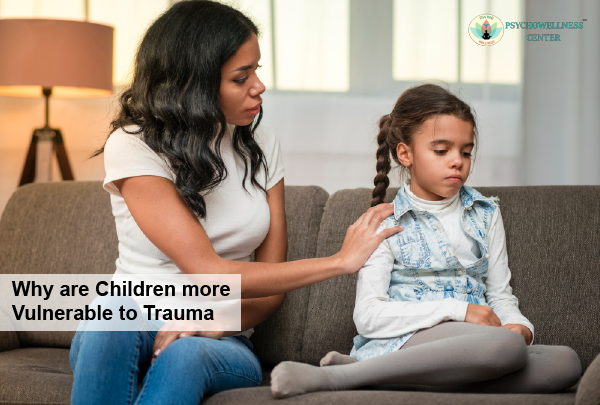
Children experience the world through a lens that is still forming. Their emotional, cognitive, and psychological systems are in a continuous state of development, which makes them more sensitive to distressing or overwhelming experiences. Trauma in childhood—whether caused by loss, family conflict, neglect, abuse, or sudden environmental changes—can leave a deep and lasting imprint. Understanding why children are more vulnerable to trauma is crucial for parents, educators, and mental health professionals to provide timely and effective support.
Developing Brain and Emotional Regulation
One of the most significant reasons children are more vulnerable to trauma lies in their developing brains. The areas responsible for emotional regulation, impulse control, and reasoning are not yet fully mature. When a child encounters a traumatic situation, their brain may struggle to process the experience in a balanced way.
This can lead to heightened emotional responses and difficulty in calming down after distress. In many cases, repeated or severe trauma may contribute to conditions such as post-traumatic stress disorder (PTSD), where children may experience flashbacks, nightmares, or intense fear. Since their brains are still forming neural connections, these experiences can shape how they respond to stress throughout their lives.
Limited Understanding of Events
Children often lack the cognitive ability to fully understand complex or distressing situations. They tend to interpret events in a self-centred way, which can lead to misunderstandings. For example, a child witnessing parental conflict may believe they are the cause of the problem.
Such interpretations can create persistent emotional difficulties, including anxiety, where the child may feel constantly worried or unsafe. Without proper explanation and reassurance from adults, these feelings can intensify and interfere with their daily functioning, relationships, and academic performance.
Dependence on Caregivers
A child’s sense of safety is closely tied to their caregivers. When caregivers provide consistent love, support, and reassurance, children develop a secure emotional foundation. However, when this support is disrupted—due to neglect, inconsistency, or conflict—the impact can be profound.
In some situations, children may experience forms of emotional abuse, such as criticism, rejection, or lack of emotional availability. This can damage their self-esteem and make it difficult for them to trust others. Since children rely heavily on caregivers for validation and security, any disruption in this relationship can increase their vulnerability to trauma.
Lack of Coping Mechanisms
Unlike adults, children have not yet developed effective coping strategies to deal with stress and adversity. They may not know how to express their feelings or seek help when they are overwhelmed.
As a result, trauma often manifests as behavioural or emotional changes rather than verbal expression. Children may become withdrawn, irritable, or aggressive. This difficulty in managing emotions is closely linked to stress, which can build up over time and affect both mental and physical health. Without intervention, chronic stress can interfere with sleep, learning, and overall development.
Sensitivity to Environment
Children are highly influenced by their environment. Even subtle changes—such as tension at home or difficulties at school—can have a significant emotional impact. Experiences like bullying can be particularly harmful, leading to feelings of fear, helplessness, and social withdrawal.
Similarly, ongoing family problem situations, such as frequent arguments or lack of emotional support, can create a sense of instability. Children may not fully understand what is happening, but they absorb the emotional atmosphere around them. This heightened sensitivity makes them more susceptible to trauma, even in situations that adults might consider manageable.
Long-Term Impact of Early Trauma
Trauma experienced during childhood does not simply fade away with time. If left unaddressed, it can have long-term consequences on mental health and overall well-being. Many adults struggling with emotional difficulties often trace their challenges back to unresolved childhood experiences.
Conditions such as depression, low self-esteem, and difficulty in forming healthy relationships are commonly linked to early trauma. These experiences can shape a child’s beliefs about themselves and the world, influencing their behaviour and emotional responses well into adulthood.
However, it is important to remember that children are also highly resilient. With the right support, they can process their experiences, develop healthy coping skills, and build emotional strength.
The Importance of Early Intervention
Recognising the signs of trauma early is essential. Changes in behaviour, mood swings, sleep disturbances, or withdrawal from activities may indicate that a child is struggling. Providing a safe and supportive environment where children feel heard and understood can make a significant difference.
Professional support plays a crucial role in helping children navigate trauma. Therapeutic approaches such as play therapy, cognitive-behavioural techniques, and family counselling can help children express and process their emotions healthily. Early intervention not only addresses immediate concerns but also prevents long-term psychological difficulties.
Conclusion
Children are more vulnerable to trauma because of their developing brains, emotional dependence, and limited ability to understand and cope with complex experiences. Their sensitivity to environmental influences and reliance on caregivers further amplify the impact of distressing events. Without timely support, these experiences can have lasting effects on their mental and emotional well-being.
At Psychowellness Center, support from the best psychologists in Delhi, experienced psychologists in Delhi NCR, and professionals offering Child Counselling Near me ensures that children receive the care they need in a nurturing environment. Whether you are seeking counselling in Delhi or psychological counselling in Delhi, early intervention can help children heal and thrive. Psychowellness Center at Dwarka and Janakpuri, New Delhi (Contact: 011-47039812 / 7827208707) offers a safe and supportive space to navigate concerns, rebuild trust, and improve communication. Their experienced therapists provide personalised care tailored to both individuals and couples. For more understanding, you can also explore the Psychowellness Center YouTube video on child development, which connects closely with how trauma affects children and offers practical insights for parents and caregivers.
Contributions: Dr. R.K. Suri, Clinical Psychologist, and Ms. Mansi, Counselling Psychologist
References
- American Psychiatric Association. (2022). Diagnostic and statistical manual of mental disorders (5th ed., text rev.). American Psychiatric Publishing.
- Perry, B. D., & Szalavitz, M. (2017). The boy who was raised as a dog: And other stories from a child psychiatrist’s notebook (3rd ed.). Basic Books.
- Shonkoff, J. P., & Garner, A. S. (2012). The lifelong effects of early childhood adversity and toxic stress. Pediatrics, 129(1), e232–e246.