
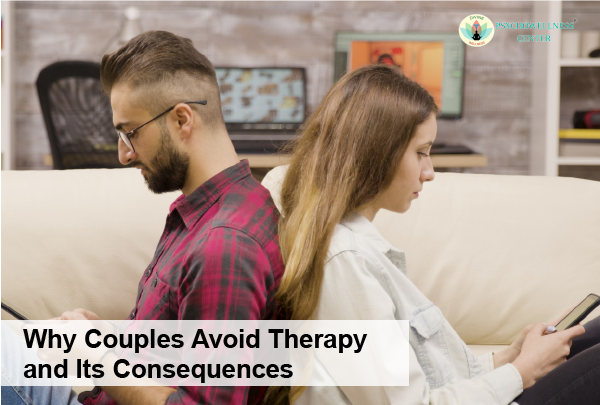
Many couples experience periods of conflict, emotional distance, or uncertainty within their relationship. Despite this, a significant number delay or avoid seeking professional support. Avoidance is often not due to a lack of need, but rather to misconceptions, fears, or practical barriers that prevent timely intervention.
Understanding why couples hesitate to seek couples therapy, and the potential consequences of that delay, can help normalise help-seeking and encourage earlier, more effective support.
Common Reasons Couples Avoid Therapy
One of the most frequent reasons is the belief that problems should be resolved privately. Many couples view seeking external help as a sign of failure rather than a proactive step toward improvement.
Stigma around mental health and therapy also plays a role. Some individuals worry about being judged or misunderstood, particularly when discussing personal or relational concerns.
Another common barrier is the assumption that issues are “not serious enough” to require professional support. Couples may wait until conflicts become severe before considering therapy, by which time patterns are more deeply ingrained.
Practical concerns such as time constraints, financial considerations, or uncertainty about where to seek help can further delay the decision.
Fear of Confrontation and Change
Therapy involves discussing difficult topics openly, which can feel uncomfortable. Couples may avoid therapy to prevent confrontation or to maintain temporary stability.
There may also be fear of what therapy might reveal. Concerns about being blamed, criticised, or having to make significant changes can discourage individuals from engaging in the process.
In some cases, one partner may be more willing to seek help than the other, leading to further delay.
Misconceptions About Therapy
Many couples assume that therapy is only for relationships in crisis. This belief prevents them from seeking support during earlier stages when intervention may be more effective.
Another misconception is that therapy will take sides or assign blame. In reality, structured relationship counselling focuses on understanding patterns and improving communication rather than determining fault.
Some also expect immediate solutions and may feel discouraged by the idea that therapy requires time and consistent effort.
Short-Term Avoidance vs Long-Term Impact
Avoiding therapy may reduce immediate discomfort, but it often leads to the persistence or escalation of underlying issues. Unresolved conflicts can become repetitive, creating frustration and emotional fatigue.
Over time, communication may deteriorate, and partners may begin to withdraw or avoid meaningful interaction. This can lead to emotional distance, reduced trust, and decreased satisfaction within the relationship.
Short-term avoidance often results in more complex challenges in the long term.
Emotional Consequences of Delayed Support
When concerns remain unaddressed, individuals may experience increased stress, anger issues, infidelity, gaslighting, intimacy issues, frustration, or feelings of isolation. Repeated misunderstandings can contribute to resentment and reduced empathy between partners.
In some cases, ongoing conflict or emotional strain may contribute to conditions such as anxiety or low mood, affecting both individual well-being and relationship functioning.
The longer these patterns persist, the more difficult they may become to change without structured support.
Impact on Communication Patterns
Communication is often one of the first areas affected when couples avoid addressing issues. Conversations may become defensive, avoidant, or emotionally charged.
Without intervention, these patterns can become habitual. Partners may stop expressing their needs or may communicate in ways that escalate conflict rather than resolve it.
Therapy provides tools to rebuild effective communication, but delayed engagement can make this process more challenging.
Effect on Trust and Emotional Connection
Trust and emotional connection are central to a healthy relationship. When issues are not addressed, trust can gradually erode, even in the absence of major conflicts.
Emotional connection may weaken as partners become less engaged or more guarded. Over time, this can lead to a sense of disconnection or dissatisfaction.
Rebuilding trust and connection often requires more time and effort when support is delayed.
Missed Opportunities for Early Intervention
Early intervention is one of the most significant advantages of therapy. Addressing concerns when they first arise allows for quicker resolution and prevents patterns from becoming entrenched.
Couples who seek support early often find it easier to implement changes and maintain progress. Delayed intervention, on the other hand, may require more intensive work to achieve similar outcomes.
When to Consider Therapy
Couples may benefit from therapy when they experience persistent conflict, communication difficulties, or emotional distance. It is also useful during transitions such as marriage, parenthood, or major life changes.
Importantly, therapy is not limited to resolving problems. It can also be used to strengthen relationships, improve understanding, and support long-term stability.
Recognising the value of early support can prevent unnecessary distress.
Conclusion
Avoiding therapy is a common response to relational discomfort, but it often leads to the persistence and escalation of underlying issues. Understanding the reasons behind this avoidance and recognising its consequences can help couples make more informed decisions about seeking support. With timely intervention, many relationship challenges can be addressed more effectively, leading to improved communication, stronger emotional connection, and greater stability.
Couples exploring options such as Couple Counselling near me, marriage counselling, relationship counselling in Delhi, therapist near me, or seeking guidance from best psychologists and top psychologists in Delhi may consider consulting Psychowellness Center. With centres located in Janakpuri and Dwarka Sec-17, Delhi, services are provided through a structured and confidential approach; appointments can be scheduled at 011-47039812 or 7827208707.
Contributions: Dr. R.K. Suri, Clinical Psychologist, and Ms. Charavi Shah, Counselling Psychologist
References
- Amato, P. R., & Hohmann-Marriott, B. (2007). A comparison of high- and low-distress marriages that end in divorce. Journal of Marriage and Family, 69(3), 621–638. https://doi.org/10.1111/j.1741-3737.2007.00396.x
- Karney, B. R., & Bradbury, T. N. (1995). The longitudinal course of marital quality and stability: A review of theory, methods, and research. Psychological Bulletin, 118(1), 3–34. https://doi.org/10.1037/0033-2909.118.1.3
- Lebow, J. L., Chambers, A. L., Christensen, A., & Johnson, S. M. (2012). Research on the treatment of couple distress. Journal of Marital and Family Therapy, 38(1), 145–168. https://doi.org/10.1111/j.1752-0606.2011.00249.x
- Vogel, D. L., Wester, S. R., Wei, M., & Boysen, G. A. (2005). The role of outcome expectations and attitudes on decisions to seek professional help. Journal of Counseling Psychology, 52(4), 459–470. https://doi.org/10.1037/0022-0167.52.4.459
- https://www.psychowellnesscenter.com/Blog/why-to-choose-couples-therapy/
- https://www.psychowellnesscenter.com/Blog/how-couple-therapy-can-help-you-find-inner-peace/
- https://www.psychowellnesscenter.com/Blog/looking-for-couples-counselling-things-to-know/
- https://www.psychowellnesscenter.com/Blog/top-and-leading-couple-counsellors-in-dwarka-delhi/