
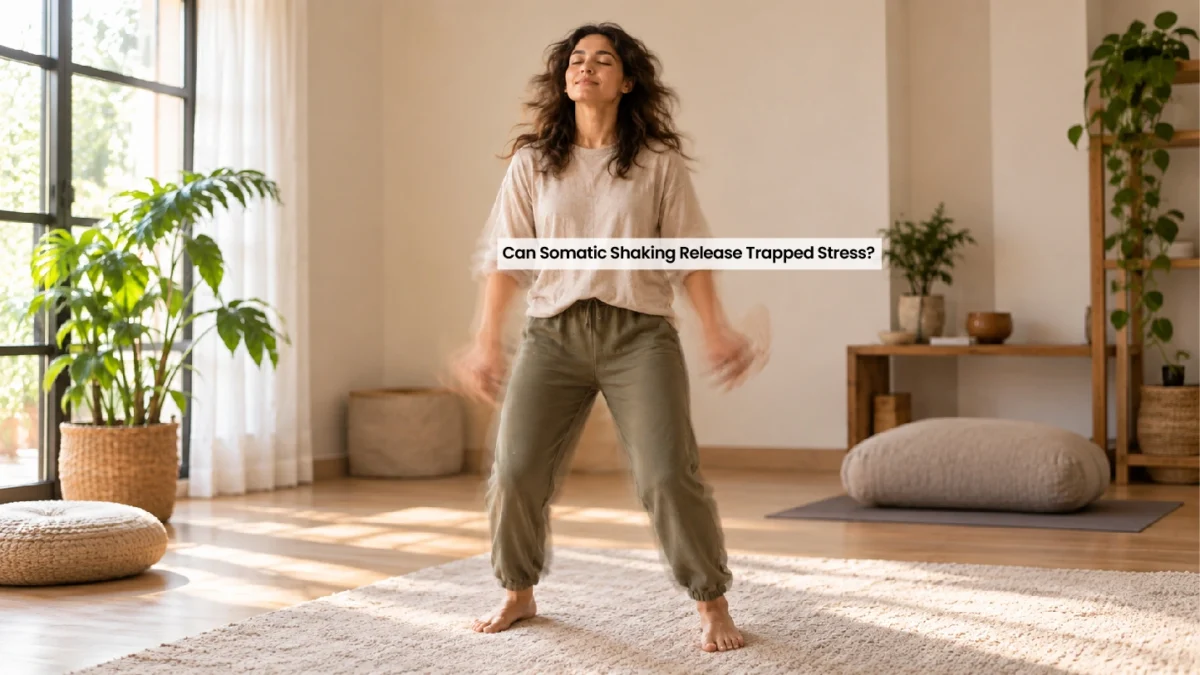
Have you ever noticed your hands trembling before an important event, your body shaking after a frightening experience, or your muscles feeling restless when you are extremely stressed?
Shaking can be a natural physical response to intense emotions or physiological arousal. This has led to growing interest in practices sometimes called somatic shaking, where a person intentionally uses gentle, rhythmic shaking or trembling movements to become more aware of bodily sensations and reduce tension.
But can shaking really “release trapped stress” from the body?
The answer is more nuanced than social media often suggests. Shaking may help some people feel calmer, more grounded, or physically relaxed, but there is not enough evidence to say that it literally removes stored stress or trauma from the body. Research on broader body- and movement-based interventions is promising, particularly in trauma-related difficulties, but studies have limitations and the evidence for specific shaking practices is still developing.
What Is Somatic Shaking?
Somatic shaking is generally used to describe intentional movements in which a person gently shakes or trembles different parts of the body.
For example, someone may stand comfortably, loosen their shoulders, bend their knees slightly, and allow gentle movements through their arms, legs, or whole body. The focus is usually on noticing bodily sensations rather than performing a particular exercise perfectly.
Some people use shaking as part of relaxation, mindfulness, movement, or body-oriented practices.
The important point is that there is no single universally accepted clinical procedure called “somatic shaking.” Different practitioners may use different techniques, explanations, and goals.
Why Does Stress Affect the Body?
Stress is not only a mental experience. It can also produce physical changes.
During stressful situations, the body’s systems involved in responding to threat become activated. You may notice:
- Faster heartbeat
- Muscle tension
- Sweating
- Changes in breathing
- Restlessness
- Jaw clenching
- Tightness in the shoulders
- Difficulty sitting still
- Trembling or shaking
After an intense situation, some people naturally experience trembling or shaking as their body settles.
This is one reason people may find intentional movement helpful when they are tense. Exercise research suggests that acute physical activity can influence physiological stress reactivity, including measures such as cortisol and blood pressure.
Does Shaking “Release Trapped Stress”?
This is where an important distinction is needed.
You may hear claims that stress or trauma becomes physically “stored” in the body and that shaking releases it. While stress can certainly have physical effects and trauma can be associated with changes in physiological regulation, the idea that specific emotions or traumatic memories are literally stored in particular muscles and then physically shaken out is not established as a scientific fact.
Research on trauma and the autonomic nervous system does show relationships between trauma-related symptoms and physiological regulation, but findings are complex and not always consistent.
Therefore, it is more accurate to say that shaking may help some people regulate physical tension or become more aware of bodily sensations, rather than claiming that it removes trauma from the body.
Why Might Someone Feel Better After Shaking?
There are several possible explanations.
1. Physical relaxation
Gentle movement can help someone become aware of areas where they are holding tension. Moving the shoulders, arms, legs, or whole body may feel physically relieving.
2. Shifting attention to the body
Stress can make people become caught up in worrying thoughts. Paying attention to movement, breathing, and physical sensations can temporarily shift attention away from repetitive thinking.
3. Sense of completion
Some people may experience shaking as a way of moving after being physically still or tense during stress. The experience itself may feel relieving, even though this does not prove that a specific “stored emotion” has been released.
4. General movement benefits
Shaking is a form of movement, and research on exercise and body-based interventions suggests that physical activity can have effects on stress and mental health. However, these findings cannot automatically be attributed specifically to shaking.
What Does Research Say About Body-Based Approaches?
Research into body- and movement-oriented interventions for trauma-related symptoms is growing.
A 2023 systematic review and meta-analysis examined 29 studies of body- and movement-oriented interventions for adults with PTSD. The researchers found potential benefits for PTSD symptoms, depression, and sleep quality, but also noted substantial variation between studies and concerns about study quality.
Another systematic review of randomized controlled trials found moderate-strength evidence for movement-based interventions for PTSD, while evidence for some other mind-body approaches was less certain. The authors also highlighted methodological limitations in the existing research.
This means body-based approaches may have a useful role, but they should not automatically be treated as a replacement for established psychological treatments.
Is Somatic Shaking Suitable for Everyone?
Not necessarily.
For some people, focusing intensely on bodily sensations can feel uncomfortable or overwhelming. Individuals with trauma-related symptoms may experience anxiety, flashbacks, dissociation, dizziness, or increased distress when engaging in certain body-focused practices.
If shaking causes discomfort, panic, pain, dizziness, or a sense of losing control, stop the exercise rather than forcing yourself to continue.
People with unexplained tremors or other physical symptoms should also consider discussing them with a qualified medical professional rather than assuming they are simply a psychological response.
How Can You Try Gentle Shaking Safely?
If you want to explore gentle movement for relaxation, keep the practice simple.
Stand or sit comfortably. Take a few natural breaths. Begin with small movements of your hands, shoulders, arms, or legs. Keep the movement gentle and avoid forcing your body to shake intensely.
Pay attention to how you feel before, during, and after the movement.
You can ask yourself:
“Do I feel calmer?”
“Do I feel more connected to my body?”
“Am I becoming more distressed?”
The goal should not be to force a dramatic emotional release. Instead, focus on comfort, awareness, and regulation.
If you are exploring shaking because of trauma, severe anxiety, panic, or persistent emotional distress, it may be helpful to work with a qualified mental-health professional who understands trauma-informed approaches.
Somatic Shaking Is Not a Replacement for Therapy
Somatic practices can be used as a complementary strategy for some individuals, but they should not be presented as a cure for trauma, anxiety, or PTSD.
Evidence-based psychological treatments remain important when someone is experiencing significant mental-health symptoms. Body-based approaches may potentially complement psychological care, particularly when used thoughtfully and appropriately.
The most important question is not whether shaking can magically remove “stored trauma,” but whether a particular practice helps you feel safer, calmer, and more connected to your body without increasing distress.
Conclusion
So, can somatic shaking release trapped stress?
Shaking may help some people experience temporary relaxation, reduce physical tension, become more aware of bodily sensations, or feel calmer after stress. However, there is currently not enough evidence to claim that shaking literally releases trapped trauma or permanently removes stress stored in the body.
The science around body-based approaches is developing, and research suggests that movement-oriented interventions may have value, particularly as part of broader approaches to trauma-related difficulties. At the same time, more high-quality research is needed to understand exactly how and for whom these approaches work.
If you are struggling with persistent stress, anxiety, trauma-related symptoms, or emotional distress, professional support can help you understand what your mind and body are experiencing and choose appropriate strategies for recovery.
Psychowellness Center
For professional psychological counselling in Delhi and mental-health support, you can connect with Psychowellness Center, with locations in Janakpuri and Dwarka Sector 17, Delhi.
Phone: 011-47039812 / 7827208707
Contributions: Dr. R.K. Suri, Clinical Psychologist, and Ms. Sakshi Dhankhar, Counselling Psychologist
Frequently Asked Questions (FAQs)
1. What is somatic shaking?
Somatic shaking generally refers to intentional, gentle shaking or trembling movements used to increase awareness of bodily sensations and potentially reduce physical tension or promote relaxation.
2. Does shaking actually release trauma from the body?
There is not enough scientific evidence to conclude that shaking literally releases stored trauma from the body. It may help some people feel physically relaxed or emotionally calmer, but claims about “releasing trapped trauma” should be interpreted cautiously.
3. Can somatic shaking help with anxiety?
Gentle movement may help some people manage physical tension and stress. However, individual responses vary, and persistent or severe anxiety may require professional assessment and treatment.
4. Can shaking replace therapy for trauma?
No. Somatic shaking should not be considered a replacement for evidence-based psychological treatment for PTSD or significant trauma-related symptoms. It may potentially be used as a complementary practice when appropriate.
5. What should I do if shaking makes me feel worse?
Stop the exercise and allow yourself to return to a comfortable, grounded state. If you experience significant distress, dizziness, panic, dissociation, pain, or other concerning symptoms, consider speaking with an appropriate mental-health or medical professional.
References
van de Kamp, M. M., Scheffers, M., Emck, C., Fokker, T. J., Hatzmann, J., Cuijpers, P., & Beek, P. J. (2023). Body-and movement-oriented interventions for posttraumatic stress disorder: An updated systematic review and meta-analysis. Journal of Traumatic Stress, 36(5), 835–848. https://doi.org/10.1002/jts.22968
https://www.psychowellnesscenter.com/service-stress-treatment-in-delhi/
https://www.psychowellnesscenter.com/Blog/best-psychologists-in-delhi-to-deal-with-acute-stress/
https://www.psychowellnesscenter.com/Blog/what-your-stress-is-trying-to-tell-you/
https://www.psychowellnesscenter.com/Blog/best-psychologist-in-janakpuri-for-stress-ptsd/
https://www.psychowellnesscenter.com/Blog/best-psychologists-in-rajender-nagar-delhi/
https://www.psychowellnesscenter.com/Blog/breaking-the-stress-eating-cycle/
Tan, L., Strudwick, J., Deady, M., Bryant, R. A., & Harvey, S. B. (2023). Mind-body exercise interventions for prevention of post-traumatic stress disorder in trauma-exposed populations: A systematic review and meta-analysis. BMJ Open, 13(7), e064758. https://doi.org/10.1136/bmjopen-2022-064758
Siciliano, R. E., Anderson, A. S., & Compas, B. E. (2022). Autonomic nervous system correlates of posttraumatic stress symptoms in youth: Meta-analysis and qualitative review. Clinical Psychology Review, 92, 102125. https://doi.org/10.1016/j.cpr.2022.102125