
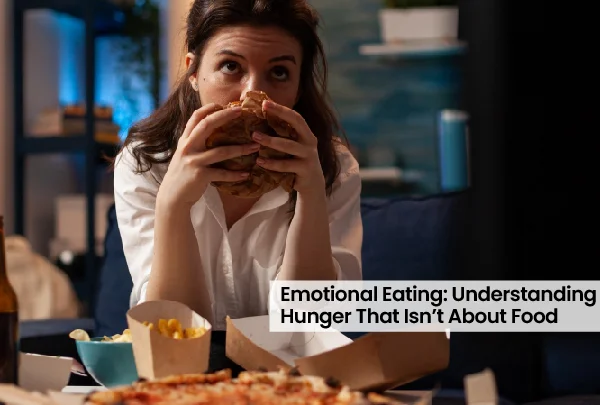
Have you ever reached for your comfort food after a stressful day or started snacking when you weren’t actually hungry? Sometimes, our desire to eat has less to do with physical hunger and more to do with our emotions. This is known as emotional eating. While food may provide temporary comfort, understanding why these cravings happen can help you develop healthier coping strategies, recognize your body’s hunger signals, and build a better relationship with food without guilt or unnecessary restrictions.
What Is Emotional Eating?
Emotional eating happens when you turn to food to manage your feelings rather than satisfy physical hunger. You might crave your favorite comfort food after an argument, snack when you’re bored, or eat more when you’re feeling overwhelmed. Stress eating is another common form of emotional eating. When you’re dealing with pressure or difficult situations, you may crave sugary, salty, or high-fat foods for temporary comfort.
Stress can also affect appetite through hormonal responses involving cortisol. While some people eat more during stressful periods, others experience reduced appetite.
Why Does Emotional Eating Happen?
There are several reasons behind emotional eating, as it develops through different emotional experiences and learned habits. Common causes include:
- Stress: Food may become a source of temporary relief during difficult days.
- Boredom: Snacking can provide entertainment when bored.
- Sadness: Familiar comfort foods may offer a temporary sense of reassurance.
- Anxiety: Eating can become a distraction from overwhelming thoughts.
- Learned habits: Childhood experiences and food-related rewards can create emotional associations with eating.
Recognizing these patterns is the first step toward understanding your relationship with food.
What Is The Difference Between Emotional Hunger and Physical Hunger?
Understanding the difference between emotional hunger and physical hunger can help you become more aware of your eating habits and recognize what your body actually needs.
Physical hunger is your body’s natural signal that it needs nourishment. It usually develops gradually and can be satisfied with proper, full meals of the day. On the other hand, emotional hunger is often connected to feelings such as stress, sadness, boredom, anxiety, or loneliness. It may appear suddenly and create cravings for specific comfort foods, even when you’ve recently eaten.
Remember, emotional and physical hunger can happen together. The goal is to understand your body’s signals, respond to your needs, and develop a healthier relationship with food through awareness and self-compassion.
What Are the Common Signs of Emotional Eating?
Recognizing the signs of emotional eating can help you understand when your feelings influence your eating habits. Some common signs include:
- Eating without physical hunger
- Sudden cravings for specific foods
- Eating to improve your mood
- Mindless snacking
- Feeling guilty, frustrated, or regretful afterwards
- Eating for comfort to cope with emotions
How Does Emotional Eating Affect Your Mental and Physical Well-Being?
Occasional emotional eating is normal. However, when it becomes a frequent coping mechanism, it may affect your overall well-being. Mental effects include:
- Guilt or shame after eating.
- Increased stress around food choices.
- Difficulty recognizing emotional needs.
- Reduced confidence in managing eating habits.
Physical effects may include:
- Digestive discomfort and bloating.
- Eating beyond comfortable fullness.
- Disrupted eating routines.
- Changes in weight over time.
Emotional eating alone does not cause weight gain or illness. The focus should be on developing healthier habits rather than judging yourself.
How Can You Break the Cycle of Emotional Overeating?
Learning ways to manage emotional hunger naturally starts with understanding your triggers and responding to them differently.
- Identify Your Trigger: Before reaching for food, ask yourself whether you’re physically hungry or experiencing an emotion such as stress or boredom.
- Maintain Regular Meals: Skipping meals or restricting food can increase hunger and make cravings harder to manage. Instead, choose balanced meals for the day.
- Pause Before Eating: Taking a few slow breaths allows you to understand what you need without automatically reacting to cravings.
- Explore Other Activities: Finding alternate activities to manage difficult emotions, like going for a walk, listening to music, or journaling.
- Practice self-compassion: Avoid blaming yourself when emotional eating happens and instead understand
What Are Healthy Ways to Cope With Emotional Hunger?
There are different ways to cope with the urge to eat. Learning healthy ways to manage food cravings can help you develop a more balanced relationship with eating. Consider these strategies:
- Pay attention and practice mindful eating
- Journal and write down your emotions to understand the pattern
- Choose enjoyable activities and stay active
- Make a consistent routine to get enough sleep
- Stay connected with your friends and family
- Seek professional help when needed
It is important to recognise when you’re eating for emotional reasons and develop different ways to care for yourself.
When To Seek Help for Emotional Eating?
If coping with emotional hunger feels difficult to control or causes significant distress, consider seeking professional support. A qualified mental health professional can help you understand emotional triggers and develop healthier coping strategies. Consider getting support if you frequently experience loss of control while eating, intense guilt around food, or eating patterns that interfere with everyday life.
Conclusion
It is important to know that emotional eating is much more than it is about food. It can reflect stress, sadness, anxiety, boredom, or an unmet emotional need. By recognizing your triggers, understanding your hunger signals, and practicing healthier coping strategies, you can gradually build a more positive relationship with food. If emotional eating is affecting your daily life or feels difficult to manage, consider reaching out to a qualified professional for personalized support. Here at the Psychowellness Center, you get guidance and support from professional therapists and counselors who will help you walk the right way. The centres at Janakpuri and Dwarka Sector 17 offer various support services because you deserve a healthy relationship with food that is built on understanding, balance, and self-compassion.
Remember, progress doesn’t require perfection. Be kind to yourself, listen to your body, and seek professional support when needed. Your emotional well-being deserves as much care and attention as your physical health.
Contributed by: Dr. R.K. Suri, Clinical Psychologist, and Ms. Vandana Krishnan, Counselling Psychologist
Frequently Asked Questions (FAQ)
- How do I know if I’m emotionally hungry or physically hungry?
Physical hunger usually develops gradually and can be satisfied by different foods. Emotional hunger often appears suddenly, involves specific cravings, and may occur even when you’re physically full.
- Can emotional eating be stopped completely?
You don’t necessarily need to eliminate emotional eating completely. The goal is to recognize when emotions influence your eating habits and develop different ways to manage those feelings.
- What is the best way to manage emotional eating?
Start by identifying your triggers, maintaining regular meals, practicing mindful eating, and exploring alternative ways to manage stress and difficult emotions.
- Is emotional eating the same as binge eating disorder?
No. Emotional eating describes eating in response to emotions, while binge eating disorder is a recognized eating disorder involving recurrent episodes of binge eating and significant distress.
References
McEwen, B. S. (2007). Physiology and neurobiology of stress and adaptation: Central role of the brain. Physiological Reviews, 87(3), 873–904. https://doi.org/10.1152/physrev.00041.2006
Morillo-Sarto, H., López-del-Hoyo, Y., et al. (2023). ‘Mindful eating’ for reducing emotional eating in patients with overweight or obesity in primary care settings: A randomized controlled trial. European Eating Disorders Review, 31(2), 303–319. https://doi.org/10.1002/erv.2958
Wozniak, J. D., & Huang, H. (2024). Emotional eating in primary care: Considerations for assessment and management. Harvard Review of Psychiatry, 32(5), 166–172. https://doi.org/10.1097/HRP.0000000000000405
https://www.talktoangel.com/blog/how-to-recover-from-your-binge-eating-habits
https://www.talktoangel.com/blog/effective-ways-to-stop-emotional-eating
https://www.talktoangel.com/blog/how-to-stop-overeating-a-form-of-emotional-self-protection