
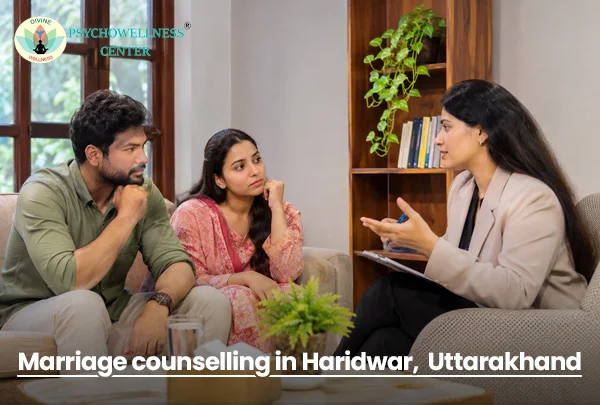
Every marriage has seasons of closeness and seasons of strain. When strain lasts, small misunderstandings pile up, conversations get shorter, and home can start to feel like a place where you tiptoe. If that sounds quite familiar to you, then you are not failing, and you do not have to work it out alone. Marriage counselling in Haridwar offers couples a confidential, structured space to understand what is going wrong and learn practical ways to repair it. This guide covers causes of conflict, what sessions involve, how long counselling takes, and how to choose support.
How Can Couples Create a Healthier Marriage with Professional Counseling?
Counselling does not decide who is right. It assists both parties in identifying the pattern that continues to damage the marriage and substituting it with better behaviors. A large meta-analysis found that couples therapy improved relationship satisfaction, communication, and emotional intimacy compared with no treatment.
Professional guidance for troubled marriages typically helps couples to:
- Understand what triggers repeated arguments
- Speak and listen without blame
- Rebuild respect and warmth
- Make decisions together
- Agree on practical steps to try at home
Professional guidance for strengthening interpersonal connections is at the heart of this work, because partners who feel understood tend to fight less and cooperate more.
What Causes Recurring Conflicts Between Husband and Wife?
Repeated arguments usually point to something deeper than the topic itself. Common causes include:
- Unspoken expectations: Each partner assumes the other “should know” what is needed.
- Unequal responsibilities: One person carries most of the household or caregiving load.
- Money pressure: Debt, uneven income, or different spending habits.
- Family involvement: Parenting choices, in-laws, and boundaries.
- Exhaustion and stress: Little energy left for patience.
- Unresolved hurt: Old wounds resurface in new disagreements.
- Different communication styles: One partner wants to talk it out, the other withdraws.
For example, a quarrel about forgotten errands may really be about feeling unappreciated. Identifying the true problem alters the dialog.
How Can Couples Make Their Communication Better in Their Marriage?
Communication is a skill like other skills, and a good part of it is that skills can be learned. These steps help with how to resolve misunderstandings between spouses:
- Pause when emotions rise. Take a 20-minute break, then return.
- Use “I” statements. Say “I felt ignored when plans changed,” not “You never listen.”
- Reflect. Repeat what you heard before replying.
- Ask, don’t assume. “What did you mean by that?” prevents many fights.
- Stay on one topic. Avoid piling on old complaints.
- Pick calm moments. Avoid serious talks when tired or rushed.
- Make clear requests. “Could we eat dinner together 4 nights a week?”
Why Do Partners Struggle to Express Their Emotional Needs?
Why do partners struggle to express their emotional needs? Several reasons are common:
- Fear of rejection or conflict: Asking feels risky.
- Upbringing: Some people grew up in homes where feelings were not discussed.
- Pride or cultural expectations: Admitting a need can feel like weakness.
- Not knowing what they feel: Needs may be vague, even to us.
- Past experiences: Earlier dismissals teach people to stay quiet.
A counsellor helps partners find words for feelings and practise sharing them safely.
Developing Effective Response Regulation
Developing effective response regulation means noticing early signs of anger, such as a racing heart, tight jaw, or raised voice, and choosing a calmer response. Slow breathing, naming the feeling (“I’m hurt”), and stepping away briefly all help. Avoid insults, threats, and the silent treatment.
Emotional response regulation also includes pausing to ask, “What do I need right now?” before reacting.
Practising Mindful Awareness Techniques
Practising mindful awareness techniques helps you notice tension before it explodes. Try three slow breaths, feel your feet on the floor, and name what you are feeling without judging it. A few silent seconds can alter the course of a conversation.
Why Do Trust Issues Develop Between Married Partners?
Trust issues between partners rarely appear overnight. They usually grow from patterns, not single events.
Common causes include:
- Lies, secrecy, or hidden spending
- Infidelity or emotional affairs
- Broken promises that repeat
- Feeling dismissed or unsupported when it matters
- Past betrayals, from this or earlier relationships
- Inconsistent behaviour, such as being warm one day and distant the next
Can Marriage Counselling Help Couples Overcome Trust Issues?
Often, yes, though it takes time and honesty. While the other partner learns to accept responsibility without getting defensive, marriage counseling gives the injured partner a space to express their pain. Reviews of therapies for couples recovering from infidelity describe structured approaches that address the hurt, rebuild trust, and support decisions about the future.
Couples usually work on:
- Understanding what happened and what contributed to it
- Setting clear agreements about honesty and openness
- Rebuilding trust through consistent, reliable actions
- Deciding together how to move forward
Progress depends on both partners’ willingness to take part.
How Does Emotional Distance Affect Marital Relationships?
Emotional distance builds quietly. Busy schedules, unresolved arguments, and unspoken hurt can leave couples feeling lonely side by side.
Over time, it can lead to:
- Fewer meaningful conversations
- Less affection and physical closeness
- Feeling like housemates, not partners
- Increased irritability or resentment
- A sense that no one understands you
- Vulnerability to outside connections that feel more supportive
To close the gap, try sharing feelings (not just logistics), saying thank you daily, scheduling phone-free time together, and listening without trying to fix everything. Nurturing lasting marital bonds depends on these small, regular habits.
How Does Counselling Help Couples Dealing With Separation?
Some couples seek help when they are already living apart or considering ending the marriage. Counselling can help in either direction.
It can support couples to:
- Slow down and think clearly before making permanent decisions
- Explore whether the marriage can be repaired
- Communicate respectfully about practical matters, such as children and finances
- Process grief, anger, and uncertainty
- Separate with dignity if that becomes the healthiest choice
Each spouse may benefit from individual counselling to help them deal with the emotional fallout.
Is Online Marriage Counselling Effective for Couples in Haridwar?
Yes, it can be. Research on couples therapy delivered by videoconference has shown improvements in relationship outcomes. Online marriage counselling sessions can suit couples with busy schedules, travel difficulties, or partners living in different places.
To get the most from online sessions:
- Choose a private, quiet space
- Check your internet connection beforehand
- Agree on a time both can protect
- Confirm the counsellor’s qualifications, fees, and privacy practices
Some couples find it takes a little longer to feel comfortable on screen, so give the format a few sessions and speak up if it is not working.
What Happens During the First Marriage Counselling Session?
Knowing the format often eases nerves. In a typical first session:
- Ground rules: The counsellor explains confidentiality and how sessions work.
- Both perspectives: Each partner shares their concerns and what they hope will change.
- Background: You may be asked about your relationship history and daily life.
- Patterns: The counsellor begins to notice recurring cycles.
- Plan: You decide on objectives and the frequency of meetings.
The counsellor does not take sides. You can also inquire about their methodology and background.
How Long Does Marriage Counselling Usually Take?
There is no fixed number. Duration depends on how long problems have existed, how complex they are, the approach used, and how consistently both partners practise between sessions. Overviews of couples therapy often cite an average of around 12 sessions, though many couples need more or fewer. Some couples with specific concerns see improvement within a few sessions, while deeper issues such as betrayal or long-standing distance may take longer.
Weekly sessions are common at the start, and some couples space sessions out later or return for occasional check-ins. Ask your counsellor for an estimate after the first few sessions, and review progress regularly.
When Should You Seek Professional Support?
Consider counselling if:
- The same argument keeps returning
- Conversations turn into blame or silence
- Trust has been damaged
- You feel emotionally distant
- Anger or criticism is increasing
- Either of you is thinking about separation
If a relationship involves abuse, threats, or fear, individual support and safety planning should come first, since joint sessions may be unsafe. In India, you can call 112 in an emergency or 181 for the Women Helpline (please check current numbers and availability)
How Do You Choose the Right Marriage Counsellor?
- Qualifications: Look for a relevant degree and registration. Clinical psychologists in India are registered with the Rehabilitation Council of India.
- Couples experience: Ask about their work with trust, communication, and conflict.
- Approach: Understand how sessions are structured.
- Confidentiality: Ask how your information is handled.
- Fairness: Both partners should feel equally heard.
- Practical details: Check fees, timings, location, and online availability.
10 Experienced Counsellors
Dr. R. K. Suri
Dr. R. K. Suri is a senior Clinical Psychologist with over 40 years of experience in stress management, relationship counselling, behavioural concerns, and cognitive-based therapies. As the founder of Psychowellness Center, he is known for his ethical practice and structured therapeutic approach.
Mrs. Kala Sengupta
Mrs Kala Sengupta is an experienced psychologist working with children, adolescents, and adults. She provides psychological assessments and counselling for anxiety, attention difficulties, emotional regulation, and behavioural concerns, using a supportive and empathetic approach.
Ms. Tanu Sangwan
Ms. Tanu Sangwan is a psychologist specialising in stress, anxiety, and emotional difficulties. She uses Cognitive Behavioural Therapy (CBT) and mindfulness to support emotional well-being and personal growth.
Mr. Utkarsh Yadav
Mr. Utkarsh Yadav supports professionals and young adults dealing with emotional difficulties, career stress, and life decisions. His approach focuses on emotional resilience, problem-solving, and practical coping strategies.
Ms. Sakshi Dhankhar
Ms. Sakshi Dhankhar is a Counselling Psychologist supporting adolescents and adults with anxiety, stress, depression, anger, relationship concerns, and workplace challenges. She uses compassionate, evidence-based approaches to promote emotional well-being and personal growth.
Dr. Sakshi Kochhar
Dr. Sakshi Kochhar is a psychologist with over 12 years of experience addressing anxiety, stress, depression, anger, and relationship concerns. She specialises in Cognitive Behavioural Therapy (CBT) and emotional well-being.
Dr. Kaukab Imam
Dr. Kaukab Imam holds a Ph.D. in Psychology and supports individuals experiencing emotional and psychological difficulties through an empathetic, patient, and client-centred approach.
Mrs. Sheetal Sachin Kusumbe
Mrs. Sheetal Sachin Kusumbe is a Mindfulness-Based CBT Therapist and Life Coach with over 17 years of experience. She focuses on holistic well-being through personalized therapeutic interventions.
Mrs. Nazneen Iqbal
Mrs. Nazneen Iqbal specializes in supporting adults experiencing stress, anxiety, depression, OCD, PTSD, phobias, anger-related concerns, and emotional difficulties.
Ms. Meenakshi Chaubey
A well-trained psychologist with extensive experience in emotional distress, anxiety, family concerns, career counselling, and psychometric assessments, utilising CBT, REBT, and other therapeutic techniques.
Conclusion
A marriage facing difficulties is not a failure. Often, it means important conversations and relationship skills need attention. With professional guidance from Psychowellness Center, couples can work towards better communication, rebuilding trust, and restoring emotional warmth.
If you are considering marriage counselling in Haridwar, take one small step this week: talk to your partner about seeking support, explore counselling services at Psychowellness Center, and schedule an introductory session, either online or in person.
Frequently Asked Questions
How many sessions of marriage counseling are necessary?
There is no set number. Many couples attend somewhere around 10 to 20 sessions, but it varies with the issues, the approach, and how consistently both partners take part.
Can marriage counselling help couples overcome trust issues?
It can help many couples, especially when both partners are willing to be honest and accountable. Counselling offers a structured way to address the hurt and rebuild trust over time.
How do I know if my marriage needs counselling?
Warning signs include repeated arguments, constant criticism, emotional distance, broken trust, loss of affection, or thinking about separation. If these feel familiar, an introductory session can help you decide.
References
- https://www.psychowellnesscenter.com/Blog/quick-resolution-for-marital-conflict-tips-from-marriage-counsellor/
- https://www.psychowellnesscenter.com/Blog/giving-importance-to-resolving-marital-conflict/
- https://www.psychowellnesscenter.com/Blog/key-secrets-to-strong-marriage-communication/
- https://www.psychowellnesscenter.com/Blog/communication-hacks-for-working-couples/
- How can mindfulness promote happiness in a marriage?
- Roddy, M. K., Walsh, L. M., Rothman, K., Hatch, S. G., & Doss, B. D. (2020). Meta-analysis of couple therapy: Effects across outcomes, designs, timeframes, and other moderators. Journal of Consulting and Clinical Psychology, 88(7), 583-596. https://doi.org/10.1037/ccp0000514
- Kysely, A., Bishop, B., Kane, R. T., McDevitt, M., De Palma, M., & Rooney, R. (2021). Couples therapy delivered through videoconferencing: Effects on relationship outcomes, mental health, and the therapeutic alliance. Frontiers in Psychology, 12, Article 773030. https://doi.org/10.3389/fpsyg.2021.773030
- Chatterjee, S., & Srivastava, N. (2025). Therapies to help recover relationships of the couples healing from infidelity: A review study. International Journal of Indian Psychology. https://doi.org/10.25215/1304.047
- Rehabilitation Council of India. (n.d.). Registration in Central Rehabilitation Register (CRR). https://rehabcouncil.nic.in/norms-guidelines/
- Psychology Today. (n.d.). How does couples therapy work? https://www.psychologytoday.com/au/basics/therapy/how-does-couples-therapy-work