
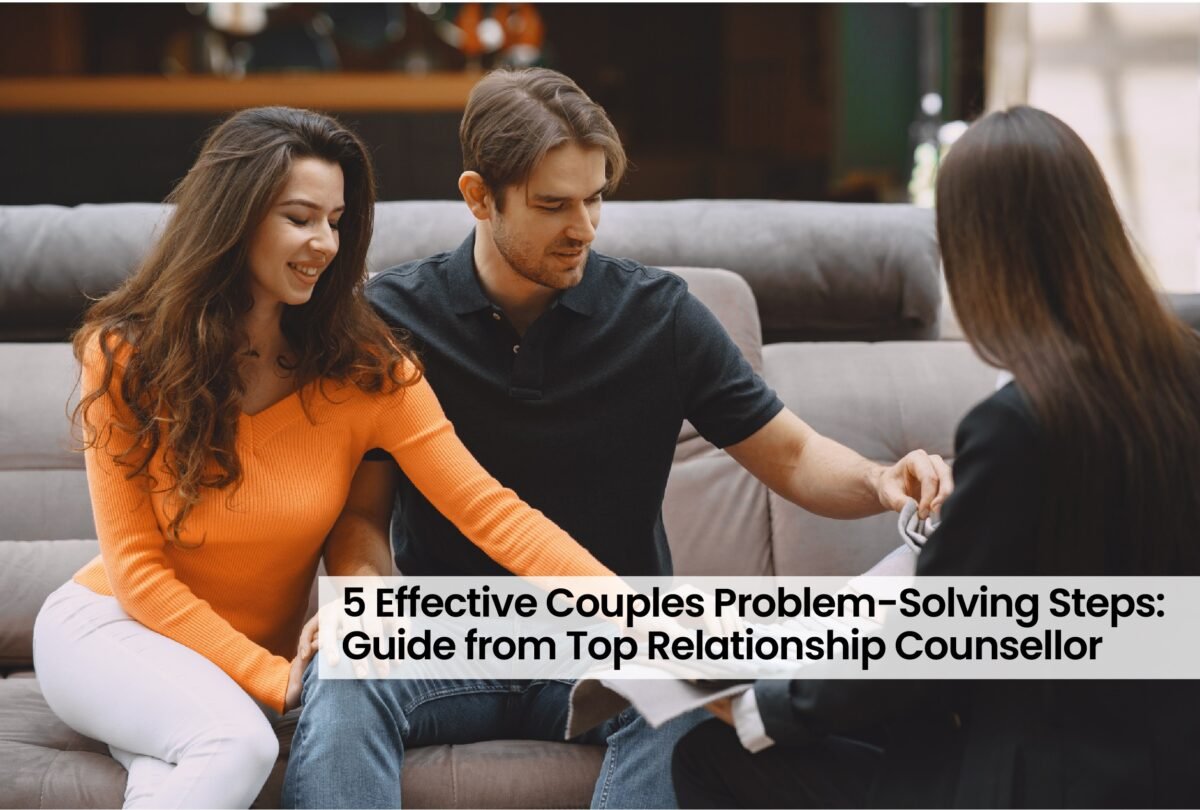
Every relationship runs into rough patches. What separates couples who grow closer from those who drift apart isn’t the absence of disagreement; it’s how they handle conflict when it arises. As a professional relationship counsellor in Delhi working with couples navigating everything from communication breakdowns to deep trust issues, I’ve seen one consistent pattern: partners who learn structured problem-solving skills recover faster and build long-term emotional resilience.
This guide breaks down five therapist-backed steps for resolving relationship conflict in a way that strengthens your emotional connection instead of eroding it.
Why Do Most Couples Struggle with Conflict Resolution in Relationships?
A common myth is that happy couples simply don’t disagree. In reality, conflict is inevitable; what predicts long-term relationship success is whether partners know how to repair emotional ruptures effectively. Most people were never taught healthy communication strategies—they only learned to avoid tough conversations, escalate arguments, or emotionally shut down.
If you are actively searching for the best couple counselling in Delhi NCR or looking for how to improve communication in a marriage, you’ve likely noticed that generic advice like “just talk more” fails under real pressure. What actually works is a repeatable, structured framework that both partners can return to whenever emotional tension rises.
Step 1: How to Stop Escalating Arguments with Your Partner Immediately?
The biggest mistake couples make is trying to solve complex relational problems while emotionally flooded. When anger or anxiety spikes, the body triggers a fight-or-flight stress response: heart rate increases, rational thinking narrows, and the conversation rapidly shifts from collaborative problem-solving to defensive self-protection.
- Take an intentional 20-minute time-out: When feeling overwhelmed, pause the discussion to let your nervous system return to baseline.
- Practice physiological grounding: Use simple grounding techniques like slow diaphragmatic breathing, going for a short walk, or naming five physical objects around you.
- Agree on a specific pause phrase: Decide on a shared time-out word in advance so pausing feels like a mutual agreement rather than emotional avoidance or stonewalling.
Step 2: Can Mindfulness Help Couples Resolve Communication Breakdowns?
Once emotional calm is restored, the next step is staying present without bringing up past grievances or projecting worst-case scenarios. This is where practicing active mindfulness becomes an essential tool for relationship healing.
Research on trait mindfulness in romantic partners shows that individuals who practice staying present report higher relationship satisfaction and respond more constructively to relationship stress—including calmer reactions and improved active listening (Barnes et al., 2007).
- The Pause Check: Before responding during a difficult talk, ask yourself: “Am I responding to what my partner just said, or reacting to an old unhealed pattern?” Interrupting this reactive cycle is critical for healthy conflict resolution.
Step 3: When Should You Take a Couples Relationship Test in Delhi?
Sometimes, despite trying individual strategies, couples find themselves stuck in repetitive argument loops. If you are unsure whether your issues stem from temporary stress or deeper dynamic misalignments, taking a professional assessment can provide clarity.
Opting for a couples relationship test in delhi with a licensed therapist helps evaluate key dynamics such as emotional intimacy, conflict handling styles, and shared goal compatibility. This diagnostic approach allows you and your partner to identify specific growth areas before small misunderstandings transform into chronic relationship dissatisfaction.
Step 4: Reconnect Through Repair and Self-Esteem
After a disagreement is addressed, the relationship needs active repair, a genuine acknowledgment of impact, not just a resolved logistics problem. This is the moment for self-improvement noticing what pattern you personally bring into conflict.
How each partner feels about themselves shapes how conflict unfolds. Lower self-esteem is linked to more negative interpretation of a partner’s behavior, which is why individual growth work often benefits the relationship as a whole. Separating “what happened here” from “what it triggered from my past” reduces repeat conflicts.
Try this: After resolving an issue, each partner shares one sentence: “What I needed in that moment was ___.” This builds emotional literacy and prevents silent resentment.
Step 5: Rebuild Resilience, Address Loneliness Before It Grows
Unresolved conflict often leaves partners feeling emotionally distant, even while living in the same home. This creeping loneliness strongly predicts long-term dissatisfaction. Research on romantic partners found loneliness is associated with lower trust and higher conflict, partly because distant partners stop noticing each other’s needs (Sease, Sandoz, Yoke, Swets, & Cox, 2024).
The antidote is intentional reconnection and resilience, bouncing back stronger after a rupture rather than avoiding the topic next time. Resilient couples treat conflict as information about unmet needs, not proof the relationship is failing.
Try this: Schedule a weekly 15-minute check-in, no phones, where you each answer: “What made you feel closest to me this week?” and “What made you feel distant?”
When to Seek Professional Support
These steps work well as daily practice, but chronic stonewalling or conflicts that never resolve benefit from professional guidance. If you’ve been searching for couple counselling near me, know that structured therapy isn’t a sign of failure, it’s a guided version of the same skills above, tailored to your history.
Conclusion
Conflict itself isn’t the enemy of a healthy relationship; poor conflict management is. By pausing before reacting, staying mindful, setting clear boundaries, doing the inner work of self-reflection, and consciously rebuilding closeness afterward, couples can transform disagreements into a source of deeper connection.
To support couples experiencing communication difficulties, recurring conflicts, emotional disconnection, or relationship concerns, couples can seek professional help at Psychowellness Center, with services available at Dwarka and Janakpuri, New Delhi (Contact: 011-47039812 / 7827208707). Experienced professionals can provide personalised relationship counselling and practical strategies to improve communication, emotional understanding, conflict resolution, trust, and mutual connection. Online support is also available through TalktoAngel, an online platform for counselling.
When couples face recurring disagreements, misunderstandings, or emotional distance, seeking professional guidance for relationship concerns can help them understand underlying patterns and communicate more effectively. Structured support can also encourage healthier conflict resolution and strengthen mutual understanding.
Frequently Asked Questions
- How do I know if my relationship needs couple counselling? If the same argument keeps repeating without resolution, if partners frequently shut down mid-conversation, or if emotional distance is growing despite living together, these are strong signs that professional support could help.
- How long does couple counselling usually take to show results? Many couples notice communication improvements within 6–8 sessions, though this varies with the depth of the issues and how consistently both partners practice the tools discussed in session.
- Can one partner benefit from counselling even if the other refuses to attend? Yes. Individual sessions can still improve how you communicate, regulate your reactions, and set boundaries, changes that often positively shift the relationship dynamic even without both partners in the room.
- What’s the difference between healthy conflict and a toxic pattern? Healthy conflict involves both partners eventually feeling heard, even if they disagree. Toxic patterns involve contempt, stonewalling, or repeated blame with no attempt at repair, signals to seek professional guidance sooner rather than later.
Call for Action
Couples seeking professional support for communication difficulties, recurring conflicts, emotional disconnection, or other relationship concerns may consider the services offered by Psychowellness Center. With centres conveniently located in Janakpuri and Dwarka Sec-17, Delhi, the clinic provides confidential and evidence-based relationship counselling. Couples can call 7827208707 or 011-47039812 to schedule an appointment or learn more about the available services.
Contributions: Dr. R.K. Suri, Clinical Psychologist, and Ms Mahima Mathur, Counselling Psychologist
References
Barnes, S., Brown, K. W., Krusemark, E., Campbell, W. K., & Rose, R. D. (2007). The role of mindfulness in romantic relationship satisfaction and responses to relationship stress. Journal of Marital and Family Therapy, 33(4), 482–500. https://doi.org/10.1111/j.1752-0606.2007.00033.x
Sease, T. B., Sandoz, E. K., Yoke, L., Swets, J. A., & Cox, C. R. (2024). Loneliness and relationship well-being: Investigating the mediating roles of relationship awareness and distraction among romantic partners. Behavioral Sciences, 14(6), Article 439. https://doi.org/10.3390/bs14060439
https://www.psychowellnesscenter.com/Blog/everything-you-need-to-know-about-relationship-counseling/
https://www.psychowellnesscenter.com/Blog/best-couple-counselling-in-delhi-to-rebuild-trust/
https://www.psychowellnesscenter.com/Blog/looking-for-couples-counselling-things-to-know/