
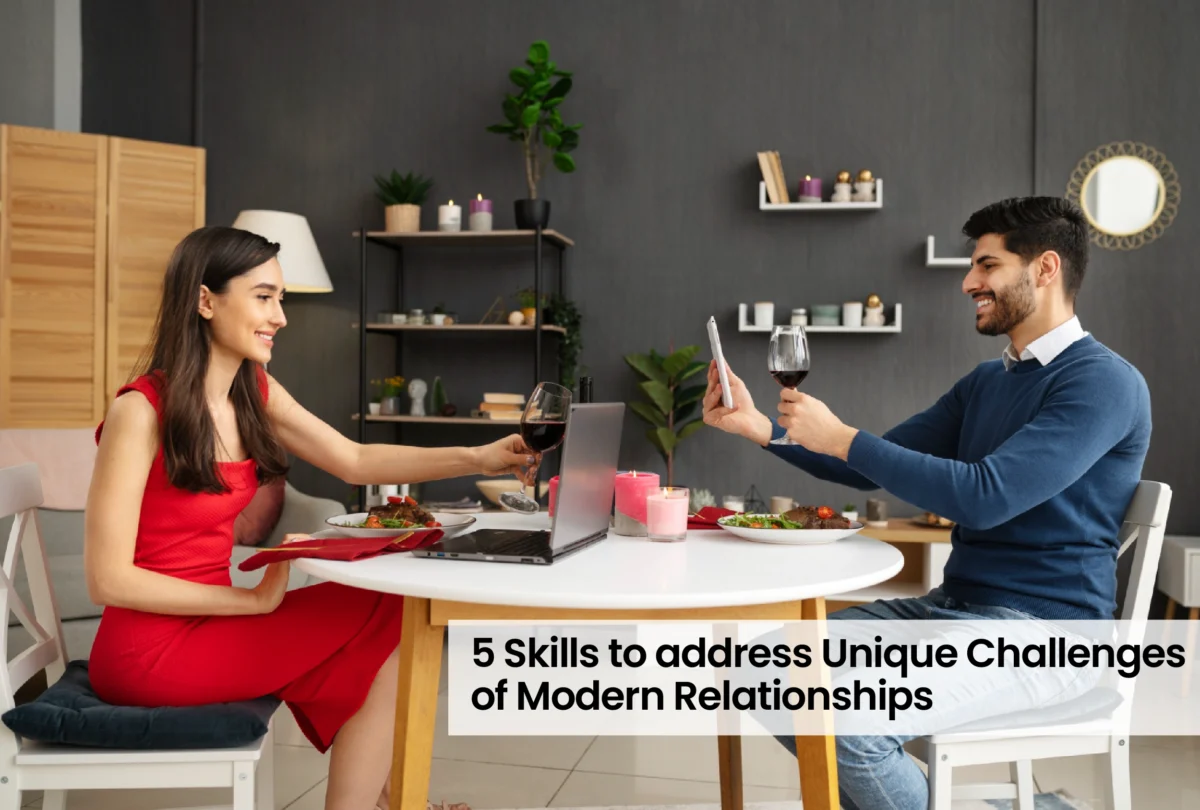
Relationships have always required effort, understanding and commitment. However, today’s relationships are facing a new set of challenges that previous generations had not encountered in the same way. Technology has contributed to the issues of couple conflicts, emotional disconnection, and unrealistic expectations and has further changed how individuals view emotional well-being.
For improving relationships, it is essential to develop certain skills that can help individuals and couples manage challenges more effectively, build trust, and create deeper emotional bonds. Couples counselling can be searched for through Relationship Counselling near me, Marriage Counselling near me, or professional psychological counselling near me that helps address the unique challenges of modern relationships.
Challenges Modern Relationships Face
Building healthier and more satisfying relationships begins with an understanding of the difficulties that the couple faces.
- Digital Communication and Social Media Pressure :- Though technology helps in communication, it often causes misunderstandings through text messages, excessive screen time, and unrealistic expectations caused by social media. Constant exposure to idealised relationships online can lead to social comparison, insecurity and dissatisfaction with one’s own relationship.
- Busy Lifestyle and Work-Life Imbalance:- Both the individuals’ working hours, careers and increasing workplace stress leave little time for emotional connection. Over time, chronic stress and burnout can reduce emotional intimacy and increase misunderstandings.
- Changing Expectations from Relationships :- Modern partners often expect a single person to fulfil multiple roles. While these expectations reflect a desire for deeper connection, they can also create disappointment if they are not fulfilled or poorly communicated.
- Emotional Isolation Despite Connectivity :- Despite being constantly connected, many individuals experience loneliness. Emotional intimacy requires presence, vulnerability, and meaningful conversations that are not simple texting.
- Difficulty Maintaining Healthy Boundaries :- Without establishing a healthy boundary, relationships may become emotionally draining or even develop into a toxic relationship. Both individuals should be able to have their own means of balancing career, friendship and family responsibilities.
5 Skills To Address These Challenges
As these challenges evolve, individuals may find it difficult to navigate through the relationships. But it is not impossible to make it work; they simply require stronger emotional skills. The following are the five skills that can help build healthier, more resilient relationships in today’s fast-changing world.
- Effective Communication
Communication is the foundation of any healthy relationship, but effective communication goes beyond that. It involves expressing thoughts honestly, listening with empathy, and understanding emotions. Modern couples often tend to text, voice chat and direct message, easily leading to interpersonal problems since there is a gap in tone, facial expressions, and emotional context.
One can strengthen this skill by:
- Practice active listening without interrupting
- Ask questions instead of making assumptions
- Express feelings using “I” statements
- Try having conversations regularly
- Clarify messages if you feel doubtful
Healthy communication helps create emotional safety, allowing both partners to feel heard, valued and respected.
2. Emotional Intelligence and Self-Awareness
Emotional intelligence is the ability to recognise, understand and manage your own as well as those of others. Learning emotion control helps reduce anxiety, work stress, and emotional exhaustion. Emotionally intelligent partners:
- Recognise their emotional triggers
- Understand their partner’s perspective
- Manage anger constructively
- Avoid hurtful words during disagreements
Strong emotional awareness reduces the likelihood of couple conflicts and encourages couples to stay present, reduce stress and communicate more calmly.
3. Building Healthy Boundaries
One of the biggest misconceptions about being in a relationship is doing everything together. In reality, healthy relationships thrive when both partners maintain individuality while being emotionally close. Establishing a healthy boundary allows couples to:
- Respect personal space
- Maintain friendships and hobbies
- Protect emotional well-being
- Prevent unhealthy dependence
However, emotional intimacy shouldn’t be replaced with boundaries. Strong and healthy intimacy develops through trust, affection, and quality time.
4. Learn Conflict Resolution
Many individuals avoid difficult conversations due to the fear of rejection or previous negative experiences. Sadly, avoiding conflict often increases resentment to grow further. Effective conflict resolution involves:
- Addressing issues early
- Concentrating on a single issue at a time
- Avoiding personal attacks
- Looking for solutions rather than assigning blame
Poor communication or unfulfilled emotional needs could involve cheating & infidelity. Rebuilding trust after infidelity requires patience, accountability, and professional guidance in such cases.
5. Invest in Personal Growth
Personal development of both individuals strengthens relationships because it creates greater confidence, resilience, and self-awareness in their partnerships. Supporting one another’s individual objectives strengthens the relationship and lowers irrational expectations.The following sectors should receive investments:
- Overall self-improvement
- Building resilience
- Future goals
- Improving time management
- Work-life balance
Couples who celebrate each other’s growth tend to experience greater trust, emotional security, and long-term relationship satisfaction.
When Should You Seek Professional Help?
While every relationship experiences ups and downs, some situations call for professional support, even though these skills can be of great help. Seeking therapy is an active step toward building healthier communication and stronger emotional connections.
Couples counselling can be considered when there are:
- Various dating concerns
- Emotional distance or loss of intimacy
- Trust issues after cheating or blame
- Persistent anxiety that affects the relationship
- Emotional abuse
- Difficulty maintaining healthy boundaries
A qualified therapist can provide personalised strategies that help couples navigate challenges while improving emotional well-being.
Conclusion
As couples navigate through the evolving challenges of modern relationships, professional guidance can provide valuable support in developing healthier skills. Psychowellness Center offers evidence-based psychological services for emotional connections through their experienced team of psychologists who provide personalised care. If you or your partner are facing ongoing relationship challenges and would like professional guidance, the offline centres are located at Janakpuri and Dwarka, Sector – 17 (011-47039812 / 7827208707). By searching for best couples counselors near me, best relationship counselors near me, and best psychologist in Delhi NCR, these services can be accessible.
Remember that relationship conflicts do not indicate the end of a relationship. When addressing these concerns with openness, empathy, and the right strategies, it can help overcome these challenges and create a healthier, stronger and satisfying bond.
Contributions: Dr. R.K. Suri, Clinical Psychologist, and Ms. Vandana , Counselling Psychologist
References
- Pew Research Center. (2020). The virtues and downsides of online dating. https://www.pewresearch.org/internet/2020/02/06/the-virtues-and-downsides-of-online-dating/
- Salovey, P., & Mayer, J. D. (1990). Emotional intelligence. Imagination, Cognition and Personality, 9(3), 185–211. https://doi.org/10.2190/DUGG-P24E-52WK-6CDG